

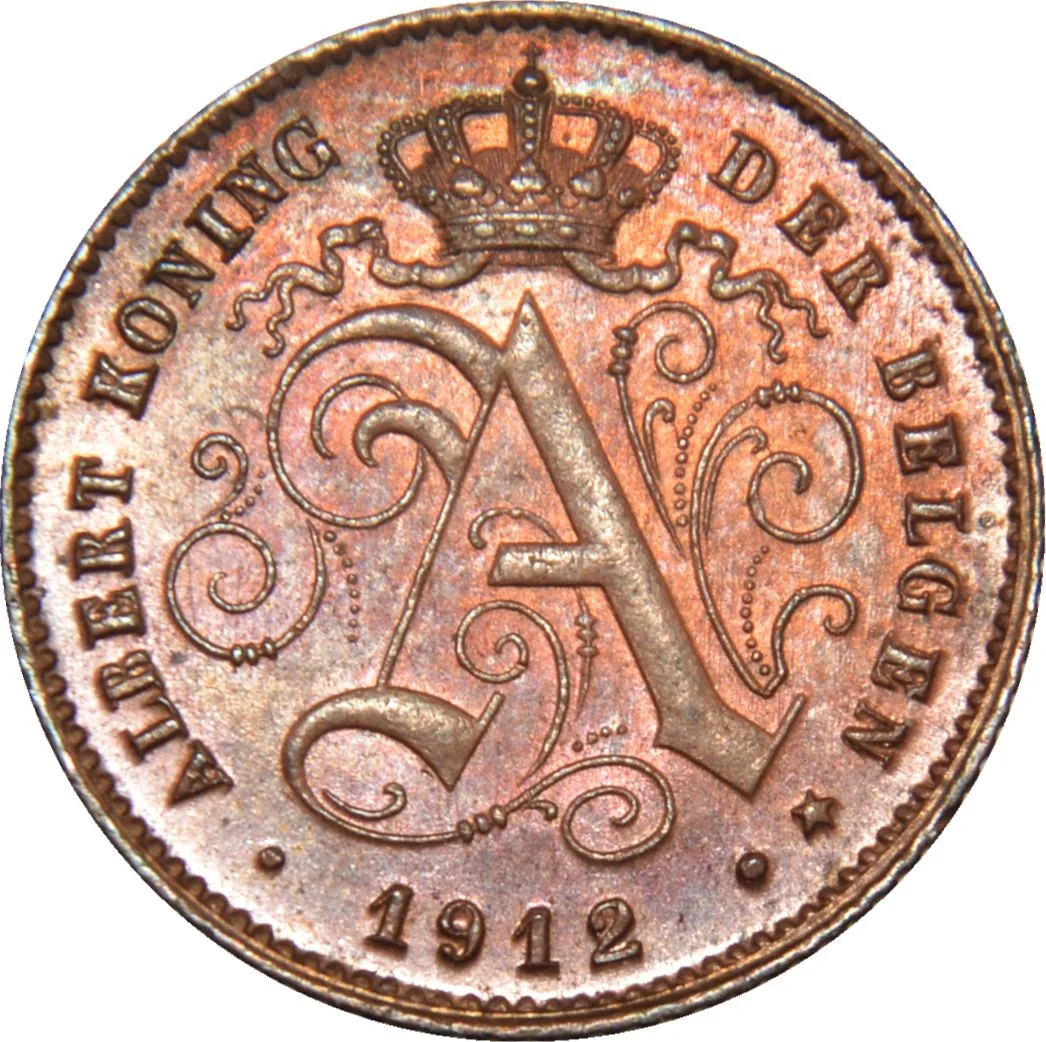
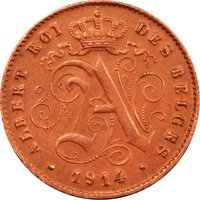
Obverse
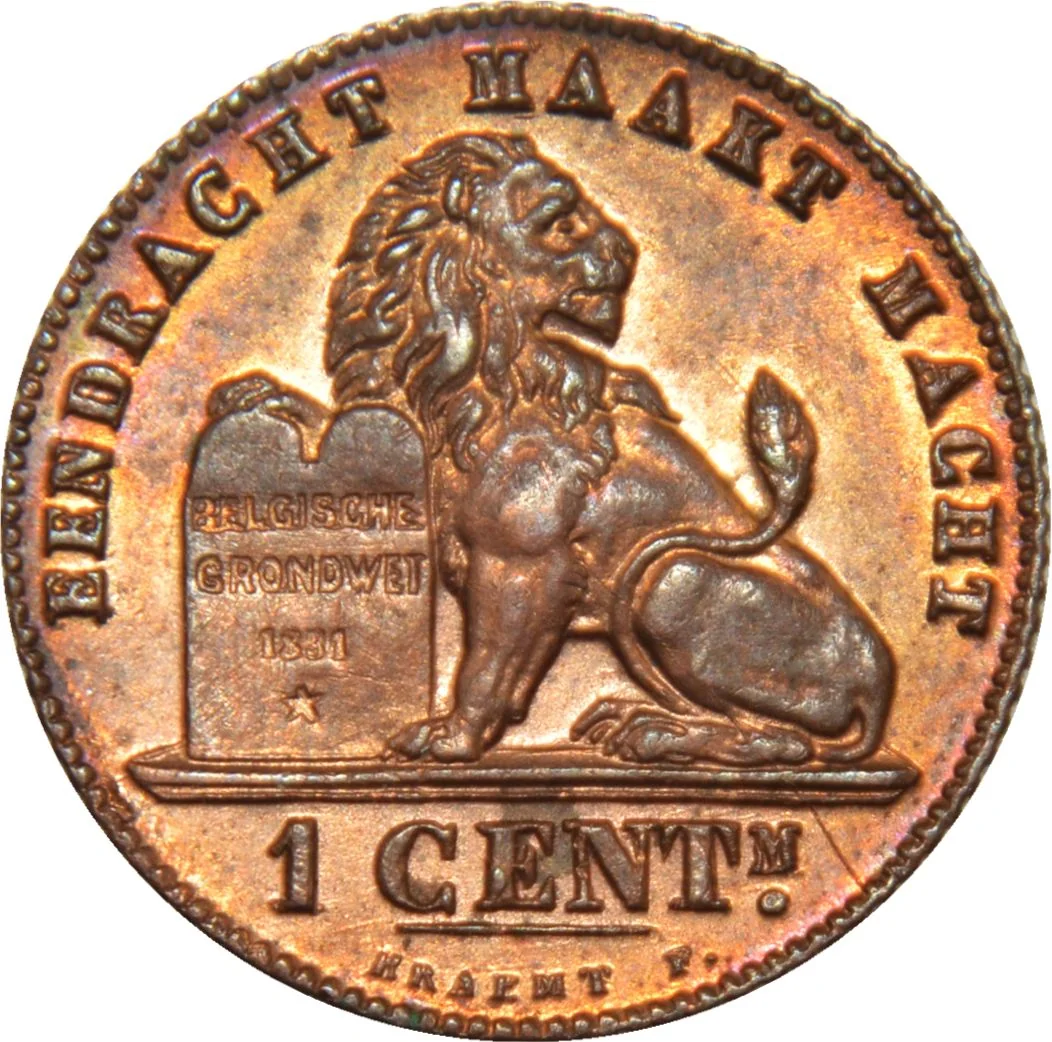
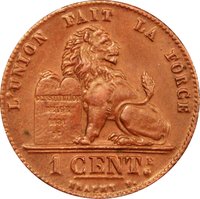
Reverse
Description:
Belgian lion with paw on 1831 Constitution, surrounded by French motto. Value and designer below.
Inscription:
EENDRACHT MAAKT MACHT
BELGISCH GRONDWET 1831
1 CENTm .
BRAEMT F.
BELGISCH GRONDWET 1831
1 CENTm .
BRAEMT F.
Translation:
UNITY MAKES STRENGTH
BELGIAN CONSTITUTION 1831
1 CENT
BRAEMT F.
BELGIAN CONSTITUTION 1831
1 CENT
BRAEMT F.
Script: Latin
Engraver: Joseph-Pierre Braemt
Edge
Reeded
Mints
| Name | Mark |
|---|---|
| Royal Mint of Belgium | — |
Mintings
| Year | Mint Mark | Mintage | Quality | Collection |
|---|---|---|---|---|
| 1912 | — | 2,542,156 |
Historical background
In 1912, Belgium's currency was firmly embedded within the Latin Monetary Union (LMU), a multinational agreement established in 1865 to standardize coinage. The Belgian franc was pegged to a bimetallic standard of gold and silver, aligning it with the currencies of France, Italy, Switzerland, and Greece. This system facilitated cross-border trade and financial stability within the bloc by ensuring the free circulation of each member's coins across national borders. Domestically, banknotes issued by the National Bank of Belgium were fully convertible into gold, underpinning confidence in the currency.
However, the LMU was under significant strain by this period. Fluctuating global silver prices and the unilateral minting of silver coins by some members had created imbalances, leading to a de facto shift towards a gold standard. Belgium, as a highly industrialized and trade-dependent nation, was particularly sensitive to these instabilities. While the system still functioned, it required ongoing diplomatic negotiations and temporary suspensions of certain rules to prevent its collapse, creating an underlying atmosphere of monetary fragility.
Economically, Belgium in 1912 was prosperous, with a strong industrial base and extensive colonial holdings in the Congo. This wealth supported the franc, but the nation's financial health was deeply intertwined with its European neighbours, especially France and Germany. The currency situation, therefore, reflected a delicate balance: domestic stability was maintained through gold convertibility and prudent banking, yet it remained vulnerable to the systemic weaknesses of the multinational LMU and the gathering geopolitical tensions on the continent that would soon erupt into World War I.
However, the LMU was under significant strain by this period. Fluctuating global silver prices and the unilateral minting of silver coins by some members had created imbalances, leading to a de facto shift towards a gold standard. Belgium, as a highly industrialized and trade-dependent nation, was particularly sensitive to these instabilities. While the system still functioned, it required ongoing diplomatic negotiations and temporary suspensions of certain rules to prevent its collapse, creating an underlying atmosphere of monetary fragility.
Economically, Belgium in 1912 was prosperous, with a strong industrial base and extensive colonial holdings in the Congo. This wealth supported the franc, but the nation's financial health was deeply intertwined with its European neighbours, especially France and Germany. The currency situation, therefore, reflected a delicate balance: domestic stability was maintained through gold convertibility and prudent banking, yet it remained vulnerable to the systemic weaknesses of the multinational LMU and the gathering geopolitical tensions on the continent that would soon erupt into World War I.
🌱 Common