

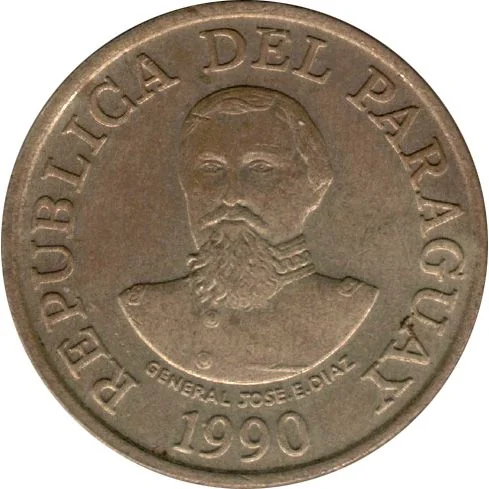
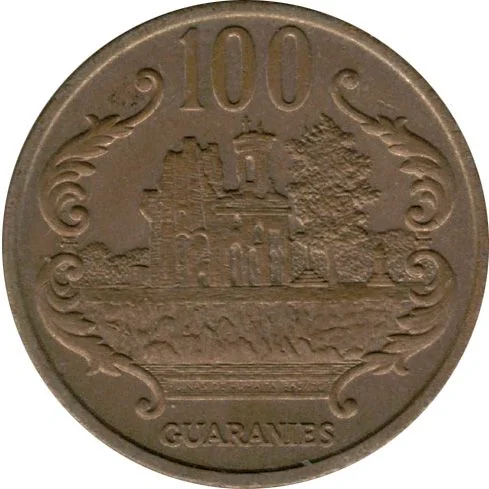
100 Guaraníes – Paraguay
Paraguay
Context
Year: 1990
Issuer: Paraguay 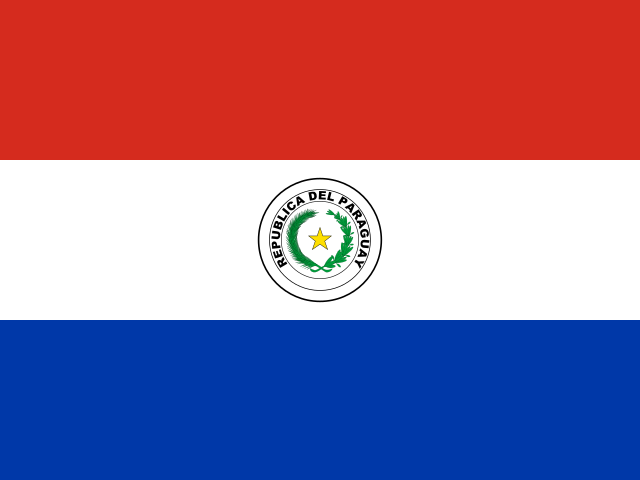
Issuing organization: Central Bank of Paraguay
Period:
(since 1811)
Currency:
(since 1944)
Demonetization: 17 January 2014
Total mintage: 35,000,000
Material
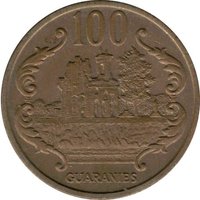
References
KM: #Click to copy to clipboard177
Numista: #4978
Value
Exchange value: 100 PYG
Obverse
Reverse
Edge
Reeded
Categories
| Building> Religious building |
| Person> Military leader |
| Geography> Town |
| Plant> Tree |
| History> War |
Mints
| Name | Mark |
|---|---|
| Royal Mint | — |
Mintings
| Year | Mint Mark | Mintage | Quality | Collection |
|---|---|---|---|---|
| 1990 | — | 35,000,000 |
Historical background
In 1990, Paraguay's currency situation was characterized by a prolonged period of monetary instability and a complex dual-exchange-rate system, a legacy of the 35-year Stroessner dictatorship that had ended just a year earlier. The official currency was the guaraní, but it existed within a framework where the Central Bank of Paraguay maintained a heavily overvalued official exchange rate for specific transactions, while a much more depreciated parallel (or "black") market rate handled the vast majority of actual currency trades. This disparity created significant distortions, encouraged corruption, and acted as a major barrier to legitimate foreign investment and trade.
The core economic background was one of high inflation, which had averaged over 30% annually throughout the late 1980s, eroding purchasing power. The government's reliance on money creation to finance persistent fiscal deficits was a primary driver of this inflation. Furthermore, the banking system was underdeveloped and burdened by non-performing loans, often directed to politically connected entities. The new government of President Andrés Rodríguez, which took power in 1989, inherited this dysfunctional system and recognized the urgent need for economic liberalization and stabilization as part of a broader transition to democracy.
Consequently, 1990 was a pivotal year of reform. The Rodríguez administration, advised by the International Monetary Fund, embarked on a significant adjustment program. Key measures included a massive devaluation of the official exchange rate to unify it with the parallel market, substantial cuts in public sector spending, and the beginning of efforts to privatize state-owned enterprises. These painful but necessary steps aimed to dismantle the distortive dual-rate system, curb inflation, and integrate Paraguay into the global economy, setting the stage for the more stable single-exchange-rate regime that would follow in the early 1990s.
The core economic background was one of high inflation, which had averaged over 30% annually throughout the late 1980s, eroding purchasing power. The government's reliance on money creation to finance persistent fiscal deficits was a primary driver of this inflation. Furthermore, the banking system was underdeveloped and burdened by non-performing loans, often directed to politically connected entities. The new government of President Andrés Rodríguez, which took power in 1989, inherited this dysfunctional system and recognized the urgent need for economic liberalization and stabilization as part of a broader transition to democracy.
Consequently, 1990 was a pivotal year of reform. The Rodríguez administration, advised by the International Monetary Fund, embarked on a significant adjustment program. Key measures included a massive devaluation of the official exchange rate to unify it with the parallel market, substantial cuts in public sector spending, and the beginning of efforts to privatize state-owned enterprises. These painful but necessary steps aimed to dismantle the distortive dual-rate system, curb inflation, and integrate Paraguay into the global economy, setting the stage for the more stable single-exchange-rate regime that would follow in the early 1990s.
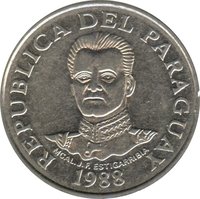
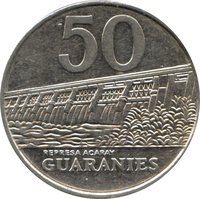
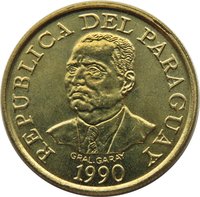
🌱 Very Common