

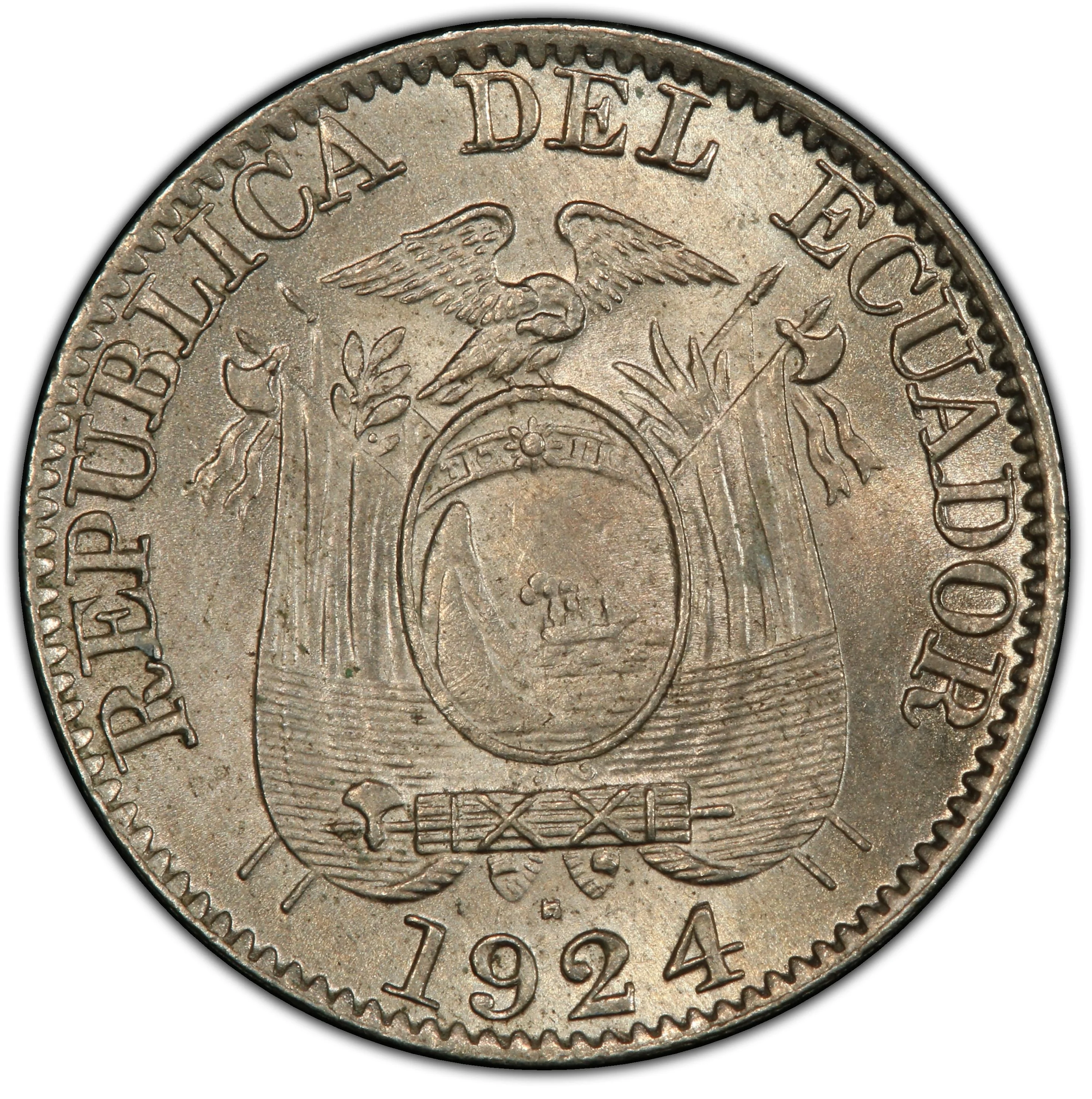
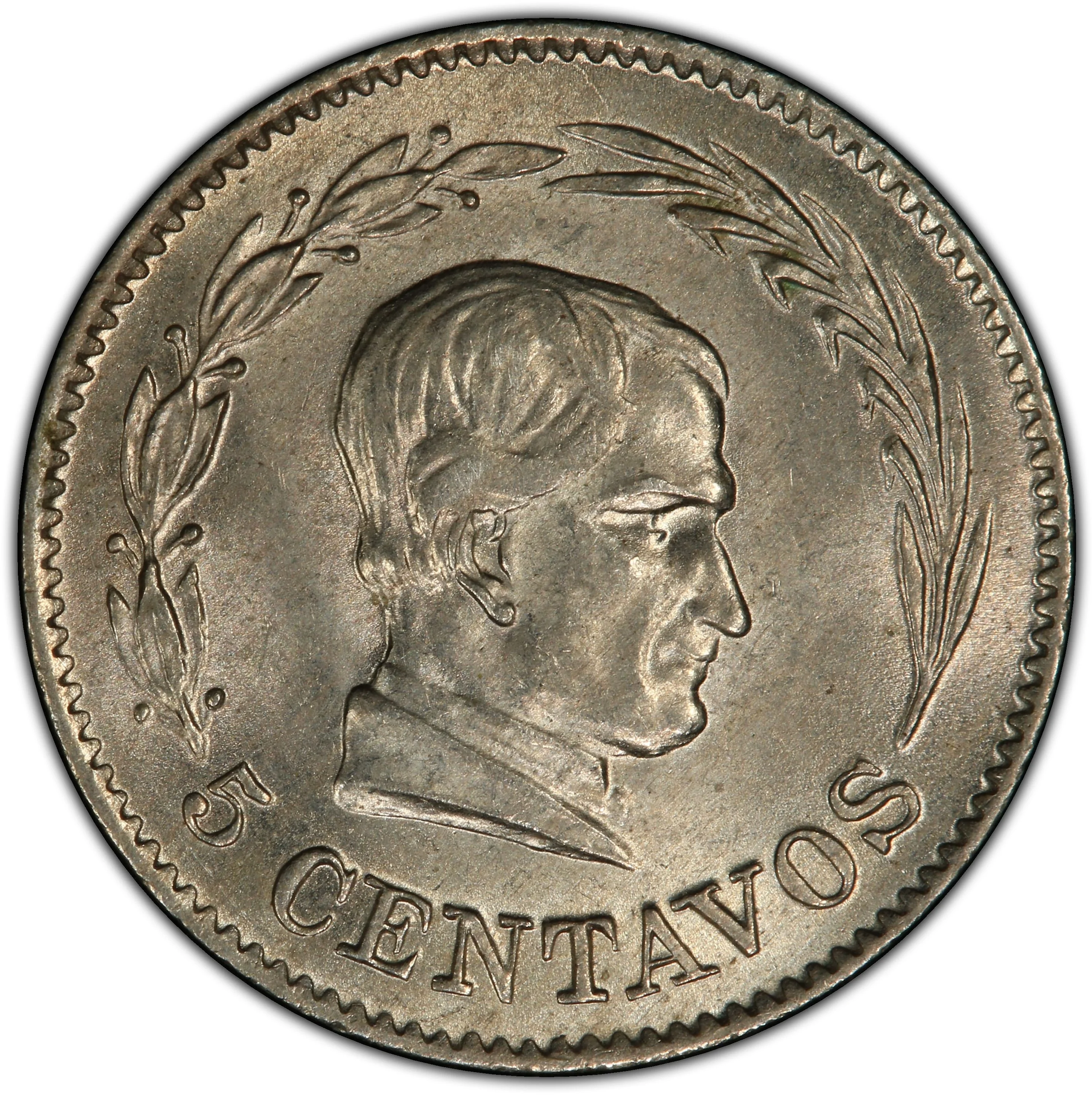
5 centavos – Ecuador
Add to wishlist
Ecuador
Context
Material
Diameter: 16.6 mm
Weight: 2 g
Thickness: 1.4 mm
Shape: Round
Composition: Copper-nickel
Technique: Milled
Alignment: Coin alignment
flip
References
KM: #
Numista: #4967
Value
Exchange value: 0.05 ECS
Obverse
Reverse
Description:
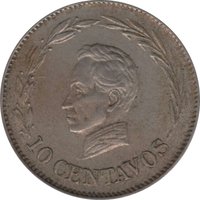
Portrait of Vicente Rocafuerte facing right, encircled by a wreath above with the denomination below.
Inscription:
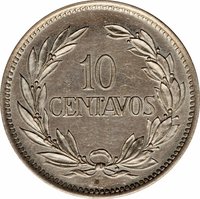
5 CENTAVOS
Script: Latin
Edge
Plain
Categories
| Symbol> Wreath |
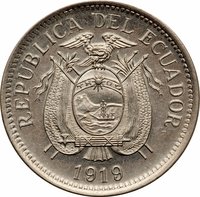
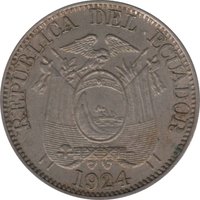
| Symbols> Coat of Arms |
| Person> Politician |
Mints
| Name | Mark |
|---|---|
| Heaton and Sons / The Mint Birmingham | H |
Mintings
| Year | Mint Mark | Mintage | Quality | Collection |
|---|---|---|---|---|
| 1924 | H | 10,000,000 |
Historical background
In 1924, Ecuador's currency situation was defined by the persistent instability of the sucre, which had been the national currency since 1884. The country operated on a silver standard, but the sucre's value was volatile due to chronic fiscal deficits, a reliance on agricultural exports (primarily cacao), and excessive printing of paper money to finance government debts. This period followed a severe economic crisis triggered by the collapse of the cacao boom during World War I, which devastated export revenues and depleted foreign currency reserves, leaving the monetary system fragile and vulnerable to speculation.
The immediate consequence was a significant divergence between the face value of coins and their intrinsic metal value. By 1924, the silver content in sucre coins was often worth more in international markets than their nominal value within Ecuador. This led to the widespread hoarding and melting down of silver coins for profit, followed by their exportation. As a result, high-value silver coins largely disappeared from circulation, causing a severe shortage of physical currency for everyday transactions and hampering commerce.
Facing this drain, the government and private banks resorted to issuing low-denomination paper money and token coins made of cheaper metals to facilitate daily business. However, these measures were stopgaps that did not address the core issues of fiscal mismanagement and export dependency. The currency instability of 1924 thus set the stage for further monetary experiments in the late 1920s, including attempts to adopt a gold exchange standard, and foreshadowed the deeper economic and political turmoil that would culminate in a major financial collapse and default in the early 1930s.
The immediate consequence was a significant divergence between the face value of coins and their intrinsic metal value. By 1924, the silver content in sucre coins was often worth more in international markets than their nominal value within Ecuador. This led to the widespread hoarding and melting down of silver coins for profit, followed by their exportation. As a result, high-value silver coins largely disappeared from circulation, causing a severe shortage of physical currency for everyday transactions and hampering commerce.
Facing this drain, the government and private banks resorted to issuing low-denomination paper money and token coins made of cheaper metals to facilitate daily business. However, these measures were stopgaps that did not address the core issues of fiscal mismanagement and export dependency. The currency instability of 1924 thus set the stage for further monetary experiments in the late 1920s, including attempts to adopt a gold exchange standard, and foreshadowed the deeper economic and political turmoil that would culminate in a major financial collapse and default in the early 1930s.
🌱 Fairly Common