

1 peso – Philippines
Add to wishlist
Philippines
Context
Years: 2023–2025
Issuer: Philippines
Issuing organization: Central Bank of the Philippines
Period:
(since 1946)
Currency:
(since 1967)
Material
References
Numista: #496418
Value
Exchange value: 1 PHP
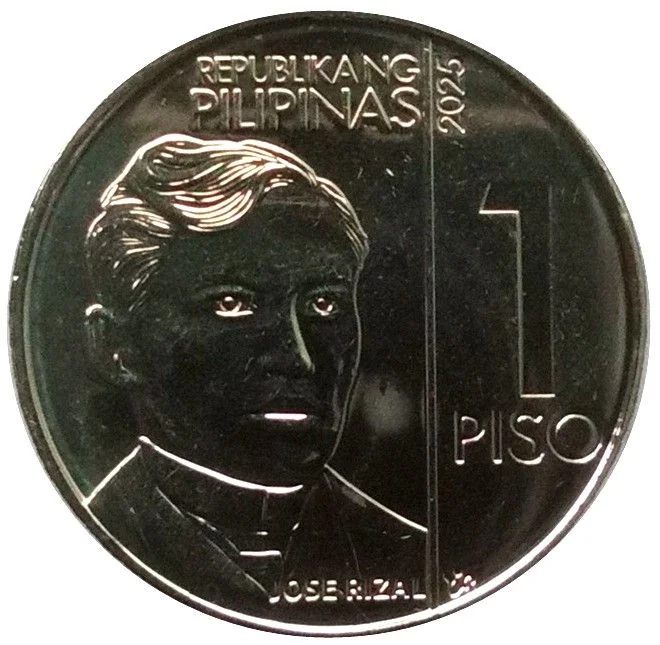
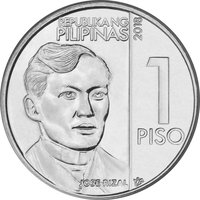
Obverse
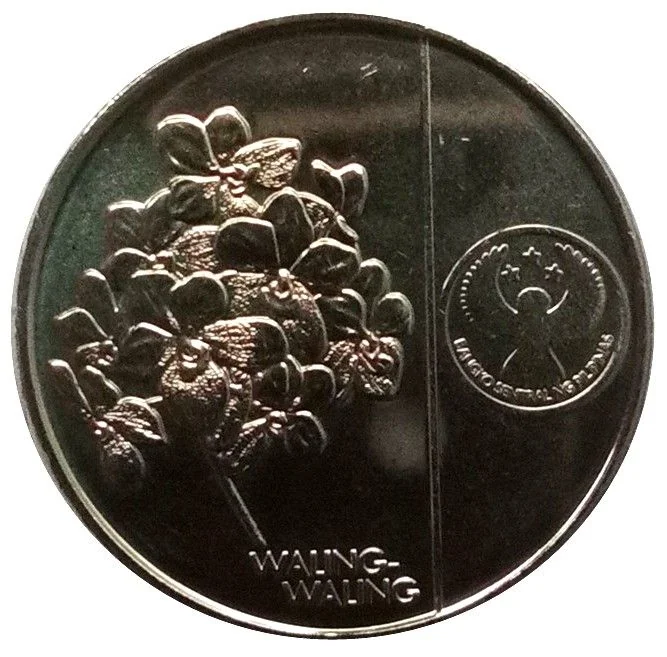
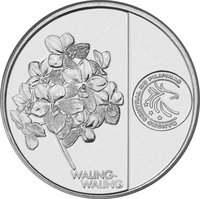
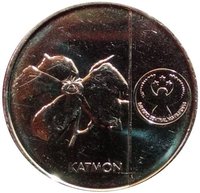
Reverse
Edge
Segmented, 4 plain and 4 reeded parts, each with 13/14 reeds.
Categories
| Art> Literature |
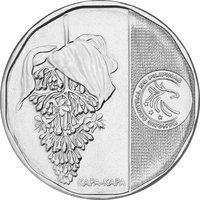
| Plants> Flower |
Mints
| Name | Mark |
|---|---|
| BSP Security Plant Complex | (PI) |
Mintings
| Year | Mint Mark | Mintage | Quality | Collection |
|---|---|---|---|---|
| 2023 | PI | — | ||
| 2025 | PI | — |
Historical background
The Philippine peso faced significant pressure throughout 2023, emerging as one of the worst-performing currencies in Asia for the year. Its primary driver was a pronounced interest rate differential with the United States. As the US Federal Reserve aggressively raised rates to combat inflation, the Bangko Sentral ng Pilipinas (BSP) pursued a more cautious tightening path. This gap made dollar-denominated assets more attractive, leading to capital outflows and weakening the peso, which breached the psychological ₱57-to-the-dollar mark and averaged near ₱56 for the year.
Domestically, the currency's weakness was compounded by the country's widening trade deficit. The Philippines' need to import essential goods—particularly energy and food—remained high, while export growth was muted. This structural imbalance increased demand for US dollars to pay for imports, further pressuring the peso. While overseas Filipino worker (OFW) remittances and business process outsourcing (BPO) revenues provided a crucial buffer for the balance of payments, they were insufficient to fully offset the outflow from the trade gap and investment shifts.
In response, the BSP maintained a hawkish stance, implementing off-cycle rate hikes and signaling its commitment to currency stability and inflation management. The central bank also intervened directly in the foreign exchange market to smooth volatility. By year-end, the peso had stabilized but remained vulnerable, with its trajectory heavily tied to the US Fed's future policy moves and the global economic climate. The situation underscored the ongoing challenge of managing inflation, supporting growth, and maintaining external stability in an uncertain global financial environment.
Domestically, the currency's weakness was compounded by the country's widening trade deficit. The Philippines' need to import essential goods—particularly energy and food—remained high, while export growth was muted. This structural imbalance increased demand for US dollars to pay for imports, further pressuring the peso. While overseas Filipino worker (OFW) remittances and business process outsourcing (BPO) revenues provided a crucial buffer for the balance of payments, they were insufficient to fully offset the outflow from the trade gap and investment shifts.
In response, the BSP maintained a hawkish stance, implementing off-cycle rate hikes and signaling its commitment to currency stability and inflation management. The central bank also intervened directly in the foreign exchange market to smooth volatility. By year-end, the peso had stabilized but remained vulnerable, with its trajectory heavily tied to the US Fed's future policy moves and the global economic climate. The situation underscored the ongoing challenge of managing inflation, supporting growth, and maintaining external stability in an uncertain global financial environment.
Series: New Generation Currency Series



✨ Legendary