

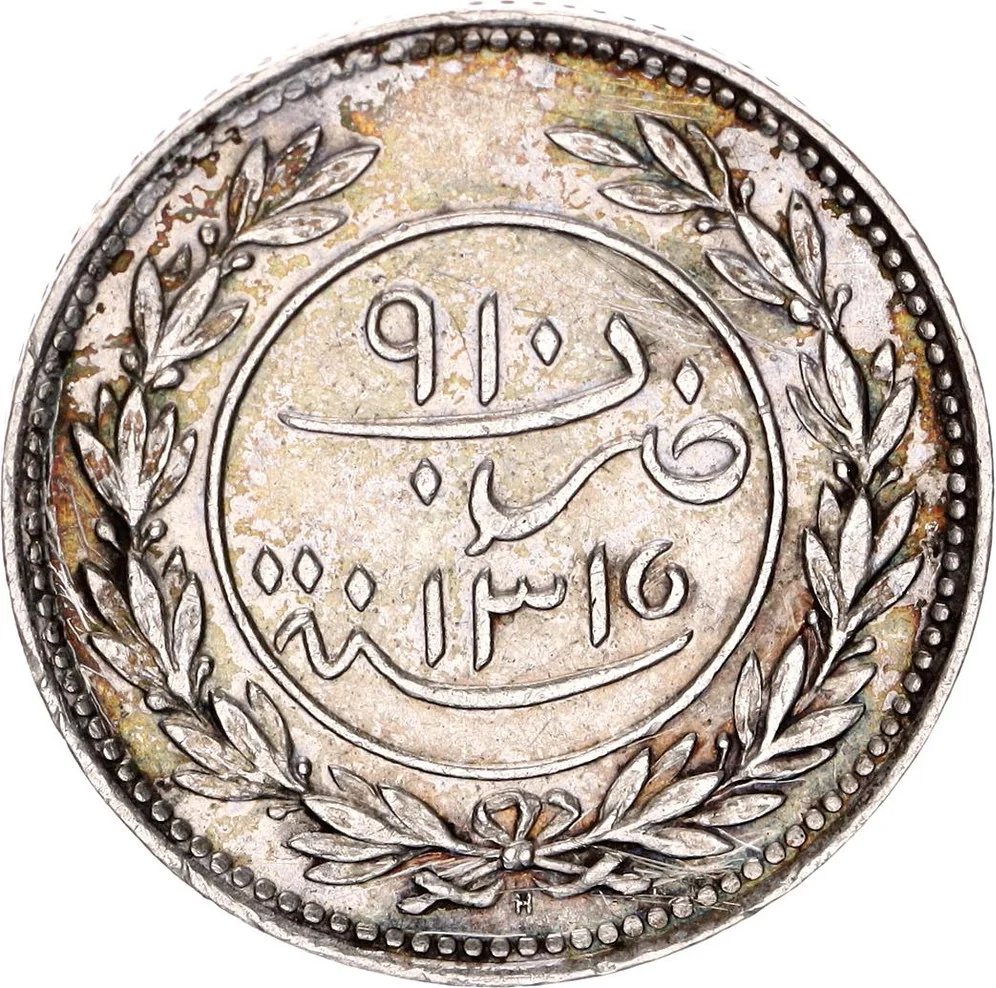
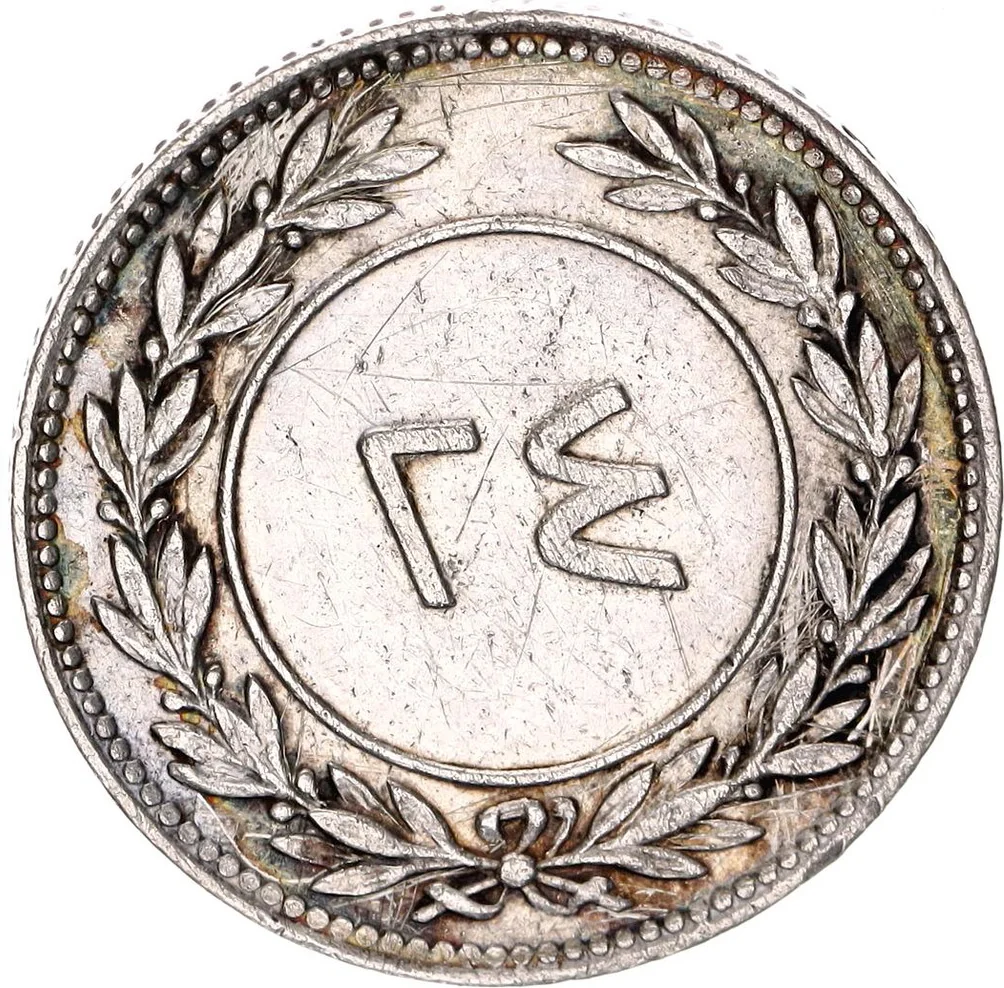
24 Khumsiyyah – Kathiri Sultanate
Yemen
Context
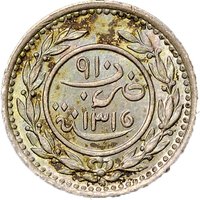
Year: 1898
Islamic (Hijri) Year: 1315
Country: Yemen 
Issuer: Kathiri Sultanate
Currency:
Demonetized: Yes
Total mintage: 83,000
Material
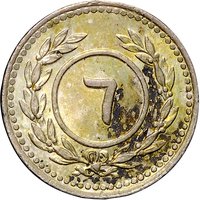
Diameter: 21 mm
Weight: 3.15 g
Silver weight: 2.87 g
Thickness: 1.9 mm
Shape: Round
Composition: 91% Silver
Standard: Gold tenth ounce
Magnetic: No
Technique: Milled
Alignment: Medal alignment
flip
References
KM: #Click to copy to clipboard217
Numista: #49611
Value
Bullion value: $8.30
Edge
Mints
| Name | Mark |
|---|---|
| Heaton and Sons / The Mint Birmingham | — |
Mintings
| Year | Mint Mark | Mintage | Quality | Collection |
|---|---|---|---|---|
| 1898 | — | 83,000 | ||
| 1898 | — | — | Proof |
Historical background
In 1898, the Kathiri Sultanate of Seiyun, a polity within the Hadhramaut region of southern Arabia, operated within a complex and fragmented monetary environment. As a British-protected state lacking its own mint, the Sultanate did not issue a unified national currency. Instead, its economy functioned on a system of concurrent circulation, where various foreign and historic coins were valued by their metallic content and accepted through commercial custom. The most important unit of account was the silver Maria Theresa thaler (MT$) , a large, trusted trade coin minted in Europe but ubiquitous throughout the Red Sea and Indian Ocean basins. It served as the benchmark for larger transactions and state finances.
Alongside the thaler, a plethora of other coins circulated daily. These included older Ottoman and Yemeni silver coins, such as the riyal , and especially British Indian silver rupees, which gained increasing influence due to Hadhrami trade links with India and the broader British imperial economic sphere. Small change was provided by copper coins, like the fils from the Ottoman Empire or local pice. The critical feature was that all these coins traded not at a fixed, government-mandated rate but at fluctuating market valuations based on their weight and fineness of silver, often leading to complexity and occasional dispute in commerce.
This multi-currency system reflected Kathiri’s position at a crossroads of trade routes and spheres of influence. While politically tied to Britain through protectorate agreements signed in the late 19th century, its economic and cultural connections stretched across the Indian Ocean to Southeast Asia, from where remittances flowed back to the Hadhramaut. The lack of a central currency authority meant that money changers (sarrafs) held significant practical power in the economy. Thus, in 1898, Kathiri’s currency situation was one of pragmatic hybridity, underpinned by the Maria Theresa thaler but inherently tied to the ebb and flow of regional trade and foreign coinage.
Alongside the thaler, a plethora of other coins circulated daily. These included older Ottoman and Yemeni silver coins, such as the riyal , and especially British Indian silver rupees, which gained increasing influence due to Hadhrami trade links with India and the broader British imperial economic sphere. Small change was provided by copper coins, like the fils from the Ottoman Empire or local pice. The critical feature was that all these coins traded not at a fixed, government-mandated rate but at fluctuating market valuations based on their weight and fineness of silver, often leading to complexity and occasional dispute in commerce.
This multi-currency system reflected Kathiri’s position at a crossroads of trade routes and spheres of influence. While politically tied to Britain through protectorate agreements signed in the late 19th century, its economic and cultural connections stretched across the Indian Ocean to Southeast Asia, from where remittances flowed back to the Hadhramaut. The lack of a central currency authority meant that money changers (sarrafs) held significant practical power in the economy. Thus, in 1898, Kathiri’s currency situation was one of pragmatic hybridity, underpinned by the Maria Theresa thaler but inherently tied to the ebb and flow of regional trade and foreign coinage.
💎 Very Rare