

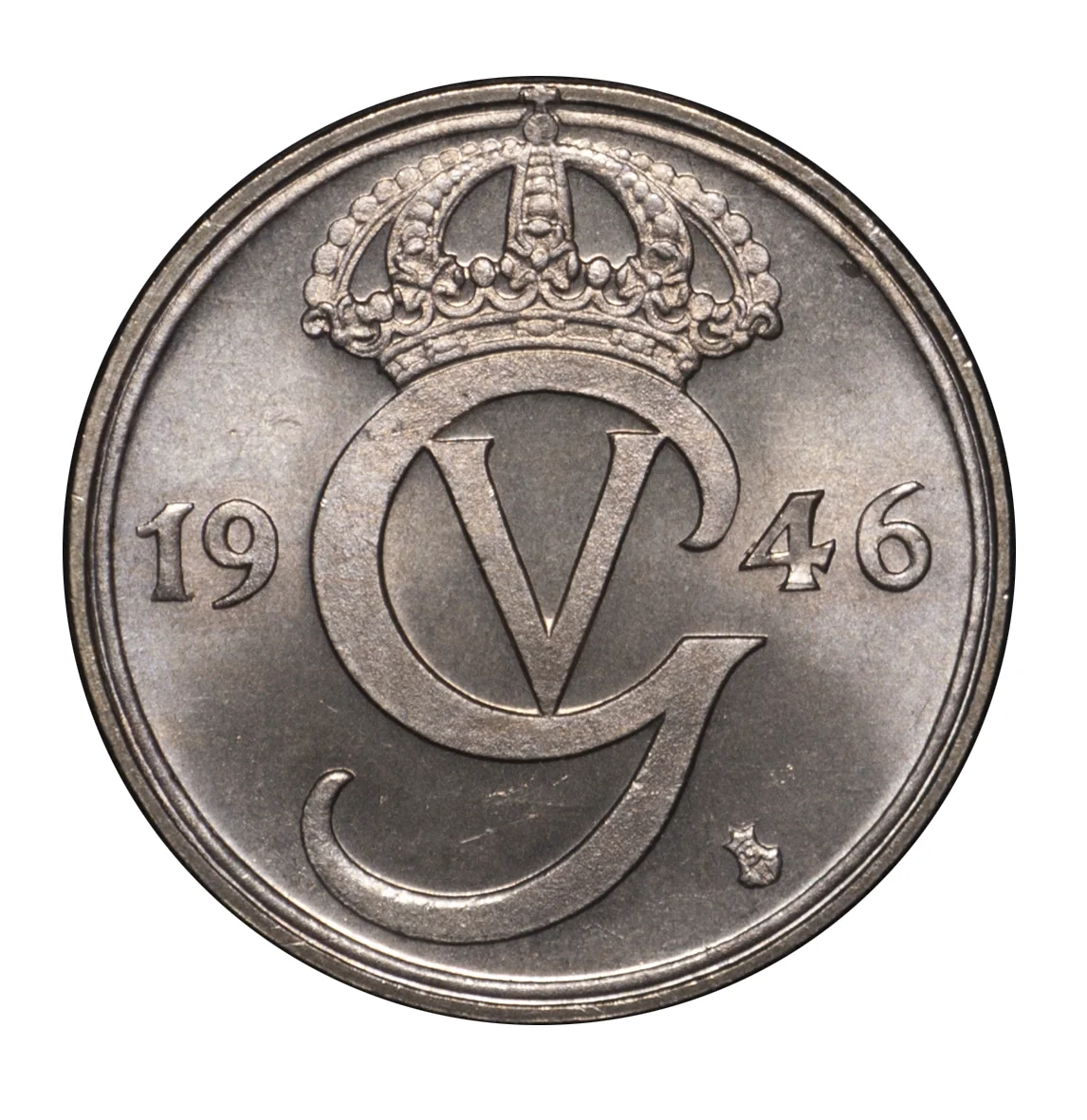
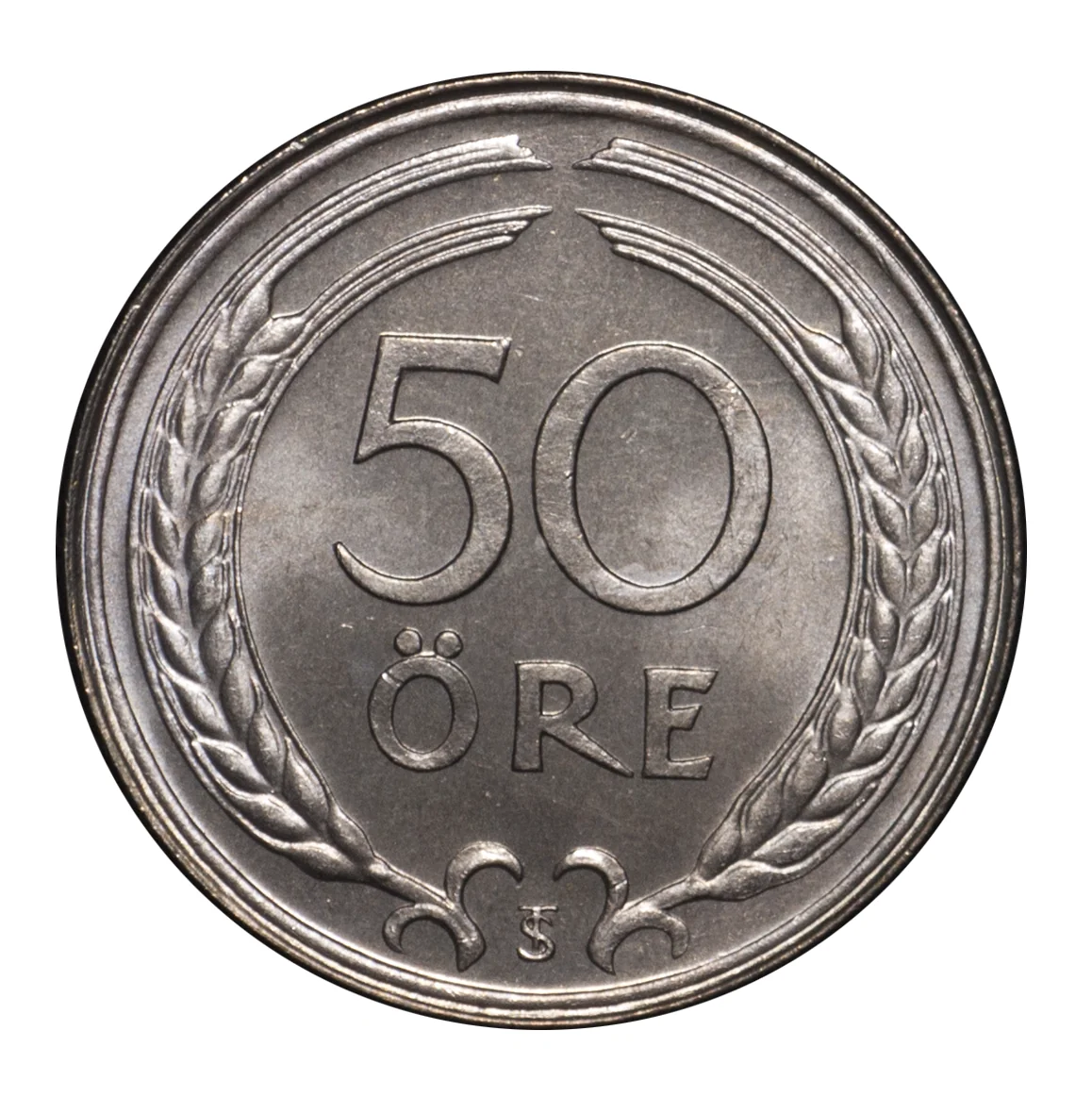
50 öre – Sweden
Add to wishlist
Sweden
Context
Material
Diameter: 22 mm
Weight: 4.8 g
Thickness: 1.55 mm
Shape: Round
Composition: Nickel brass
Magnetic: No
Technique: Milled
Alignment: Medal alignment
flip
References
KM: #
Numista: #1509
Value
Exchange value: 0.50 SEK
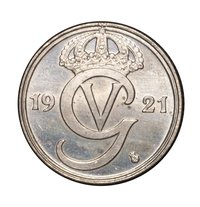
Obverse
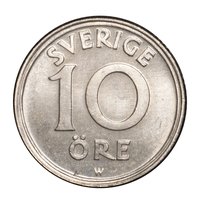
Reverse
Edge
Reeded
Mints
| Name | Mark |
|---|---|
| Kungliga Myntet | — |
Mintings
| Year | Mint Mark | Mintage | Quality | Collection |
|---|---|---|---|---|
| 1920 | — | 479,500 | ||
| 1921 | — | 214,922 | ||
| 1924 | — | 645,368 | ||
| 1940 | — | — | ||
| 1946 | — | 1,425,990 | ||
| 1947 | — | 1,031,800 |
Historical background
In the aftermath of the First World War, Sweden, like much of Europe, faced significant economic turbulence. Although the country had remained neutral and its industrial base was intact, it was deeply affected by the global post-war boom and bust. A sharp international recession in 1920-21 led to collapsing export demand, falling prices, and rising unemployment. This deflationary shock placed severe strain on the Swedish economy and its monetary system.
The core of the currency situation was Sweden's commitment to the gold standard, which it had suspended during the war. There was intense political and economic debate about if and when to return to gold at the pre-war parity. Deflation made this goal particularly painful, as it required pushing prices and wages down further to restore the krona's pre-war gold value. This internal adjustment caused widespread social hardship and industrial conflict, as businesses failed and real debt burdens increased.
Ultimately, the Riksbank maintained a restrictive monetary policy to defend the krona's value and pave the way for the return to gold, which was finally achieved in 1924. The period 1920-1922 is therefore remembered as a time of deliberate deflationary pressure, where the priority of currency stability and international credibility was pursued at a high short-term cost to the domestic economy, setting the stage for the relatively stable, yet later challenged, gold standard era of the mid-1920s.
The core of the currency situation was Sweden's commitment to the gold standard, which it had suspended during the war. There was intense political and economic debate about if and when to return to gold at the pre-war parity. Deflation made this goal particularly painful, as it required pushing prices and wages down further to restore the krona's pre-war gold value. This internal adjustment caused widespread social hardship and industrial conflict, as businesses failed and real debt burdens increased.
Ultimately, the Riksbank maintained a restrictive monetary policy to defend the krona's value and pave the way for the return to gold, which was finally achieved in 1924. The period 1920-1922 is therefore remembered as a time of deliberate deflationary pressure, where the priority of currency stability and international credibility was pursued at a high short-term cost to the domestic economy, setting the stage for the relatively stable, yet later challenged, gold standard era of the mid-1920s.
🌱 Very Common