


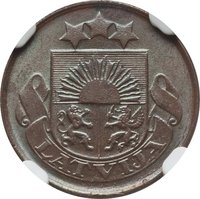
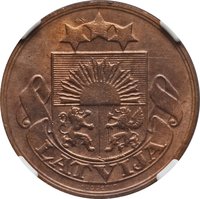
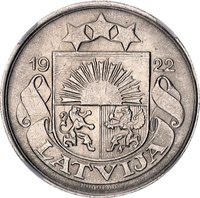
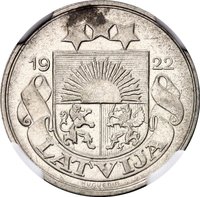
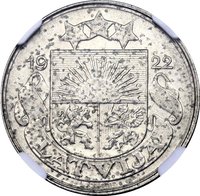
Obverse
Description:
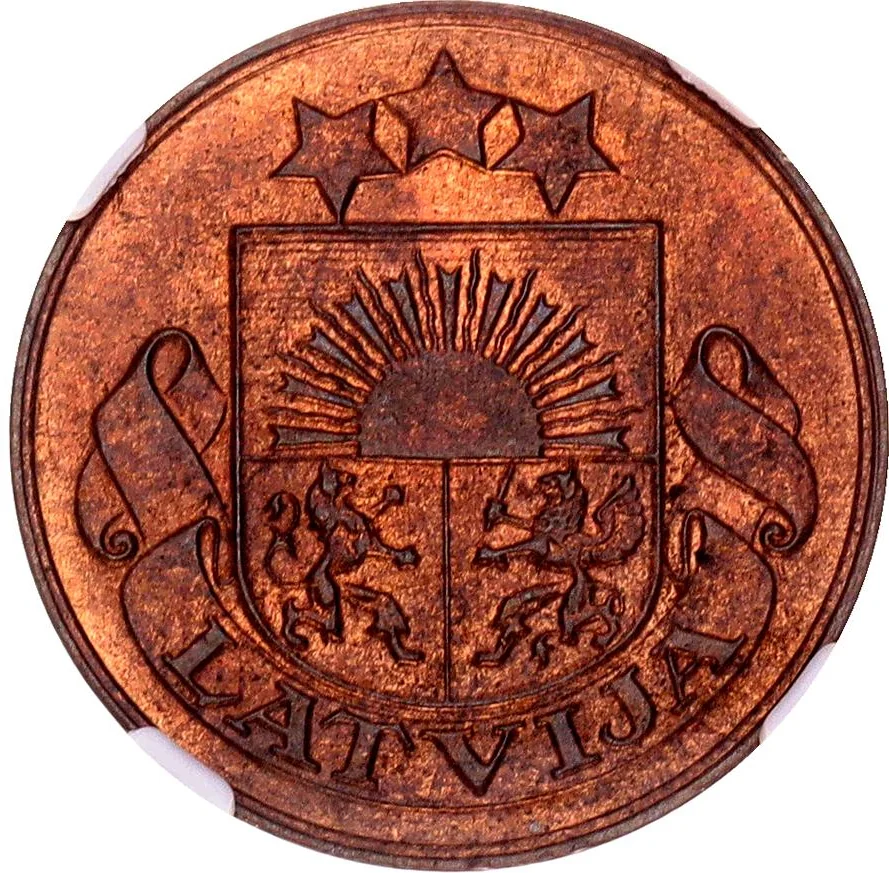
National arms atop ribbon.
Inscription:
LATVIJA
HUGUENIN
HUGUENIN
Translation:
LATVIA
HUGUENIN
HUGUENIN
Script: Latin
Engraver: Rihards Zariņš
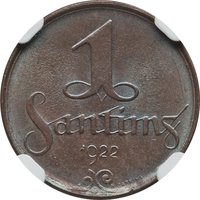
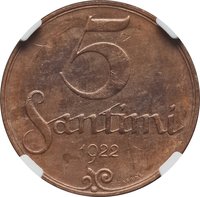
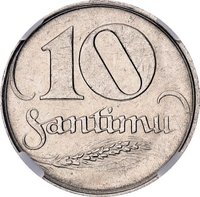
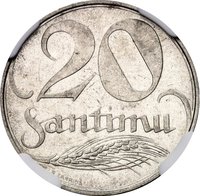
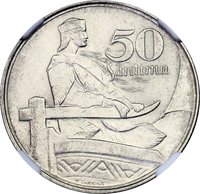
Reverse
Description:
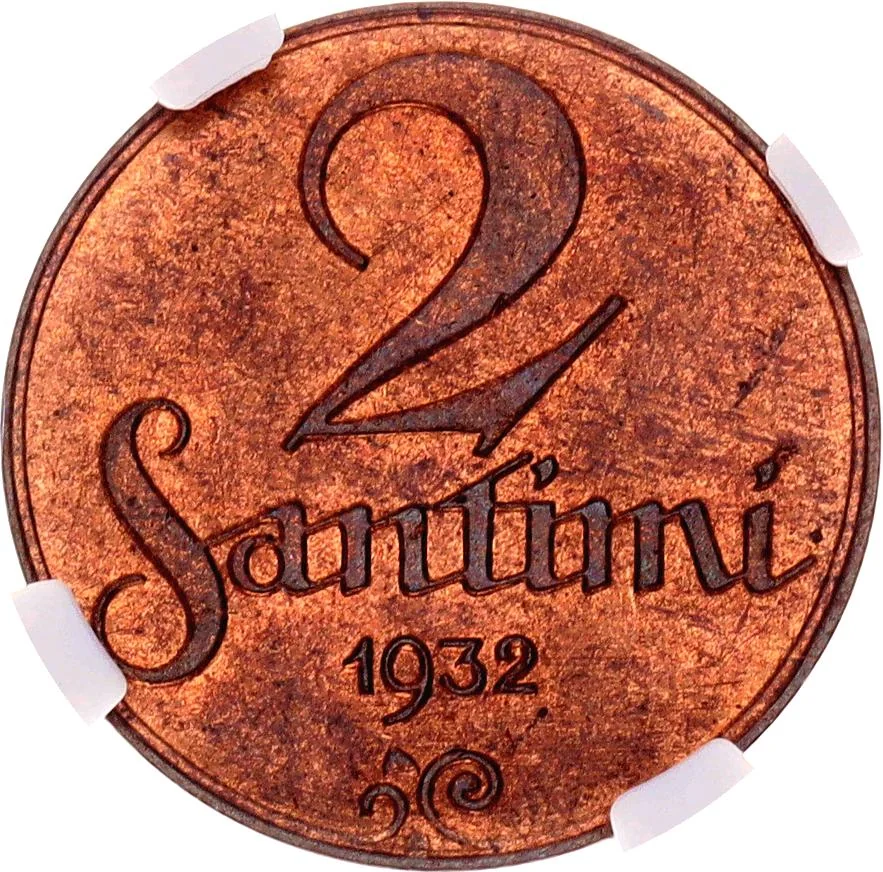
Value, date
Inscription:
2
Santimi
1922
R. ZARRIŅŠ
Santimi
1922
R. ZARRIŅŠ
Translation:
Two Santims
1922
R. ZARRIŅŠ
1922
R. ZARRIŅŠ
Script: Latin
Language: Latvian
Engraver: Rihards Zariņš
Edge
Plain
Categories
| Symbols> Coat of Arms |
Mints
| Name | Mark |
|---|---|
| Heaton and Sons / The Mint Birmingham | — |
| Royal Mint (Tower Hill) | — |
| Huguenin | Hug. |
Mintings
Historical background
In 1922, Latvia was in the midst of a profound monetary crisis, a direct legacy of the First World War and its subsequent wars of independence. The territory had been flooded with various currencies, including Imperial Russian rubles, German Ost rubles, and even local promissory notes issued by towns and institutions. This chaotic mix, coupled with rampant inflation and a severe lack of small change, crippled everyday commerce and hindered the fledgling state's economic recovery. The situation was dire, with no stable national currency to underpin sovereignty or facilitate reconstruction.
Recognizing that monetary stability was a prerequisite for national survival, the Latvian government took decisive action. On March 22, 1922, the Constitutional Assembly passed the Law on the Monetary Unit, which established the Latvian lats (LVL) as the national currency, backed by gold. The initial exchange rate was set at 50 lats to one British gold pound. To manage the transition, the government created the Bank of Latvia (Latvijas Banka) in September of that year, granting it the sole right of issue. The primary task was to replace the worthless rubble of old currencies with a trusted, stable monetary unit.
The introduction of the lats was not an immediate, nationwide event in 1922, but rather the crucial legal and institutional foundation for stabilization. The actual banknotes and coins would begin circulating in the following years, with the first lats notes issued in 1923. Therefore, 1922 represents the pivotal turning point—the year Latvia committed to a disciplined, independent monetary policy. This bold move successfully halted hyperinflation, restored public confidence, and provided the essential financial framework for the "Golden Thirties," a period of remarkable economic growth and cultural flourishing in the interwar Republic of Latvia.
Recognizing that monetary stability was a prerequisite for national survival, the Latvian government took decisive action. On March 22, 1922, the Constitutional Assembly passed the Law on the Monetary Unit, which established the Latvian lats (LVL) as the national currency, backed by gold. The initial exchange rate was set at 50 lats to one British gold pound. To manage the transition, the government created the Bank of Latvia (Latvijas Banka) in September of that year, granting it the sole right of issue. The primary task was to replace the worthless rubble of old currencies with a trusted, stable monetary unit.
The introduction of the lats was not an immediate, nationwide event in 1922, but rather the crucial legal and institutional foundation for stabilization. The actual banknotes and coins would begin circulating in the following years, with the first lats notes issued in 1923. Therefore, 1922 represents the pivotal turning point—the year Latvia committed to a disciplined, independent monetary policy. This bold move successfully halted hyperinflation, restored public confidence, and provided the essential financial framework for the "Golden Thirties," a period of remarkable economic growth and cultural flourishing in the interwar Republic of Latvia.
Series: 1922 Latvia circulation coins
🌱 Very Common