

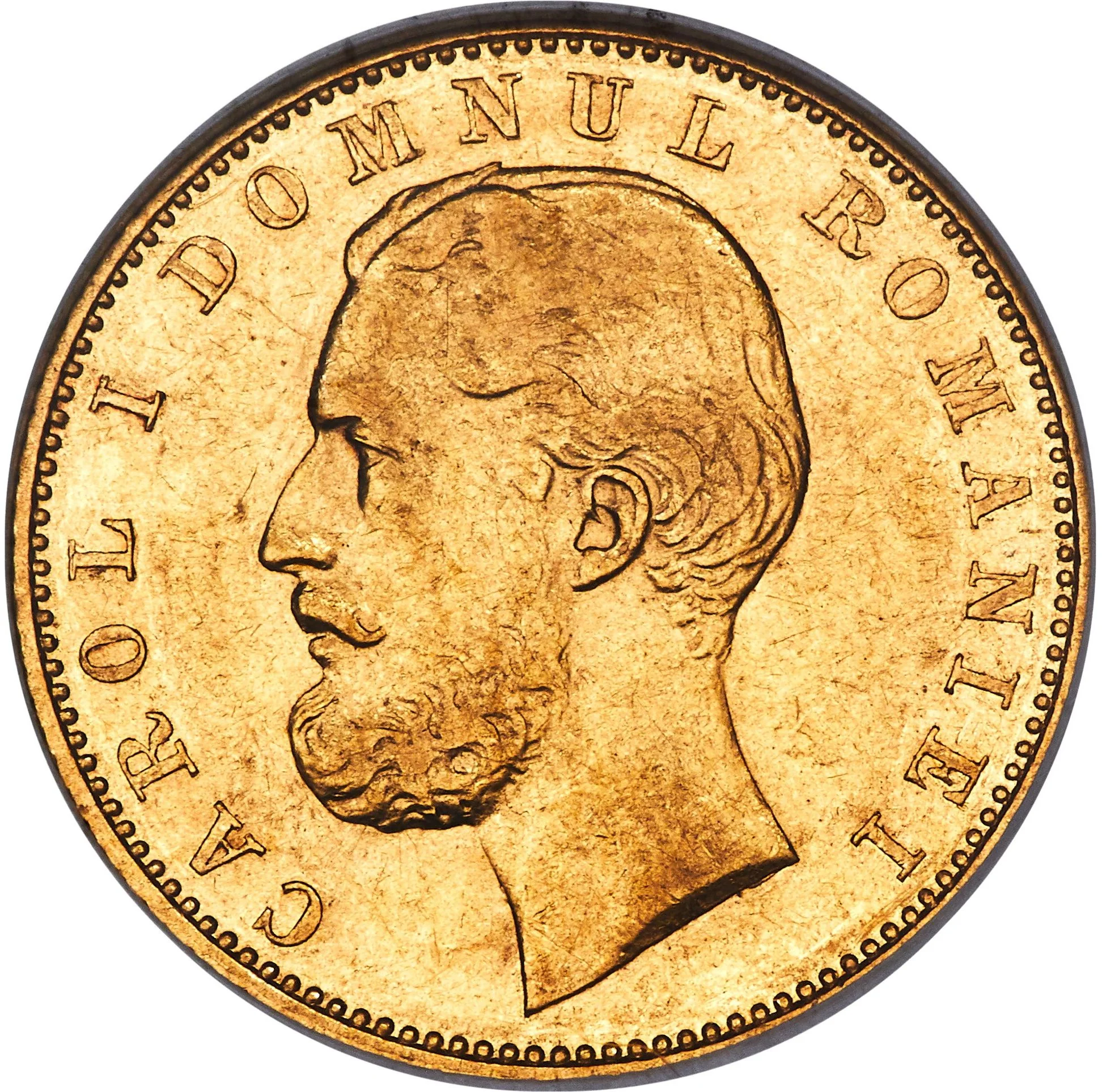
Obverse
Description:
Turn left.
Inscription:
CAROL I DOMNUL ROMANIEI
Translation:
Carol I, Lord of Romania
Script: Latin
Language: Romanian
Engraver: C.J. Cândescu
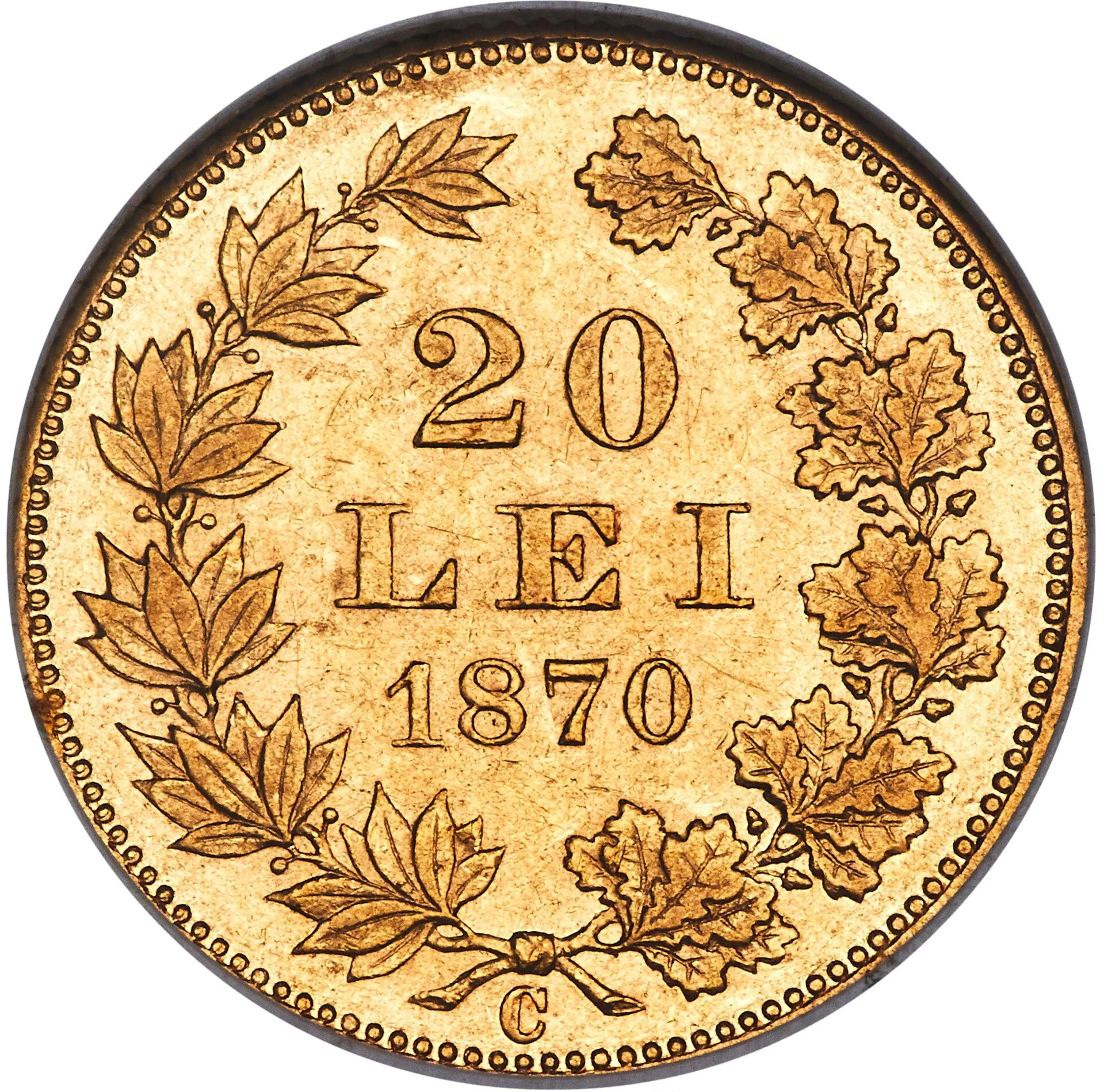
Reverse
Edge
Reeded
Mints
| Name | Mark |
|---|---|
| State Mint | C |
Mintings
| Year | Mint Mark | Mintage | Quality | Collection |
|---|---|---|---|---|
| 1870 | C | 5,000 |
Historical background
In 1870, Romania existed as the United Principalities of Moldavia and Wallachia, operating under a complex and unstable monetary system. The state lacked a unified national currency, leading to a chaotic circulation of diverse foreign coins. The most prominent was the Ottoman piastre (or kuruș), a legacy of the region's former suzerainty under the Ottoman Empire, but Austrian florins, Russian rubles, and French francs also circulated widely for commerce and state finance. This multiplicity of currencies created significant challenges for trade, taxation, and economic planning, as their values fluctuated against one another.
The desire for economic independence and modernization drove the Romanian leadership to pursue a national currency. Following the model of the Latin Monetary Union, the Romanian leu (meaning "lion") was officially established by the Law for the Minting of National Silver Coinage in 1867. However, the process of implementation was slow. By 1870, the first national coins (silver 5-lei, 2-lei, 1-leu, and 50-bani denominations) had only recently entered circulation, beginning in 1868. They faced public skepticism and competed directly with the more trusted and entrenched foreign coins, particularly the Austrian florin.
Consequently, 1870 represents a critical transitional year. The country was caught between an outdated, heterogeneous system and the nascent stages of its modern monetary sovereignty. The government struggled to enforce the leu's exclusive use and guarantee its value, as the banking system was underdeveloped and specie (precious metal) reserves were limited. This period of overlap and uncertainty highlighted the profound difficulties of building a stable financial foundation for the newly autonomous state, a process that would require several more decades to fully accomplish.
The desire for economic independence and modernization drove the Romanian leadership to pursue a national currency. Following the model of the Latin Monetary Union, the Romanian leu (meaning "lion") was officially established by the Law for the Minting of National Silver Coinage in 1867. However, the process of implementation was slow. By 1870, the first national coins (silver 5-lei, 2-lei, 1-leu, and 50-bani denominations) had only recently entered circulation, beginning in 1868. They faced public skepticism and competed directly with the more trusted and entrenched foreign coins, particularly the Austrian florin.
Consequently, 1870 represents a critical transitional year. The country was caught between an outdated, heterogeneous system and the nascent stages of its modern monetary sovereignty. The government struggled to enforce the leu's exclusive use and guarantee its value, as the banking system was underdeveloped and specie (precious metal) reserves were limited. This period of overlap and uncertainty highlighted the profound difficulties of building a stable financial foundation for the newly autonomous state, a process that would require several more decades to fully accomplish.
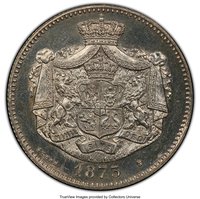
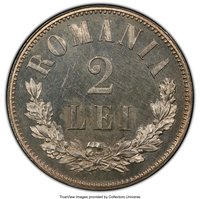
💎 Extremely Rare