


Obverse
Description:
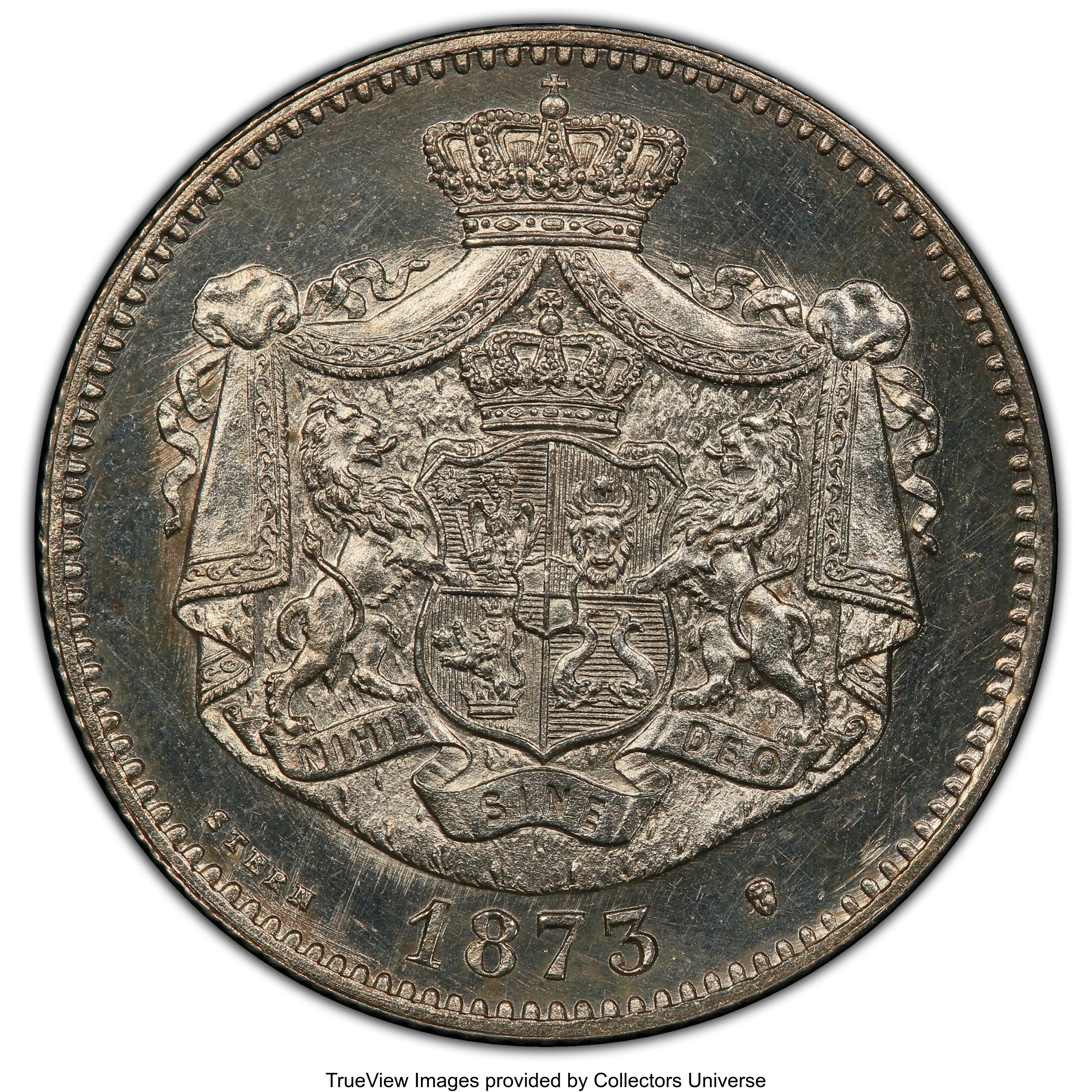
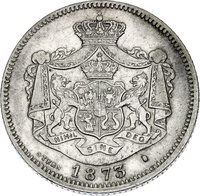
Romania's arms and date.
Inscription:
NIHIL SINE DEO
1873
STERN
1873
STERN
Translation:
Nothing without God
1873
Stern
1873
Stern
Script: Latin
Language: Latin
Engraver: Stern
Designer: José Allard
Reverse
Edge
Reeded
Categories
| Symbols> Coat of Arms |
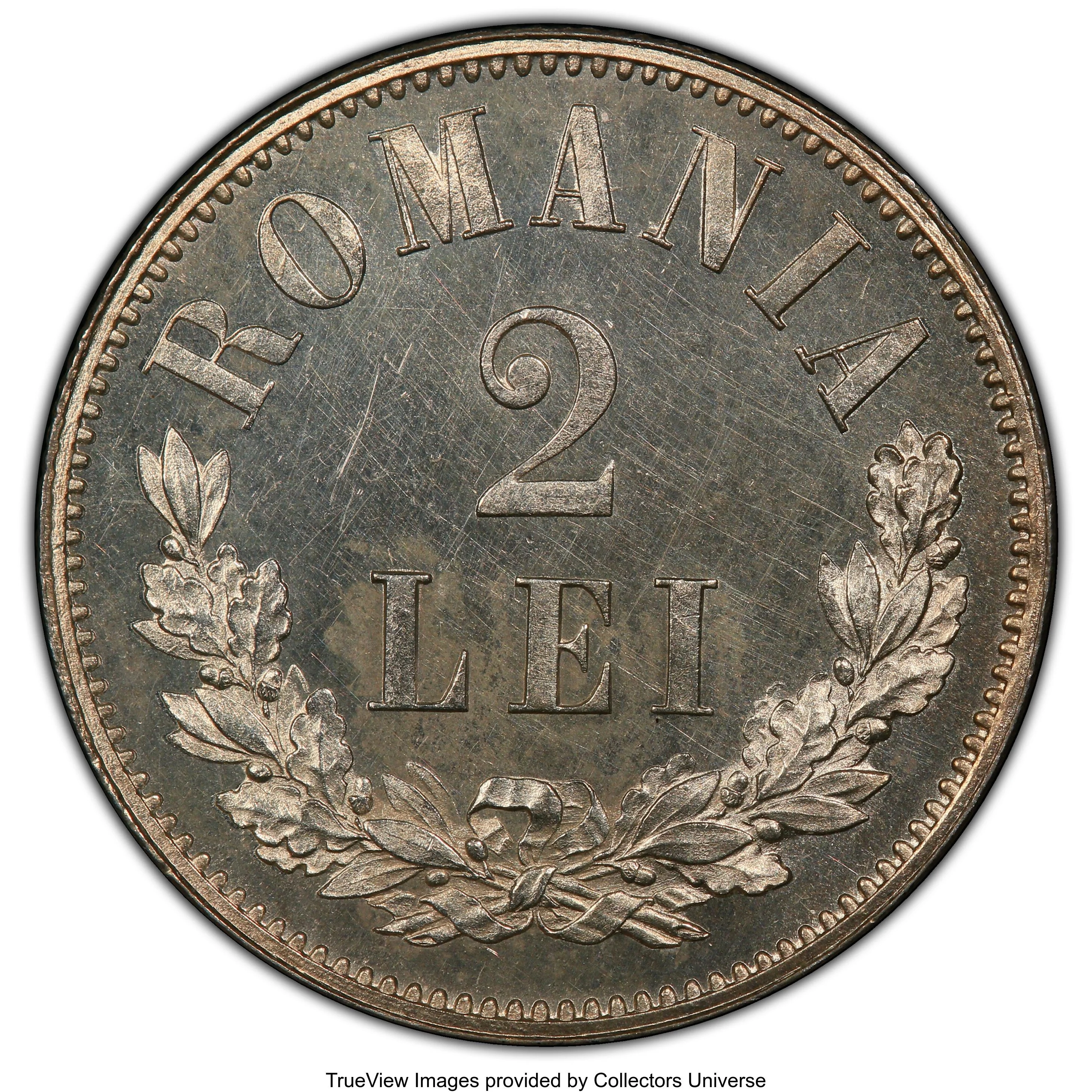
| Symbol> Wreath |
Mints
| Name | Mark |
|---|---|
| Royal Mint of Belgium | — |
Mintings
| Year | Mint Mark | Mintage | Quality | Collection |
|---|---|---|---|---|
| 1872 | — | 262,000 | ||
| 1873 | — | 1,745,000 | ||
| 1875 | — | 3,092,500 | ||
| 1876 | — | 653,255 |
Historical background
In 1872, Romania was navigating a complex monetary landscape as it sought to solidify its economic sovereignty following the 1859 union of Moldavia and Wallachia. The country operated without a unified national currency; instead, circulation was dominated by a multitude of foreign coins, particularly the French franc, Austrian florin, Russian ruble, and Turkish lira, alongside older domestic issues like the ban and leu. This monetary pluralism created significant challenges for trade, state finance, and everyday transactions, leading to confusion over exchange rates and hindering economic development.
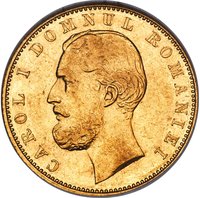
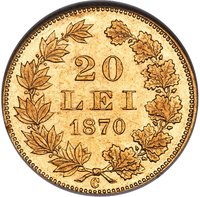
Recognizing this instability, the government, under Prince Carol I, had taken a decisive step by adopting the Latin Monetary Union (LMU) standard in 1867. This committed Romania to a bimetallic system based on gold and silver, with the leu defined as equal to one French franc. The pivotal year of 1872 saw the concrete realization of this policy with the minting of the first modern Romanian gold coins—the 20-lei and 10-lei pieces—at the newly established Bucharest Mint. These coins, featuring the portrait of Carol I, were tangible symbols of national identity and economic ambition.
However, the 1872 currency reform remained incomplete. While high-value gold coins entered circulation, the promised full suite of lower-denomination silver and copper coins to facilitate daily commerce had not yet been produced, meaning the old chaotic mix of foreign money still dominated the marketplace. Furthermore, Romania's adherence to the LMU's bimetallism would soon be tested by the global "Crime of 1873," a sharp decline in the price of silver that destabilized the fixed gold-silver ratio. Thus, 1872 stands as a year of foundational but precarious transition, marking the beginning of a modern monetary system while foreshadowing the fiscal difficulties that would persist for decades.
Recognizing this instability, the government, under Prince Carol I, had taken a decisive step by adopting the Latin Monetary Union (LMU) standard in 1867. This committed Romania to a bimetallic system based on gold and silver, with the leu defined as equal to one French franc. The pivotal year of 1872 saw the concrete realization of this policy with the minting of the first modern Romanian gold coins—the 20-lei and 10-lei pieces—at the newly established Bucharest Mint. These coins, featuring the portrait of Carol I, were tangible symbols of national identity and economic ambition.
However, the 1872 currency reform remained incomplete. While high-value gold coins entered circulation, the promised full suite of lower-denomination silver and copper coins to facilitate daily commerce had not yet been produced, meaning the old chaotic mix of foreign money still dominated the marketplace. Furthermore, Romania's adherence to the LMU's bimetallism would soon be tested by the global "Crime of 1873," a sharp decline in the price of silver that destabilized the fixed gold-silver ratio. Thus, 1872 stands as a year of foundational but precarious transition, marking the beginning of a modern monetary system while foreshadowing the fiscal difficulties that would persist for decades.
🌱 Fairly Common