

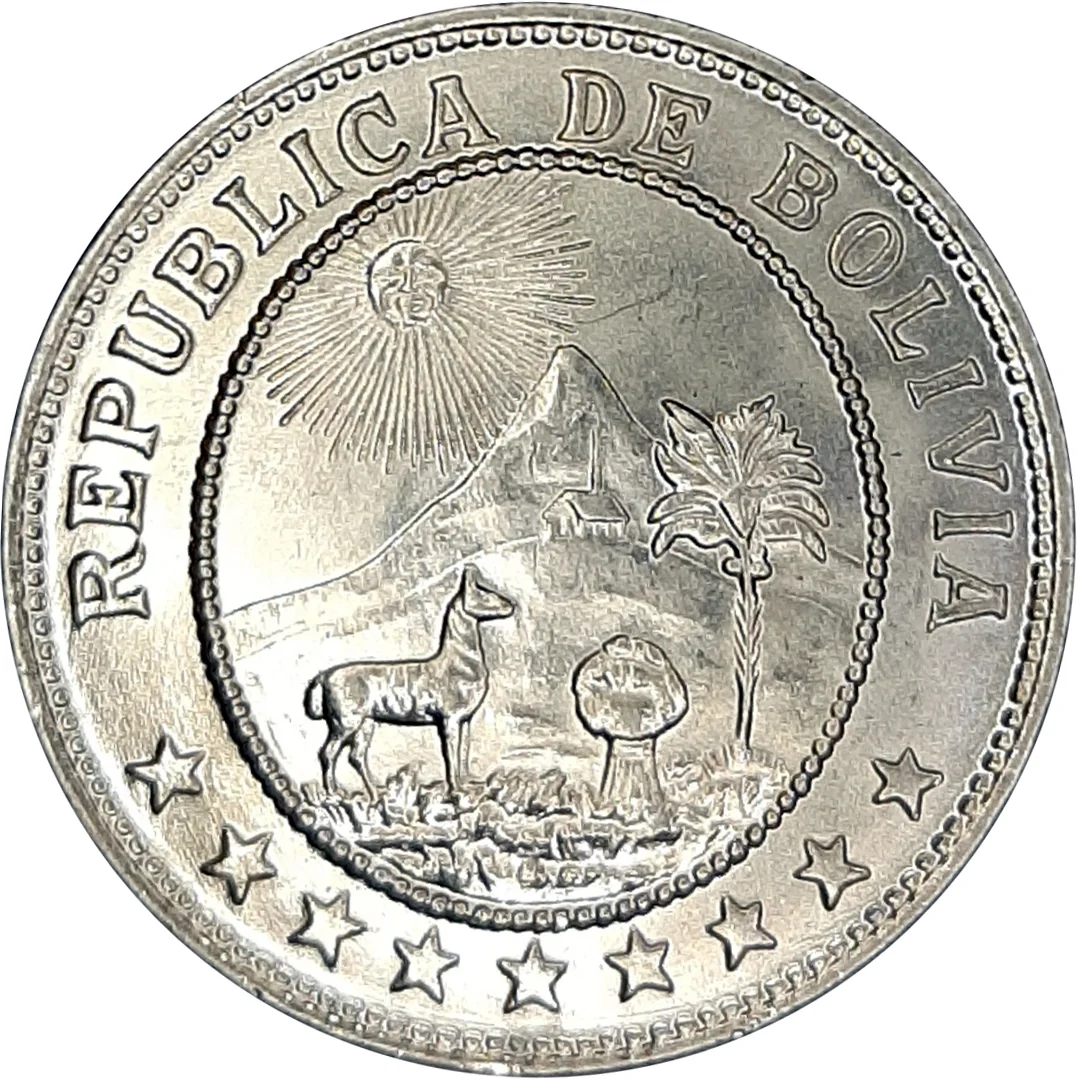
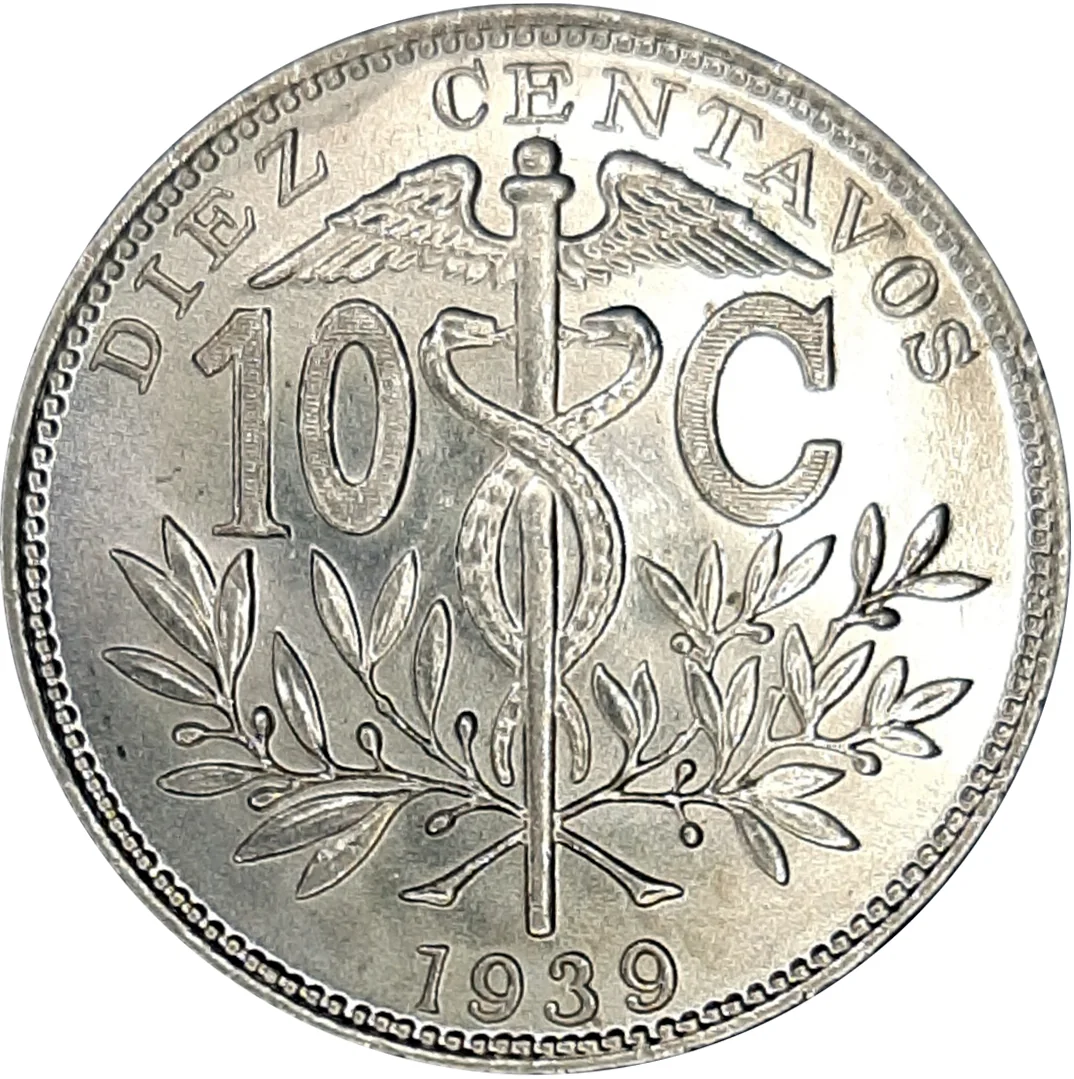
10 centavos – Bolivia
Add to wishlist
Bolivia
Context
Years: 1935–1939
Issuer: Bolivia
Period:
(1825—2009)
Currency:
(1864—1963)
Demonetization: 1951
Total mintage: 20,000,000
Material
Diameter: 22.5 mm
Weight: 4.5 g
Thickness: 1.38 mm
Shape: Round
Composition: Copper-nickel
Technique: Milled
Alignment: Medal alignment
flip
References
KM: #
Numista: #4905
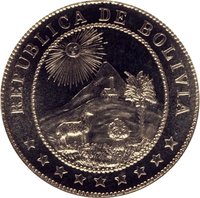
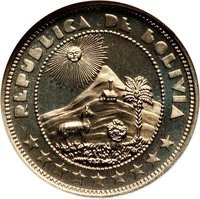
Obverse
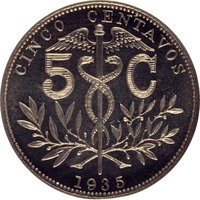
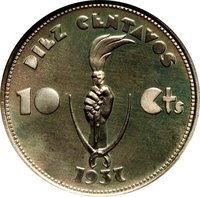
Reverse
Edge
Plain
Categories
| Symbol> Caduceus |
| Animal> Camel |
| Geography> Mountain |
| Plant> Tree |
| Symbols> Coat of Arms |
| Symbol> Sun |
Mints
| Name | Mark |
|---|---|
| Huguenin | — |
| Münze Österreich | — |
Mintings
| Year | Mint Mark | Mintage | Quality | Collection |
|---|---|---|---|---|
| 1935 | — | 10,000,000 | ||
| 1936 | — | 10,000,000 | ||
| 1939 | — | — |
Historical background
In 1935, Bolivia’s currency situation was dire, deeply entangled with the catastrophic Chaco War (1932-1935) against Paraguay. The conflict had drained the national treasury, leading to massive foreign debt and the depletion of gold and foreign currency reserves. To finance the war, the government under President Daniel Salamanca resorted to printing vast quantities of paper money without metallic backing, leading to severe inflation and a sharp decline in the boliviano's international value. The central bank, established only in 1929, lacked the independence and resources to implement sound monetary policy amidst this fiscal crisis.
The economic consequences were profound. Rampant inflation eroded purchasing power, causing widespread hardship for the civilian population and returning soldiers. The country's traditional silver coinage, the boliviano, had effectively been replaced by devalued paper notes, creating a crisis of confidence in the currency. Furthermore, Bolivia's access to international credit was severely constrained due to its default on foreign loans in 1931, isolating it from the capital needed for stabilization. The economy was crippled, relying heavily on tin exports whose prices were volatile on the global market.
Thus, as the Chaco War ended in a ceasefire in June 1935, Bolivia faced a monumental task of postwar reconstruction with a broken monetary system. The immediate priority was stabilizing the currency and controlling inflation, but this was inseparable from the need for broader political and economic reform. The war's financial legacy set the stage for the economic turmoil and social upheaval that would define the following decades, including the nationalization of the tin mines and a series of currency devaluations as successive governments grappled with the deep-seated fiscal imbalances created during the early 1930s.
The economic consequences were profound. Rampant inflation eroded purchasing power, causing widespread hardship for the civilian population and returning soldiers. The country's traditional silver coinage, the boliviano, had effectively been replaced by devalued paper notes, creating a crisis of confidence in the currency. Furthermore, Bolivia's access to international credit was severely constrained due to its default on foreign loans in 1931, isolating it from the capital needed for stabilization. The economy was crippled, relying heavily on tin exports whose prices were volatile on the global market.
Thus, as the Chaco War ended in a ceasefire in June 1935, Bolivia faced a monumental task of postwar reconstruction with a broken monetary system. The immediate priority was stabilizing the currency and controlling inflation, but this was inseparable from the need for broader political and economic reform. The war's financial legacy set the stage for the economic turmoil and social upheaval that would define the following decades, including the nationalization of the tin mines and a series of currency devaluations as successive governments grappled with the deep-seated fiscal imbalances created during the early 1930s.
🌱 Common