

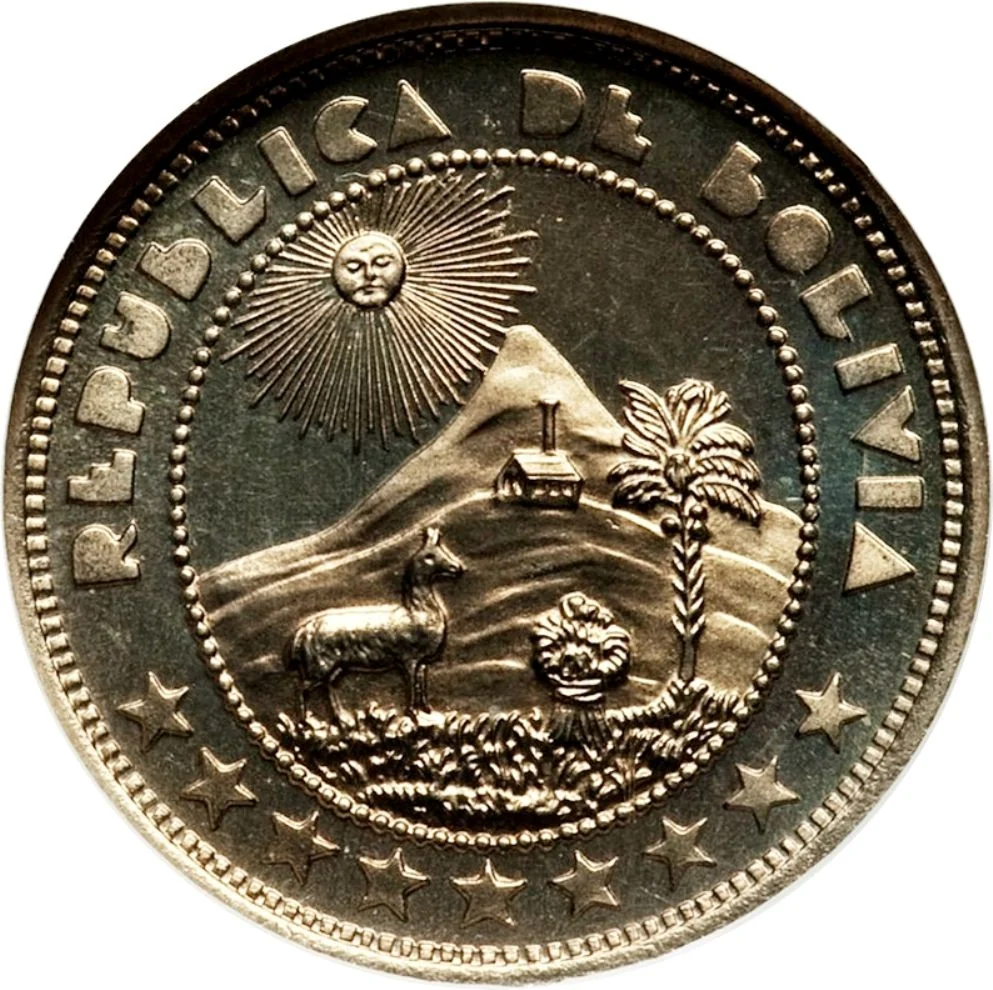
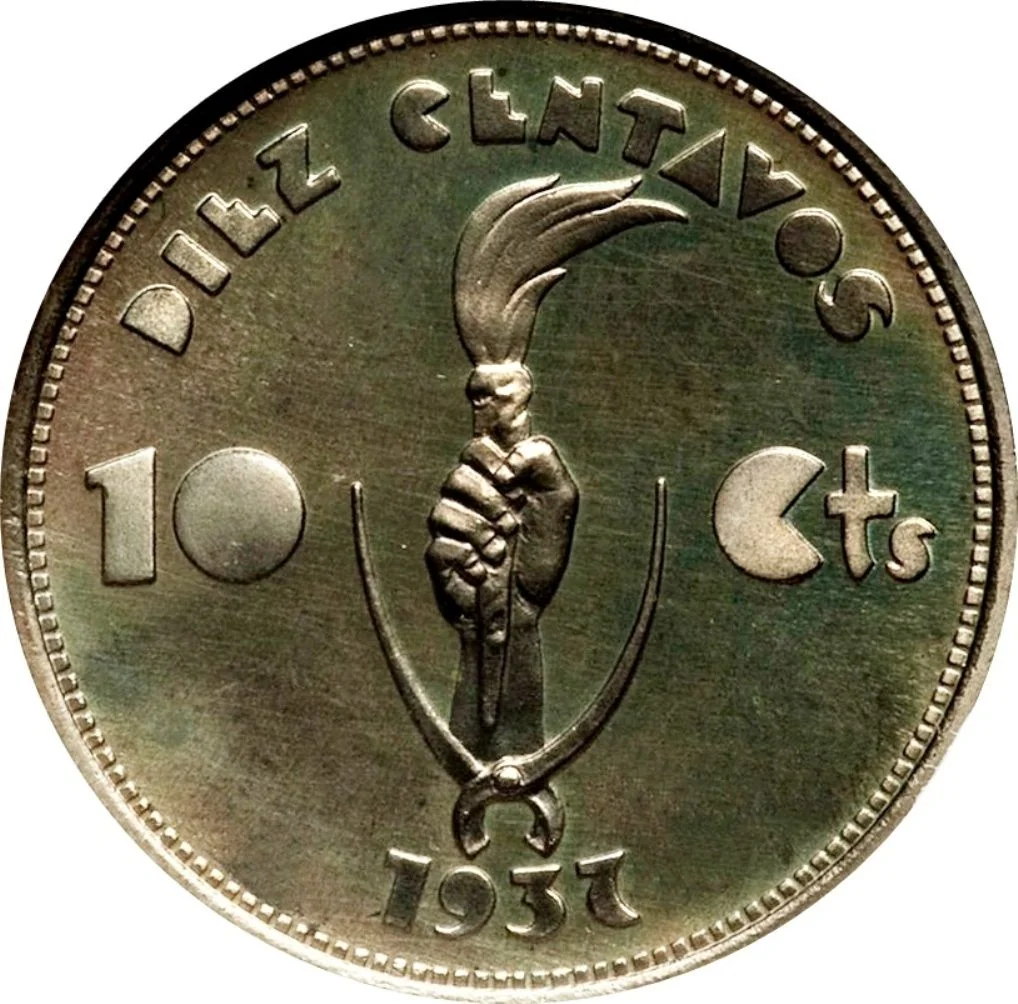
10 centavos – Bolivia
Add to wishlist
Bolivia
Context
Year: 1937
Issuer: Bolivia
Period:
(1825—2009)
Currency:
(1864—1963)
Demonetization: 1951
Total mintage: 20,000,000
Material
Diameter: 22.5 mm
Weight: 4.5 g
Thickness: 1.46 mm
Shape: Round
Composition: Copper-nickel
Technique: Milled
Alignment: Medal alignment
flip
References
KM: #
Numista: #4904
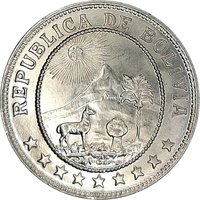
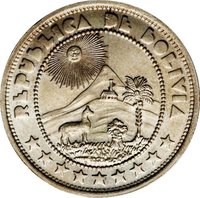
Obverse
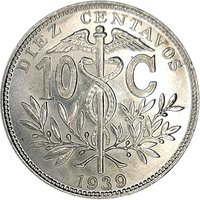
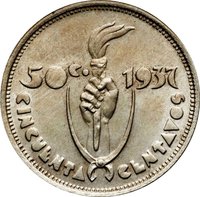
Reverse
Edge
Plain
Categories
| Geography> Mountain |
| Plant> Tree |
| Symbols> Coat of Arms |
| Symbol> Sun |
| Animal> Camel |
| Symbol> Hand |
Mints
| Name | Mark |
|---|---|
| Münze Österreich | — |
Mintings
| Year | Mint Mark | Mintage | Quality | Collection |
|---|---|---|---|---|
| 1937 | — | 20,000,000 | ||
| 1937 | — | — | Proof |
Historical background
In 1937, Bolivia’s currency situation was directly shaped by the catastrophic Chaco War (1932–1935) against Paraguay. The conflict had drained the national treasury, leading to massive external borrowing and the exhaustion of foreign exchange reserves. The government of President David Toro, who had come to power in a military socialist coup in 1936, faced a dire fiscal crisis with a depreciating currency, rampant inflation, and a crushing external debt that consumed over 50% of state revenues. The traditional reliance on tin exports for foreign currency was insufficient to stabilize the economy, creating an urgent need for monetary and banking reform.
The central response was the creation of the Central Bank of Bolivia (Banco Central de Bolivia) in July 1937, a landmark institutional shift. Prior to this, private banks, notably the Banco de la Nación Boliviana, had issued currency with limited central oversight. The new central bank was granted a monopoly on note issue, aiming to impose discipline, centralize dwindling gold and foreign exchange reserves, and manage the government's debt. This reform was part of a broader state-interventionist agenda under Toro’s “military socialism,” which also included the establishment of the state mining corporation and increased control over natural resources.
Despite this structural change, the underlying pressures remained severe in 1937. The boliviano continued to lose value internationally, and inflation eroded domestic purchasing power, causing widespread social hardship. The economy was still fundamentally dependent on volatile tin prices, and the government's capacity to implement effective monetary policy was constrained by political instability and low reserves. Thus, while 1937 marked a pivotal turn toward a modern centralized banking system intended to address currency instability, immediate economic recovery remained elusive, setting the stage for continued fiscal struggles in the years to follow.
The central response was the creation of the Central Bank of Bolivia (Banco Central de Bolivia) in July 1937, a landmark institutional shift. Prior to this, private banks, notably the Banco de la Nación Boliviana, had issued currency with limited central oversight. The new central bank was granted a monopoly on note issue, aiming to impose discipline, centralize dwindling gold and foreign exchange reserves, and manage the government's debt. This reform was part of a broader state-interventionist agenda under Toro’s “military socialism,” which also included the establishment of the state mining corporation and increased control over natural resources.
Despite this structural change, the underlying pressures remained severe in 1937. The boliviano continued to lose value internationally, and inflation eroded domestic purchasing power, causing widespread social hardship. The economy was still fundamentally dependent on volatile tin prices, and the government's capacity to implement effective monetary policy was constrained by political instability and low reserves. Thus, while 1937 marked a pivotal turn toward a modern centralized banking system intended to address currency instability, immediate economic recovery remained elusive, setting the stage for continued fiscal struggles in the years to follow.
🌱 Common