

1 rupee – Seychelles
Add to wishlist
Seychelles
Context
Years: 1954–1974
Issuer: Seychelles
Ruler: Elizabeth II
Currency:
(since 1914)
Demonetized: Yes
Total mintage: 725,000
Material
References
KM: #
Numista: #4894
Value
Exchange value: 1 SCR
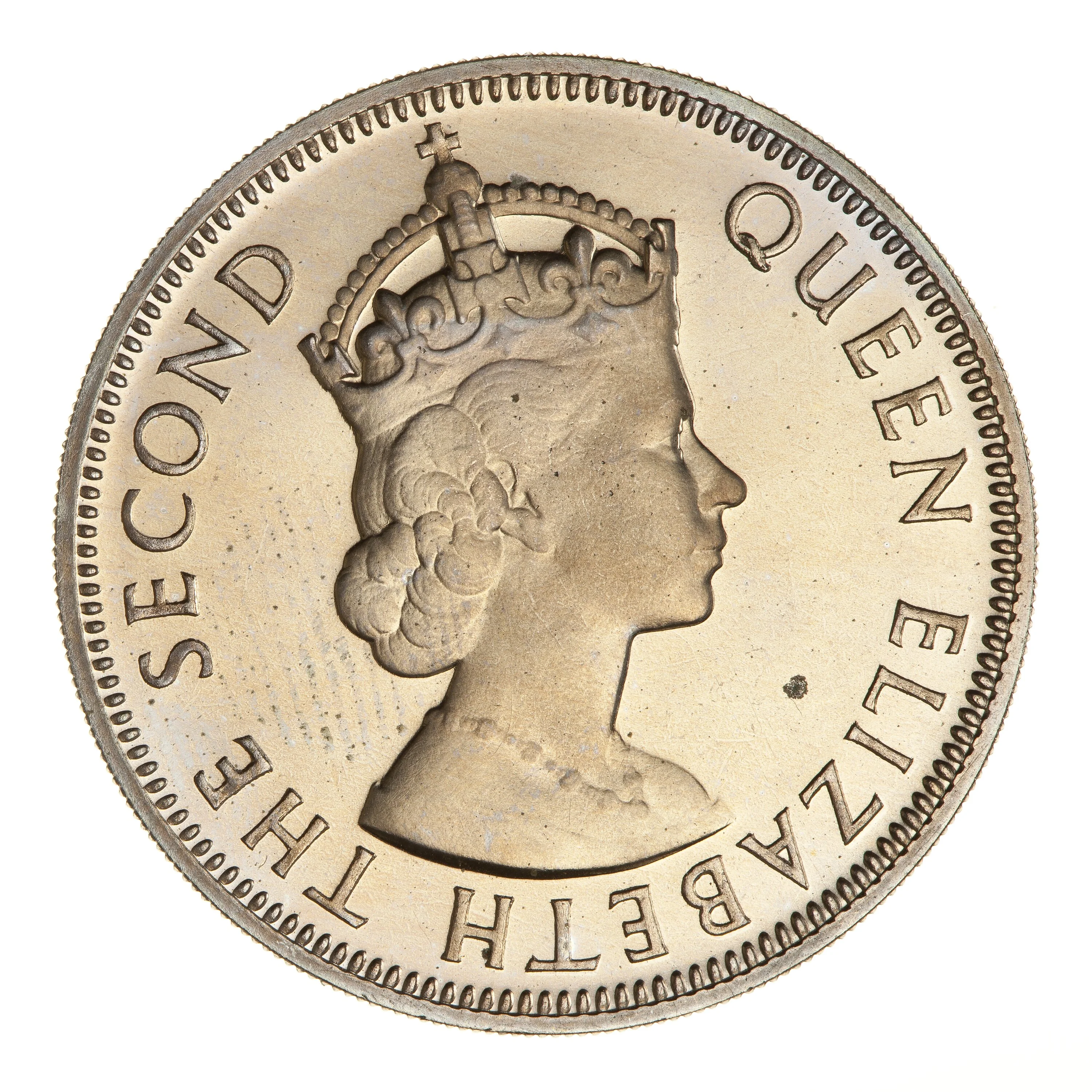
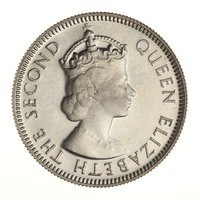
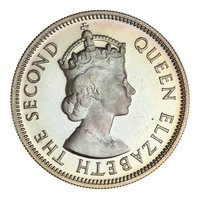
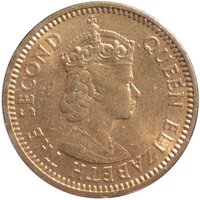
Obverse
Description:
King facing right
Inscription:
QUEEN ELIZABETH THE SECOND
Script: Latin
Engraver: Cecil Thomas
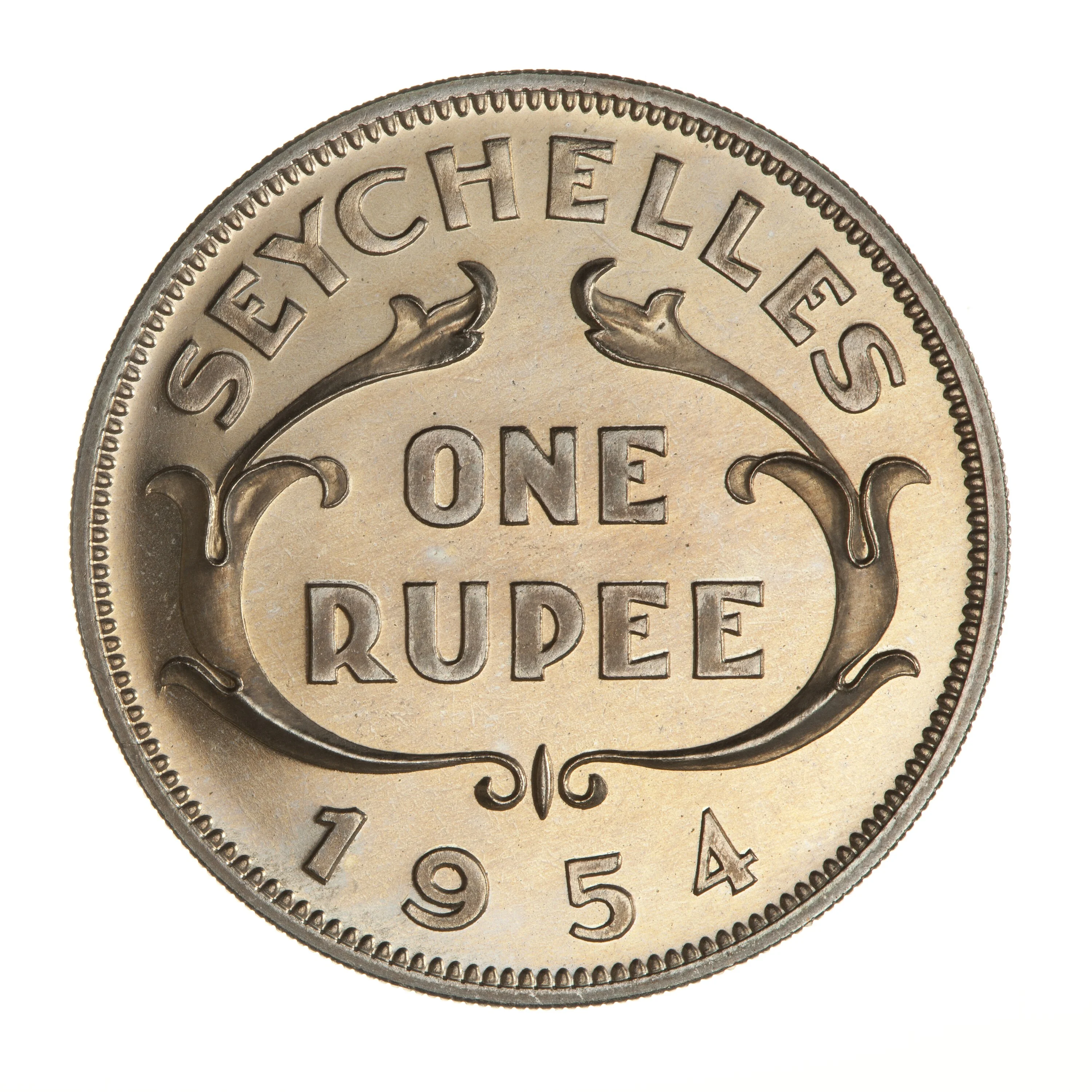
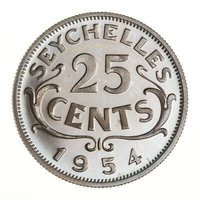
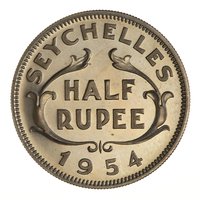
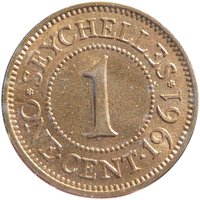
Reverse
Description:
Sprig value above date
Inscription:
SEYCHELLES
ONE
RUPEE
1 9 6 0
ONE
RUPEE
1 9 6 0
Script: Latin
Engraver: George Kruger Gray
Edge
Reeded
Mints
| Name | Mark |
|---|---|
| Royal Mint (Tower Hill) | — |
| Royal Mint | — |
Mintings
| Year | Mint Mark | Mintage | Quality | Collection |
|---|---|---|---|---|
| 1954 | — | — | Proof | |
| 1954 | — | 150,000 | ||
| 1960 | — | — | Proof | |
| 1960 | — | 60,000 | ||
| 1966 | — | 45,000 | ||
| 1967 | — | 10,000 | ||
| 1968 | — | 40,000 | ||
| 1969 | — | — | Proof | |
| 1969 | — | 50,000 | ||
| 1970 | — | 50,000 | ||
| 1971 | — | 100,000 | ||
| 1972 | — | 120,000 | ||
| 1974 | — | 100,000 |
Historical background
In 1954, Seychelles operated under a colonial currency system directly tied to British monetary policy. As a Crown Colony, the official currency was the Seychelles rupee, which was pegged at a fixed rate to the pound sterling (GBP). This peg provided stability and facilitated trade with the United Kingdom, the islands' dominant economic partner. The physical currency in circulation consisted of banknotes and coins issued by the Government of Seychelles, but its value was ultimately guaranteed and controlled by the British colonial administration.
The economy in the mid-1950s was modest and primarily agrarian, relying on exports of copra, cinnamon, and vanilla. This limited economic base meant there was little pressure for an independent monetary policy. The currency situation was largely uncomplicated, designed to serve administrative needs and basic commerce rather than complex financial markets. The fixed exchange rate simplified transactions for the plantation owners and the small merchant class, insulating them from currency fluctuations but also tethering the islands' economic fate to the strength of the sterling.
Looking ahead, this period of monetary stability under the sterling peg would continue until the 1970s. Significant change only came with the move towards independence, culminating in the establishment of the Central Bank of Seychelles in 1978. Therefore, 1954 represents a point of quiet consistency within the broader narrative of Seychellois monetary history, a year characterized by colonial dependency and a simple, externally managed currency regime suited to a small, plantation-based island economy.
The economy in the mid-1950s was modest and primarily agrarian, relying on exports of copra, cinnamon, and vanilla. This limited economic base meant there was little pressure for an independent monetary policy. The currency situation was largely uncomplicated, designed to serve administrative needs and basic commerce rather than complex financial markets. The fixed exchange rate simplified transactions for the plantation owners and the small merchant class, insulating them from currency fluctuations but also tethering the islands' economic fate to the strength of the sterling.
Looking ahead, this period of monetary stability under the sterling peg would continue until the 1970s. Significant change only came with the move towards independence, culminating in the establishment of the Central Bank of Seychelles in 1978. Therefore, 1954 represents a point of quiet consistency within the broader narrative of Seychellois monetary history, a year characterized by colonial dependency and a simple, externally managed currency regime suited to a small, plantation-based island economy.
🌱 Common