

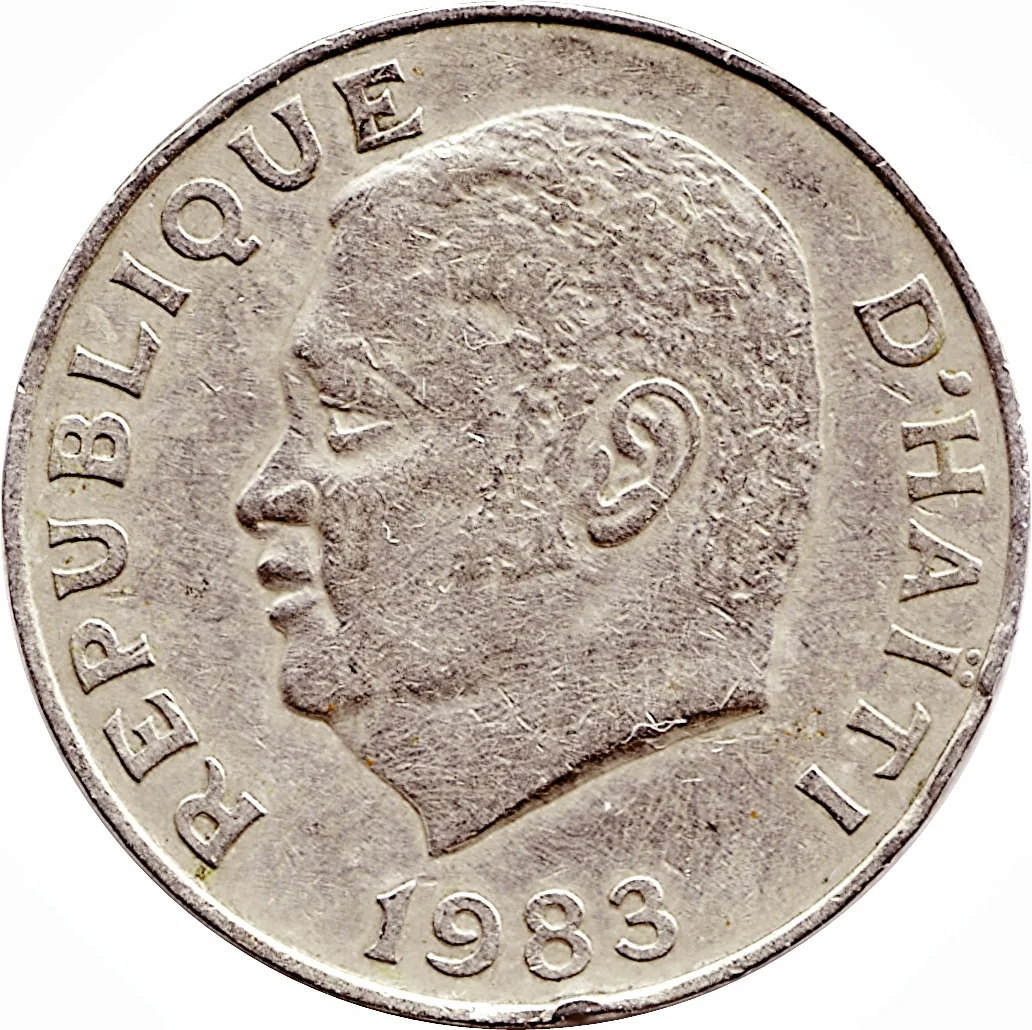
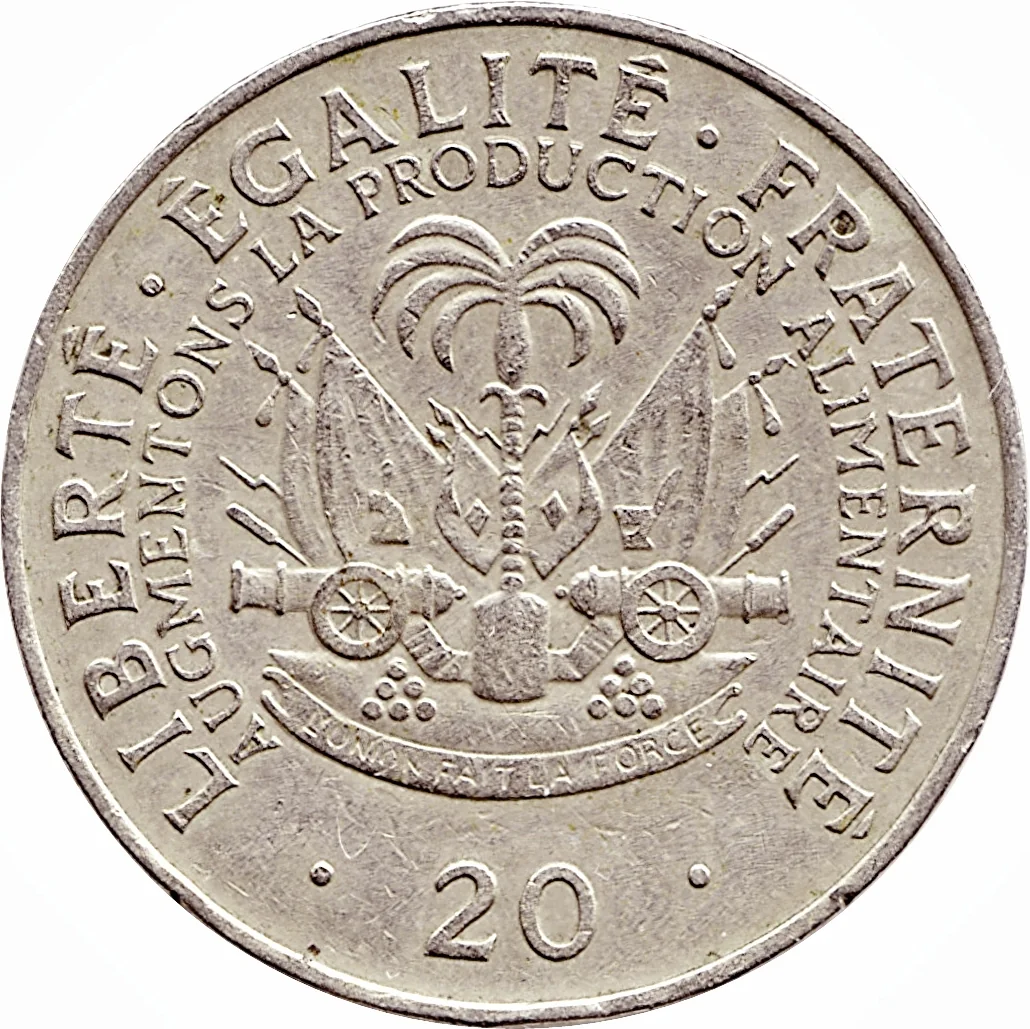
20 centimes – Haiti
Add to wishlist
Circulating commemorative coins
Commemoration: F.A.O.
Haiti
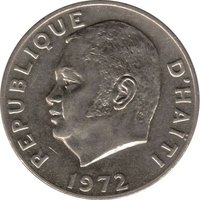
Obverse
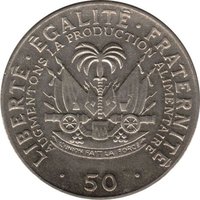
Reverse
Edge
Plain
Categories
| Symbols> Coat of Arms |
| Organization> FAO |
| Person> Politician |
Mints
| Name | Mark |
|---|---|
| Royal Mint | — |
| United States Mint of San Francisco | — |
Mintings
| Year | Mint Mark | Mintage | Quality | Collection |
|---|---|---|---|---|
| 1972 | — | 1,500,000 | ||
| 1975 | — | 4,000,000 | ||
| 1983 | — | 1,500,000 |
Historical background
In 1972, Haiti's currency situation was characterized by the long-standing dominance of the gourde (HTG), which operated under a fixed exchange rate regime pegged to the United States dollar. This peg, established at 5 gourdes to 1 USD in 1912, remained unaltered for six decades, providing a rare facade of monetary stability amidst the country's profound political and economic turmoil. The regime of President François "Papa Doc" Duvalier, who ruled until his death in 1971, and the subsequent ascension of his son Jean-Claude "Baby Doc" Duvalier, maintained this peg as a matter of policy, prioritizing the confidence of a small elite and foreign commercial interests over domestic economic development.
However, this apparent stability was largely superficial and masked significant underlying weaknesses. Haiti's economy was structurally weak, reliant on low-wage agricultural exports like coffee and light assembly manufacturing, with minimal industrial base. The fixed exchange rate, while simplifying trade, arguably became overvalued over time, hindering export competitiveness and failing to reflect the nation's true economic reality. Furthermore, the currency in circulation was physically scarce in rural areas, and the U.S. dollar circulated widely alongside the gourde, especially in Port-au-Prince and the tourism sector, effectively creating a dual-currency economy that marginalized the poor.
The year 1972 fell within a period of relative calm before impending economic storms. The Duvalier government, now under the younger and initially more publicly liberal Jean-Claude, was heavily reliant on foreign aid and loans to sustain itself. While the gourde's peg would hold officially until 1991, the economic policies of the 1970s—including increased borrowing and spending on prestige projects—would later contribute to severe imbalances. Thus, the currency situation in 1972 represented a precarious equilibrium: a symbol of enforced stability maintained by an authoritarian state, yet underpinned by a fragile economy increasingly vulnerable to future debt crises and devaluation.
However, this apparent stability was largely superficial and masked significant underlying weaknesses. Haiti's economy was structurally weak, reliant on low-wage agricultural exports like coffee and light assembly manufacturing, with minimal industrial base. The fixed exchange rate, while simplifying trade, arguably became overvalued over time, hindering export competitiveness and failing to reflect the nation's true economic reality. Furthermore, the currency in circulation was physically scarce in rural areas, and the U.S. dollar circulated widely alongside the gourde, especially in Port-au-Prince and the tourism sector, effectively creating a dual-currency economy that marginalized the poor.
The year 1972 fell within a period of relative calm before impending economic storms. The Duvalier government, now under the younger and initially more publicly liberal Jean-Claude, was heavily reliant on foreign aid and loans to sustain itself. While the gourde's peg would hold officially until 1991, the economic policies of the 1970s—including increased borrowing and spending on prestige projects—would later contribute to severe imbalances. Thus, the currency situation in 1972 represented a precarious equilibrium: a symbol of enforced stability maintained by an authoritarian state, yet underpinned by a fragile economy increasingly vulnerable to future debt crises and devaluation.
🌱 Common