

1 dinar – Yugoslavia
Add to wishlist
Circulating commemorative coins
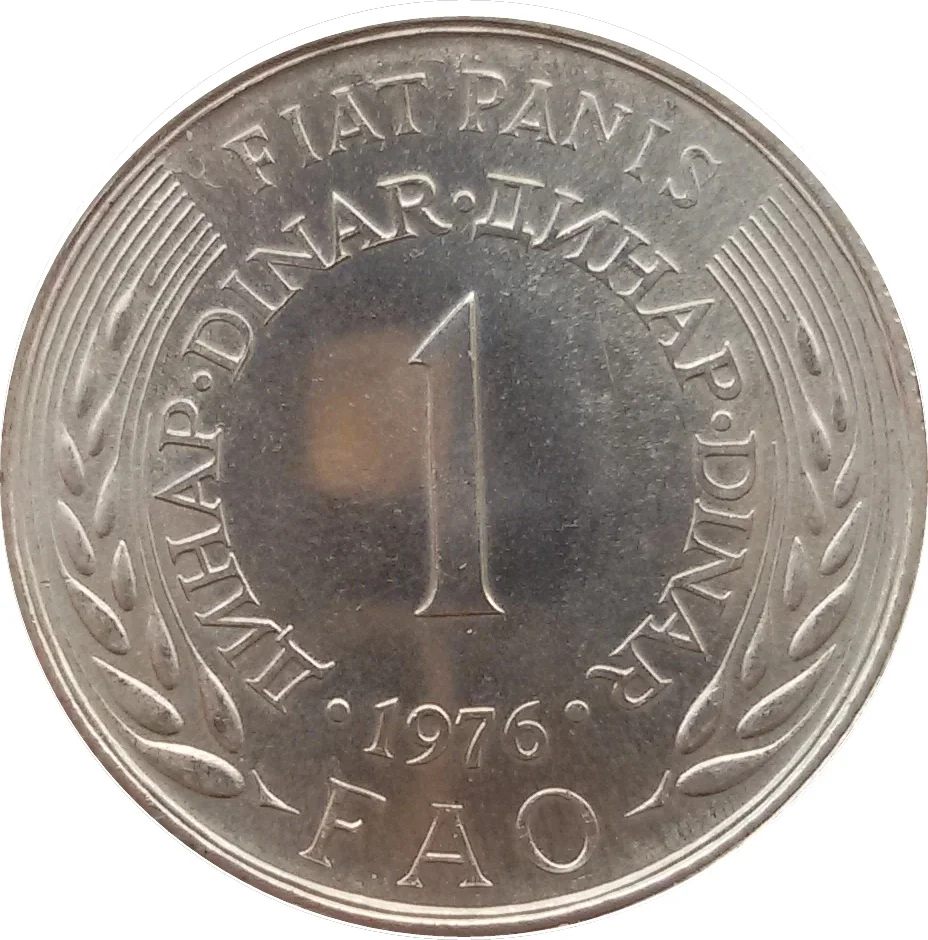
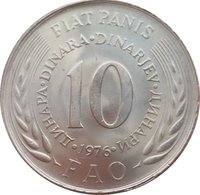
Commemoration: FAO
Context
Year: 1976
Issuer: Yugoslavia
Issuing organization: National Bank of Yugoslavia
Period:
(1963—1992)
Currency:
(1966—1989)
Demonetization: 30 September 1988
Total mintage: 500,000
Material
References
KM: #
Numista: #4873
Value
Exchange value: 1 YUD
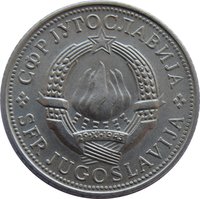
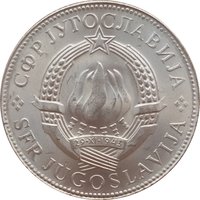
Obverse
Inscription:
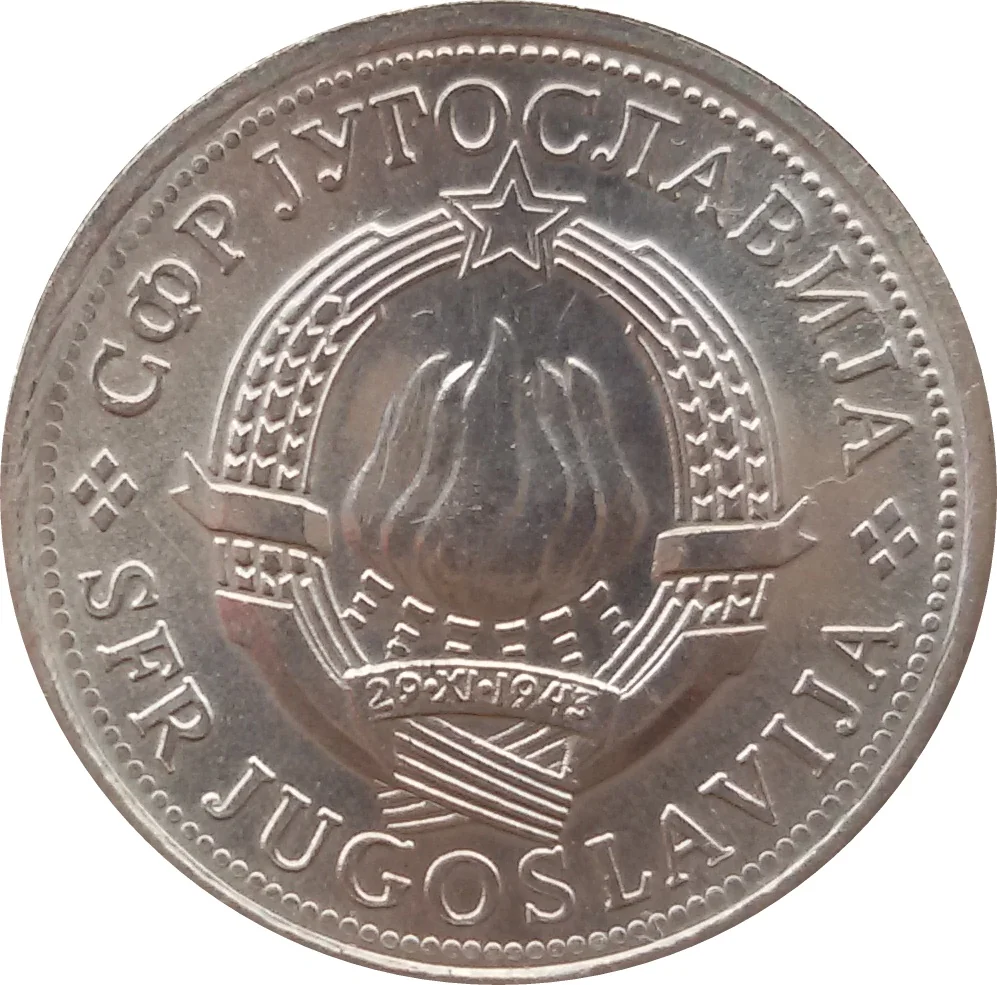
СФР ЈУГОСЛАВИЈА
29.XI.1943
SFR JUGOSLAVIJA
29.XI.1943
SFR JUGOSLAVIJA
Translation:
SOCIALIST FEDERAL REPUBLIC OF YUGOSLAVIA
29 NOVEMBER 1943
29 NOVEMBER 1943
Language: Serbian
Designer: Dragomir Mileusnić
Reverse
Edge
Reeded
Categories
| Symbol> Wreath |
| Organization> FAO |
| Symbols> Coat of Arms |
Mints
| Name | Mark |
|---|---|
| Belgrade | — |
Mintings
| Year | Mint Mark | Mintage | Quality | Collection |
|---|---|---|---|---|
| 1976 | — | 500,000 |
Historical background
In 1976, Yugoslavia's currency situation was characterized by the "managed floating" of the dinar within a complex and unique economic system. The country operated under a system of self-management socialism, which decentralized economic control to worker councils within enterprises. This structure, combined with heavy borrowing from abroad to fund development and consumption, created persistent inflationary pressures and trade imbalances. Externally, the dinar's value was not pegged to a single currency but was managed against a basket of the currencies of Yugoslavia's major trading partners, allowing for periodic devaluations to maintain export competitiveness.
Domestically, the currency situation reflected deep structural tensions within the Yugoslav federation. The economic disparities between the more developed northern republics (like Slovenia and Croatia) and the less developed southern regions (like Kosovo and Macedonia) were significant. The National Bank of Yugoslavia struggled to implement a unified monetary policy, as republican banks often pursued credit policies favoring their local economies, fueling money supply growth. While the official exchange rate in 1976 was approximately 18.45 dinars to the US dollar, this masked underlying weaknesses, including a growing black market for foreign currency and suppressed inflation.
Overall, 1976 fell within a period of relative but fragile stability before the severe economic crises of the 1980s. The currency regime was ultimately unsustainable, as it attempted to balance the incompatible goals of a decentralized, import-reliant economy with the need for monetary discipline. The reliance on foreign loans to bridge trade gaps and fund deficits merely postponed harder adjustments, setting the stage for the debt crisis and hyperinflation that would engulf the country in the following decade.
Domestically, the currency situation reflected deep structural tensions within the Yugoslav federation. The economic disparities between the more developed northern republics (like Slovenia and Croatia) and the less developed southern regions (like Kosovo and Macedonia) were significant. The National Bank of Yugoslavia struggled to implement a unified monetary policy, as republican banks often pursued credit policies favoring their local economies, fueling money supply growth. While the official exchange rate in 1976 was approximately 18.45 dinars to the US dollar, this masked underlying weaknesses, including a growing black market for foreign currency and suppressed inflation.
Overall, 1976 fell within a period of relative but fragile stability before the severe economic crises of the 1980s. The currency regime was ultimately unsustainable, as it attempted to balance the incompatible goals of a decentralized, import-reliant economy with the need for monetary discipline. The reliance on foreign loans to bridge trade gaps and fund deficits merely postponed harder adjustments, setting the stage for the debt crisis and hyperinflation that would engulf the country in the following decade.
🌱 Common