

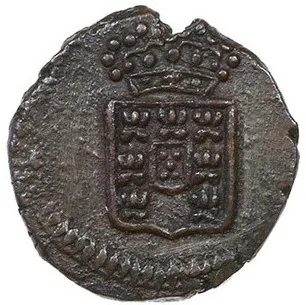
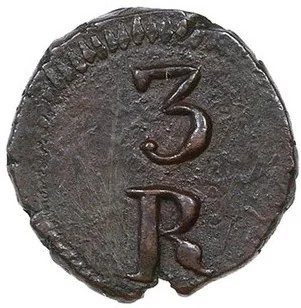
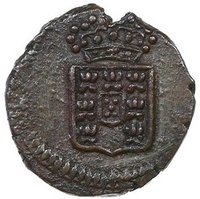
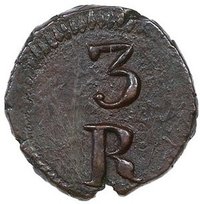
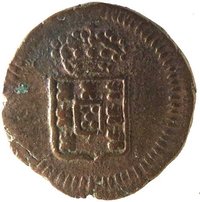
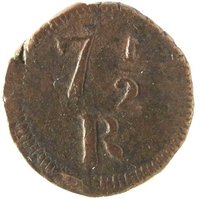
3 réis – Portuguese India
Add to wishlist
India
Context
Years: 1840–1848
Country: India
Issuer: Portuguese India
Ruler: Mary II
Currency:
(1706—1880)
Demonetized: Yes
Material
Diameter: 14 mm
Weight: 1.8 g
Shape: Irregular round
Composition: Copper
Magnetic: No
Technique: Hammered
References
KM: #
Numista: #48726
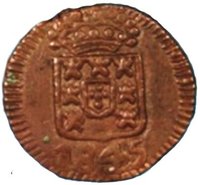
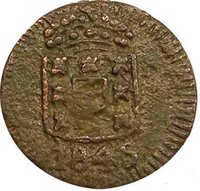
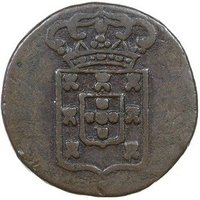
Obverse
Description:
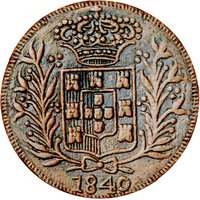
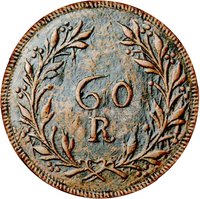
Gomes/2013: M2.01.0 (Nov/Dec) & M2.02.01-02.0 (dated).
Script: Latin
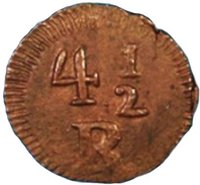
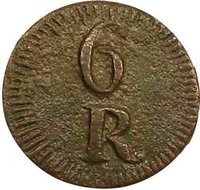
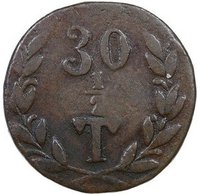
Reverse
Edge
Mints
| Name | Mark |
|---|---|
| Goa | — |
Mintings
| Year | Mint Mark | Mintage | Quality | Collection |
|---|---|---|---|---|
| 1840 | — | — | ||
| 1845 | — | — | ||
| 1846 | — | — | ||
| 1848 | — | — |
Historical background
In 1840, the currency situation in Portuguese India (primarily Goa, Daman, and Diu) was a complex and fragmented system, reflecting its history as a commercial crossroads. The official currency was the Portuguese réis, but its practical use was limited. The territory operated on a de facto dual-currency system, dominated by foreign silver coins that circulated freely due to centuries of regional trade. The most important of these was the British Indian silver rupee, alongside other coins like the Maria Theresa thaler and older Portuguese colonial coins like the xerafim (often valued at 300 réis). This created a chaotic marketplace where daily transactions required constant mental calculations between different monetary units and fluctuating exchange rates.
This monetary mosaic was a direct result of economic reality. Portuguese India's trade was overwhelmingly oriented toward British India and the wider Indian Ocean world, making the sturdy British rupee the preferred medium for commerce. The Portuguese administration itself often collected taxes and conducted official business in rupees, acknowledging their supremacy. The limited supply of Portuguese currency from the metropole was insufficient and often of inferior quality, failing to displace the entrenched foreign coins. Consequently, the local economy functioned with a confusing array of coins, each with its own accepted value in réis, leading to inefficiency and opportunities for exploitation by money changers (sarafs).
The situation highlighted Lisbon's weak economic control and the relative decline of its once-powerful Asian possession. Attempts at monetary reform were sporadic and largely ineffective in 1840, as any decree from Lisbon had to contend with the overwhelming market preference for silver rupees. Thus, the currency landscape remained a patchwork, symbolizing Portuguese India's transition from a dominant trading empire to a territorially small enclave economically integrated into the British Indian sphere. This instability would persist until more concerted reforms were attempted later in the 19th century.
This monetary mosaic was a direct result of economic reality. Portuguese India's trade was overwhelmingly oriented toward British India and the wider Indian Ocean world, making the sturdy British rupee the preferred medium for commerce. The Portuguese administration itself often collected taxes and conducted official business in rupees, acknowledging their supremacy. The limited supply of Portuguese currency from the metropole was insufficient and often of inferior quality, failing to displace the entrenched foreign coins. Consequently, the local economy functioned with a confusing array of coins, each with its own accepted value in réis, leading to inefficiency and opportunities for exploitation by money changers (sarafs).
The situation highlighted Lisbon's weak economic control and the relative decline of its once-powerful Asian possession. Attempts at monetary reform were sporadic and largely ineffective in 1840, as any decree from Lisbon had to contend with the overwhelming market preference for silver rupees. Thus, the currency landscape remained a patchwork, symbolizing Portuguese India's transition from a dominant trading empire to a territorially small enclave economically integrated into the British Indian sphere. This instability would persist until more concerted reforms were attempted later in the 19th century.
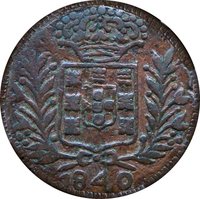
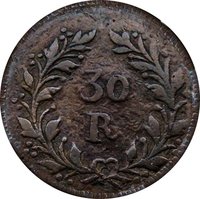
💎 Extremely Rare