

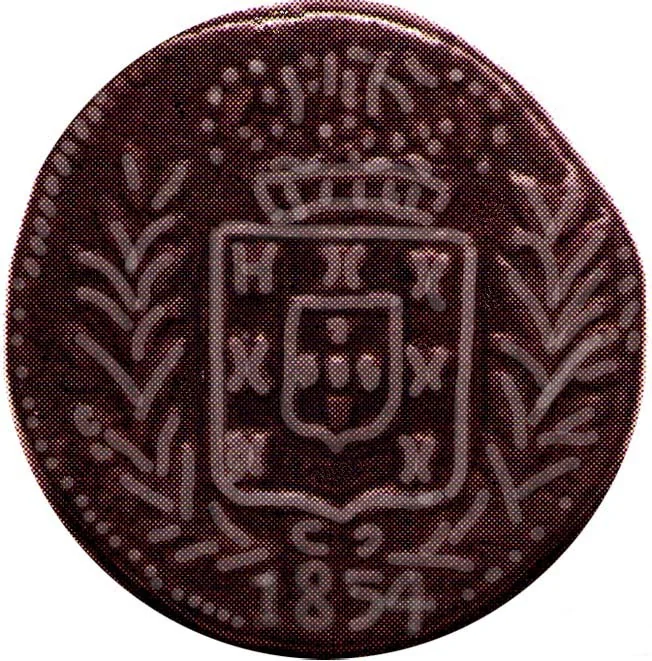
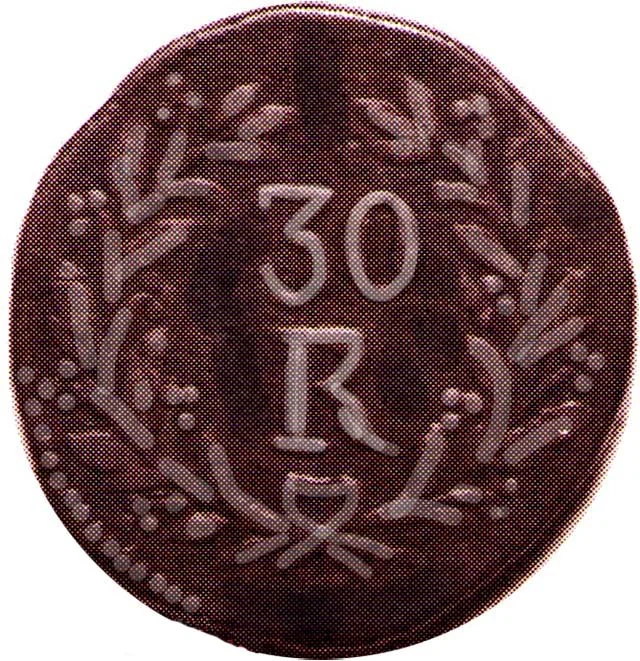
½ tanga – Portuguese India
Add to wishlist
India
Context
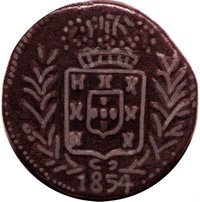
Year: 1854
Country: India
Issuer: Portuguese India
Issuing organization: Casa da Moeda de Damão
Ruler: Pedro V
Currency:
(1706—1880)
Demonetized: Yes
Material
Diameter: 28 mm
Weight: 18 g
Shape: Irregular round
Composition: Copper
Magnetic: No
Technique: Hammered
References
KM: #
Numista: #48686
Mintings
| Year | Mint Mark | Mintage | Quality | Collection |
|---|---|---|---|---|
| 1854 | — | — |
Historical background
In 1854, the currency situation in Portuguese India was a complex and fragmented system, reflecting both its colonial status and its deep economic ties to neighbouring British India. The official currency was the Portuguese Indian Rupia, introduced in the late 18th century to replace the xerafim. However, its circulation was inconsistent and it competed directly with the dominant British Indian Rupee, which was widely trusted and used for most significant trade. This duality created a bimetallic system where gold mohurs and silver rupees circulated alongside smaller local copper coins (bazarucos or reis), leading to frequent confusion and exchange rate fluctuations.
The primary challenge was a severe shortage of standardized fractional currency for daily transactions. The Portuguese administration failed to mint sufficient small-denomination coins, creating a vacuum filled by a chaotic array of foreign coins. These included old Mughal and Maratha coins, cut fractions of larger coins, and most problematically, a flood of counterfeit copper coins from neighbouring regions. This debased and unreliable small-change currency crippled local markets, eroded public trust, and facilitated exploitation of the poor, who bore the brunt of the inconsistent valuations.
Recognizing the economic damage and loss of monetary sovereignty, the Portuguese authorities in Goa took decisive action in 1854 itself. The government demonetized the myriad of unofficial and foreign copper coins and initiated a major recoinage program. They introduced new, machine-struck copper bazarucos denominated in réis at the Lisbon mint, which were put into circulation in 1855. This reform was a critical step towards establishing a unified, decimal-based currency system (the real), which would eventually be fully realized with the introduction of the escudo in the early 20th century, aiming to bring order and colonial control to the monetary chaos.
The primary challenge was a severe shortage of standardized fractional currency for daily transactions. The Portuguese administration failed to mint sufficient small-denomination coins, creating a vacuum filled by a chaotic array of foreign coins. These included old Mughal and Maratha coins, cut fractions of larger coins, and most problematically, a flood of counterfeit copper coins from neighbouring regions. This debased and unreliable small-change currency crippled local markets, eroded public trust, and facilitated exploitation of the poor, who bore the brunt of the inconsistent valuations.
Recognizing the economic damage and loss of monetary sovereignty, the Portuguese authorities in Goa took decisive action in 1854 itself. The government demonetized the myriad of unofficial and foreign copper coins and initiated a major recoinage program. They introduced new, machine-struck copper bazarucos denominated in réis at the Lisbon mint, which were put into circulation in 1855. This reform was a critical step towards establishing a unified, decimal-based currency system (the real), which would eventually be fully realized with the introduction of the escudo in the early 20th century, aiming to bring order and colonial control to the monetary chaos.
✨ Legendary