

2 dinars – Yugoslavia
Add to wishlist
Context
Year: 1938
Issuer: Yugoslavia
Ruler: Peter II
Currency:
(1918—1941)
Demonetization: 26 October 1942
Total mintage: 74,250,000
Material
References
KM: #
Numista: #4868
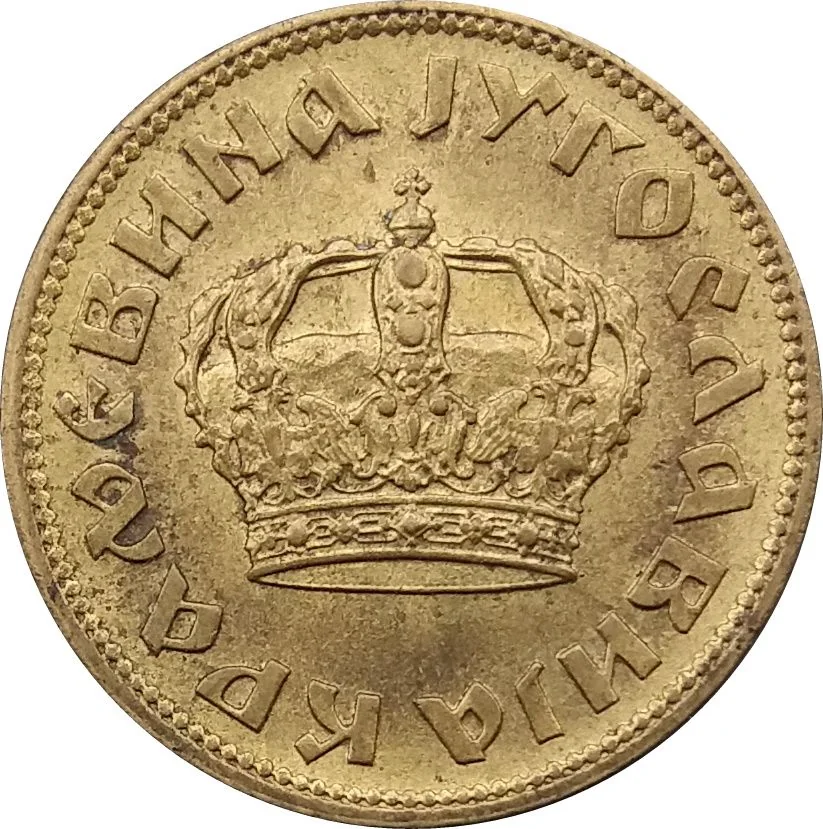
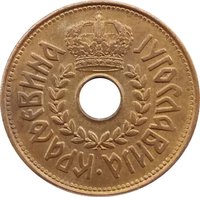
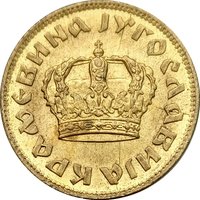
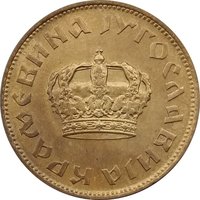
Obverse
Description:
Royal headpiece
Inscription:
КРАЉЕВИНА ЈУГОСЛАВИЈА
Translation:
KINGDOM OF YUGOSLAVIA
Script: Cyrillic
Language: Serbian
Engraver: Frano Meneghello Dinčić
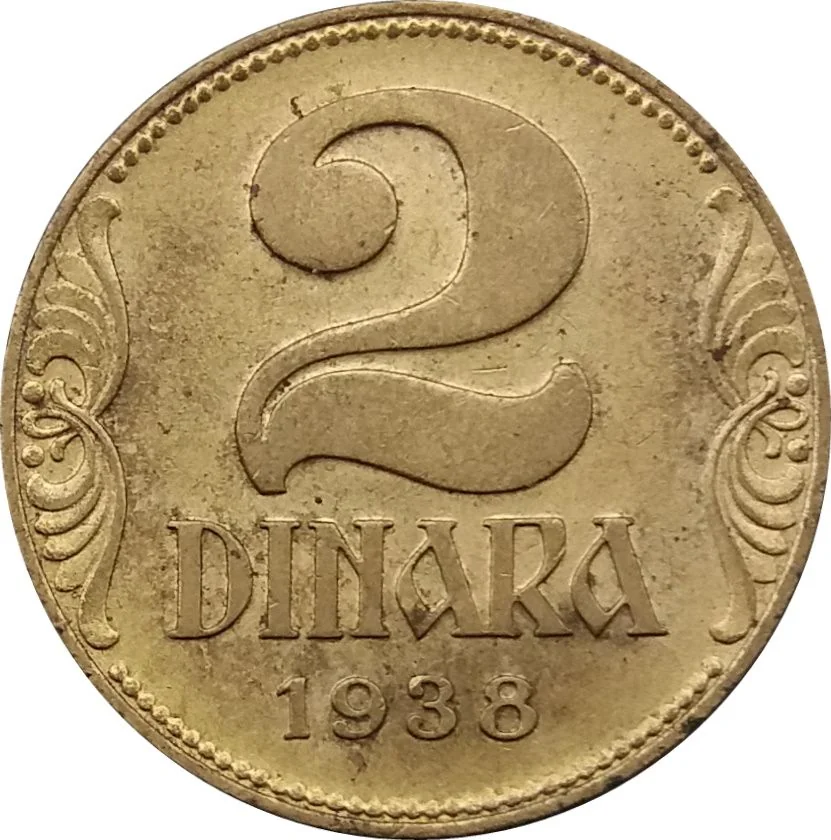
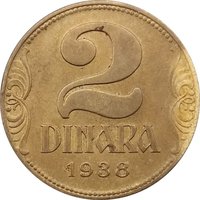
Reverse
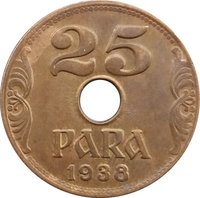
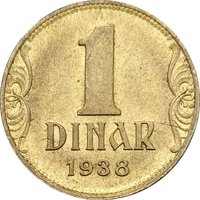
Description:
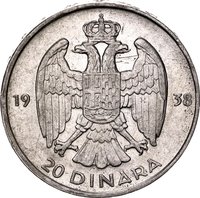
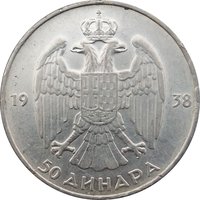
Denomination over date, large number.
Inscription:
2 DINARA
1938
1938
Script: Latin
Engraver: Frano Meneghello Dinčić
Edge
Plain
Mints
| Name | Mark |
|---|---|
| Monnaie de Paris | — |
Mintings
| Year | Mint Mark | Mintage | Quality | Collection |
|---|---|---|---|---|
| 1938 | — | 74,250,000 | ||
| 1938 | — | — | Proof |
Historical background
In 1938, the Kingdom of Yugoslavia operated under a managed currency system centered on the Yugoslav dinar, which was pegged to the French franc as part of the "Bloc Franc" arrangement. This peg, established in 1931, aimed to provide monetary stability by linking the dinar to the gold standard via the franc. The National Bank of Yugoslavia held significant gold and foreign exchange reserves, primarily in French francs, to back the currency and maintain the fixed exchange rate. This system provided a degree of external stability during a turbulent interwar period, but it also made the Yugoslav economy sensitive to the economic policies and fortunes of France.
Internally, the economy was characterized by significant regional disparities between the more industrialized north (Slovenia, Croatia) and the agrarian south. This structural weakness, combined with the global fallout from the Great Depression, meant the currency's stability was somewhat fragile. While not in a state of acute crisis in 1938, the dinar faced underlying pressures. The government maintained strict exchange controls to prevent capital flight and protect reserves, a common practice of the era. Economic policy was conservative, prioritizing the maintenance of the franc peg over aggressive domestic stimulus.
The geopolitical landscape posed the greatest threat to Yugoslavia's monetary situation. The Anschluss of Austria in March 1938 brought Nazi Germany directly to Yugoslavia's borders, dramatically increasing its economic and political influence in the Balkans. Germany began aggressively drawing Yugoslavia into its economic orbit through clearing agreements, which would eventually bypass hard currency reserves and tie trade to the Reichsmark. Thus, while the dinar was formally stable and pegged to the franc in 1938, its future was increasingly jeopardized by the shifting axis of European power, foreshadowing the monetary chaos and occupation that would follow the outbreak of World War II.
Internally, the economy was characterized by significant regional disparities between the more industrialized north (Slovenia, Croatia) and the agrarian south. This structural weakness, combined with the global fallout from the Great Depression, meant the currency's stability was somewhat fragile. While not in a state of acute crisis in 1938, the dinar faced underlying pressures. The government maintained strict exchange controls to prevent capital flight and protect reserves, a common practice of the era. Economic policy was conservative, prioritizing the maintenance of the franc peg over aggressive domestic stimulus.
The geopolitical landscape posed the greatest threat to Yugoslavia's monetary situation. The Anschluss of Austria in March 1938 brought Nazi Germany directly to Yugoslavia's borders, dramatically increasing its economic and political influence in the Balkans. Germany began aggressively drawing Yugoslavia into its economic orbit through clearing agreements, which would eventually bypass hard currency reserves and tie trade to the Reichsmark. Thus, while the dinar was formally stable and pegged to the franc in 1938, its future was increasingly jeopardized by the shifting axis of European power, foreshadowing the monetary chaos and occupation that would follow the outbreak of World War II.
🌱 Very Common