

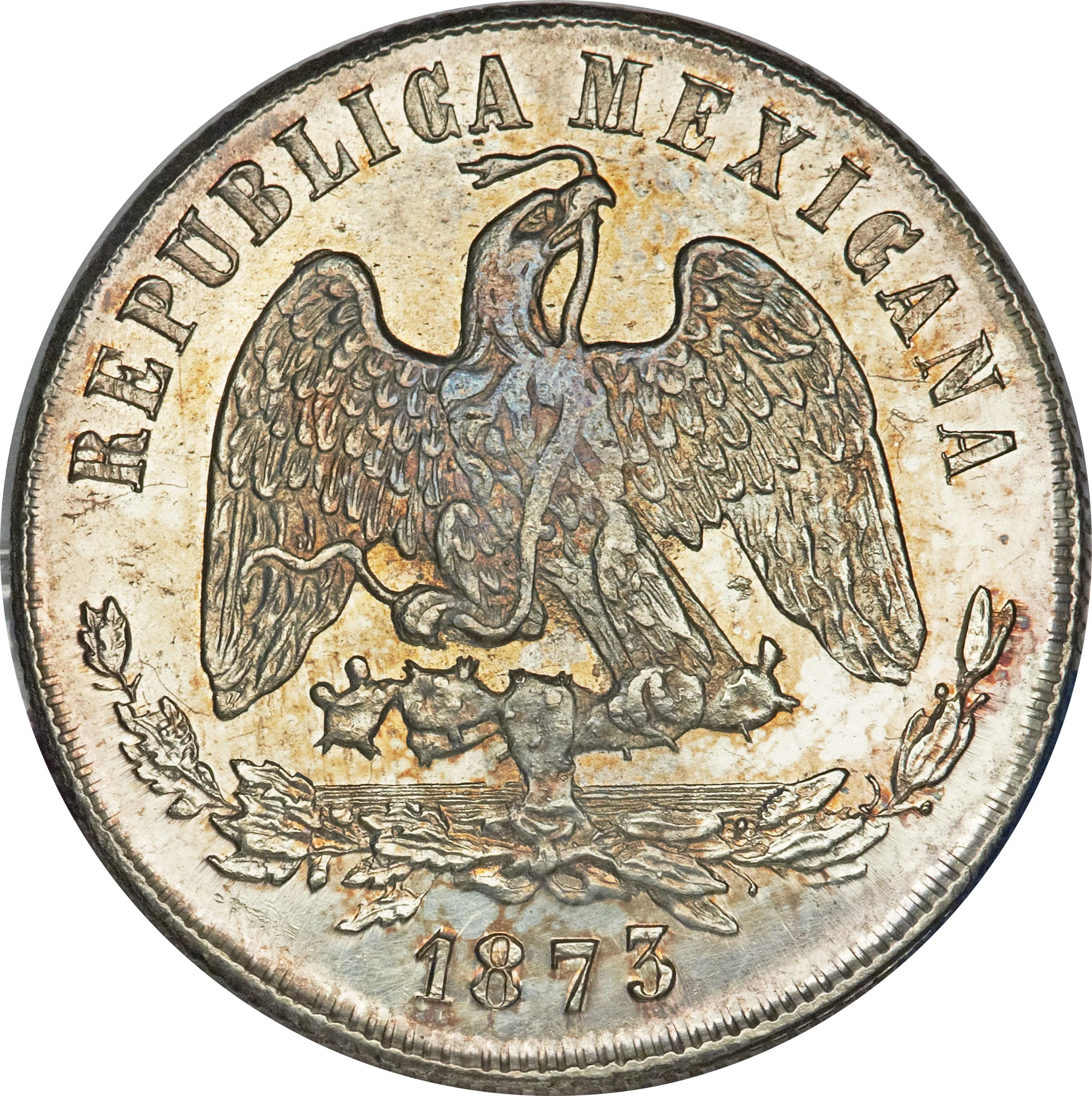
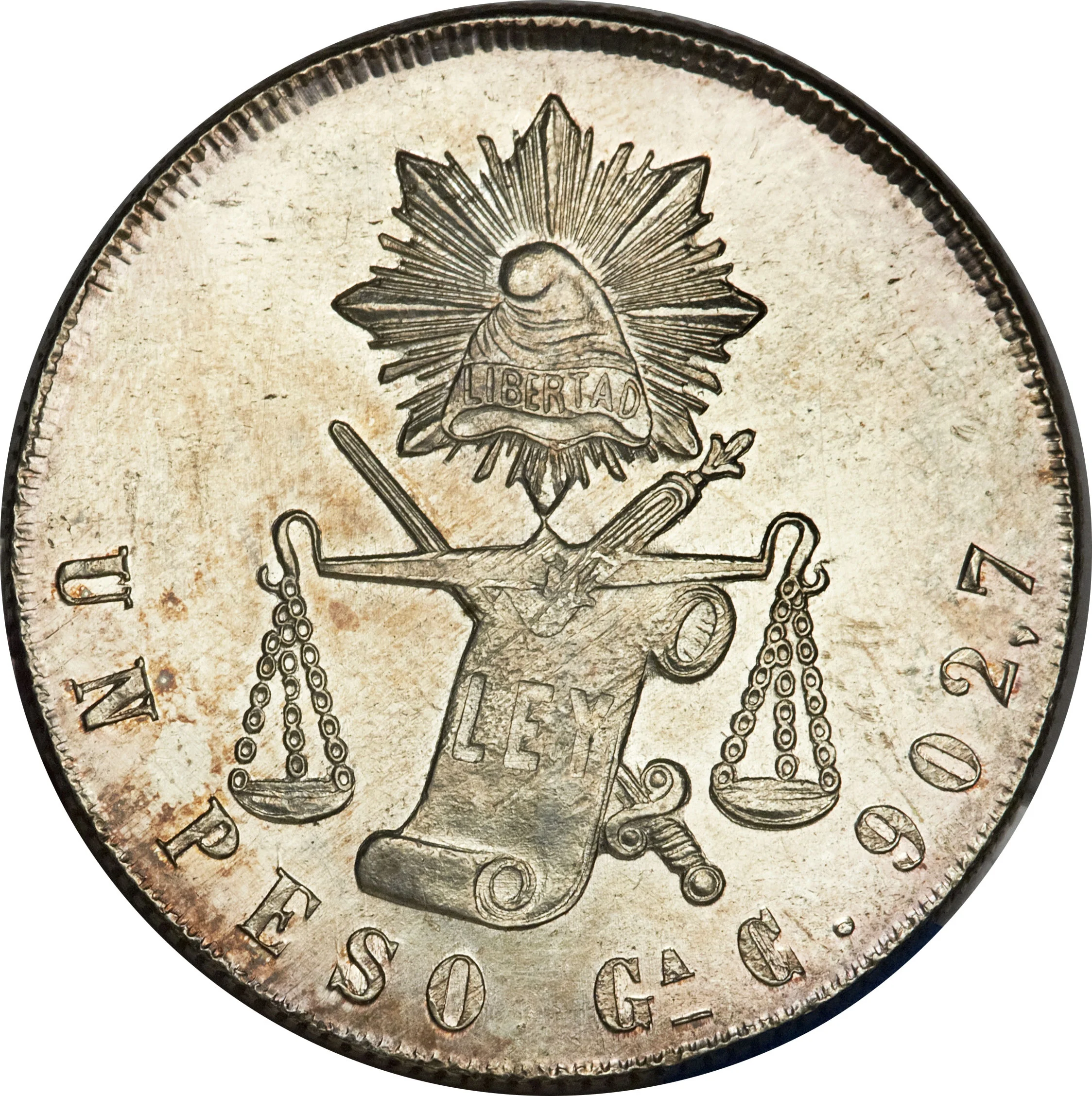
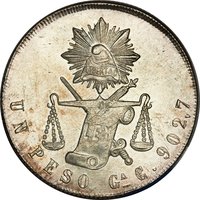
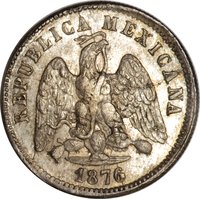
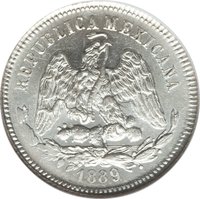
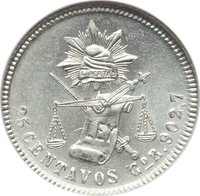
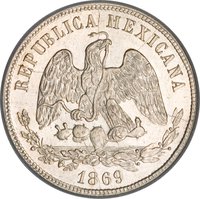
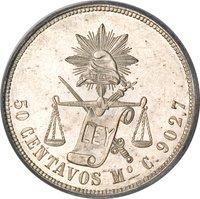
Obverse
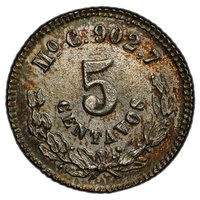
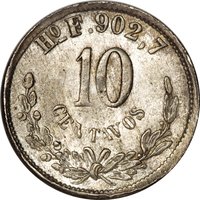
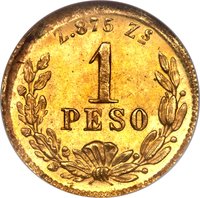
Reverse
Edge
Reeded
Mints
| Name | Mark |
|---|---|
| Chihuahua | CH |
| Casa de Moneda de Culiacán | Cn |
| Durango | Do |
| Guadalajara | Ga |
| Casa de Moneda de Guanajuato | Go |
| Mexican Mint | Mo |
| Oaxaca | Oa |
| San Luís Potosí | Pi |
| Casa de Moneda de Zacatecas | Zs |
Mintings
| Year | Mint Mark | Mintage | Quality | Collection |
|---|---|---|---|---|
| 1869 | Mo | — | ||
| 1869 | Oa | — | ||
| 1870 | Cn | — | ||
| 1870 | Do | — | ||
| 1870 | Ga | — | ||
| 1870 | Pi | — | ||
| 1870 | Zs | 4,519,000 | ||
| 1870 | Mo | 5,115,000 | ||
| 1870 | OA | — | ||
| 1870 | Oa | — | ||
| 1871 | Cn | 478,000 | ||
| 1871 | Do | 427,000 | ||
| 1871 | Mo | 6,974,000 | ||
| 1871 | Oa | 140,000 | ||
| 1871 | Zs | 4,459,000 | ||
| 1871 | Ga | 829,000 | ||
| 1871 | Go | 3,946,000 | ||
| 1871 | Pi | — | ||
| 1871 | OA | — | ||
| 1872 | Do | 296,000 | ||
| 1872 | Ga | 485,000 | ||
| 1872 | Go | 4,067,000 | ||
| 1872 | CH | 747,000 | ||
| 1872 | Pi | 1,873,000 | ||
| 1872 | Zs | 4,039,000 | ||
| 1872 | Oa | 180,000 | ||
| 1872 | Cn | 209,000 | ||
| 1872 | Mo | — | ||
| 1872 | OA | — | ||
| 1873 | CH | 320,000 | ||
| 1873 | Cn | 527,000 | ||
| 1873 | Do | 203,000 | ||
| 1873 | Ga | 277,000 | ||
| 1873 | Go | 1,560,000 | ||
| 1873 | Go/Mo | — | ||
| 1873 | Mo | — | ||
| 1873 | Oa | 105,000 | ||
| 1873 | Pi | — | ||
| 1873 | Zs | 1,782,000 |
Historical background
In 1869, Mexico's currency situation was characterized by profound instability and complexity, a direct legacy of decades of political turmoil and foreign intervention. Following the War of Reform (1857-61) and the French Intervention (1862-67), the restored Republic under President Benito Juárez inherited a financial system in disarray. The national treasury was empty, foreign debt was immense, and the monetary landscape was a chaotic patchwork of coinage. In circulation were a mix of pre-revolutionary Spanish colonial coins, Republican issues, and even currency forcibly introduced by the French-imposed Empire of Maximilian, all with fluctuating and often disputed values.
The core of the problem was a severe shortage of standardized, trustworthy fractional currency for daily transactions. While gold and silver pesos were the official standard, the scarcity of smaller denomination coins led to widespread use of tlacos (crude lead or copper tokens issued by local merchants and haciendas) and clipped or debased coins. This environment fostered confusion, hindered commerce, and facilitated fraud. The Juárez government recognized that establishing a uniform and reliable national currency was essential not only for economic recovery but also as a powerful symbol of the restored Republic's sovereignty and authority.
Consequently, the period around 1869 was one of active monetary reform. The government had already, in 1867, demonetized the currency of the Imperial regime and was working to reassert federal control over minting. Efforts were focused on increasing the production of fractional silver coins, particularly the peso fuerte and its divisions (reales and centavos), at the reopened Mexico City Mint. The goal was to gradually drive out unofficial and foreign tokens, stabilize the money supply, and lay the groundwork for the more comprehensive reforms that would follow in the coming Porfiriato era, ultimately leading to the introduction of the famous "Libertad" peso.
The core of the problem was a severe shortage of standardized, trustworthy fractional currency for daily transactions. While gold and silver pesos were the official standard, the scarcity of smaller denomination coins led to widespread use of tlacos (crude lead or copper tokens issued by local merchants and haciendas) and clipped or debased coins. This environment fostered confusion, hindered commerce, and facilitated fraud. The Juárez government recognized that establishing a uniform and reliable national currency was essential not only for economic recovery but also as a powerful symbol of the restored Republic's sovereignty and authority.
Consequently, the period around 1869 was one of active monetary reform. The government had already, in 1867, demonetized the currency of the Imperial regime and was working to reassert federal control over minting. Efforts were focused on increasing the production of fractional silver coins, particularly the peso fuerte and its divisions (reales and centavos), at the reopened Mexico City Mint. The goal was to gradually drive out unofficial and foreign tokens, stabilize the money supply, and lay the groundwork for the more comprehensive reforms that would follow in the coming Porfiriato era, ultimately leading to the introduction of the famous "Libertad" peso.
Series: 1869 Mexico circulation coins
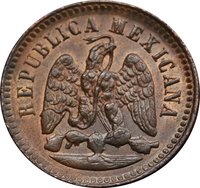
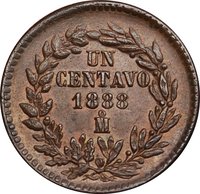
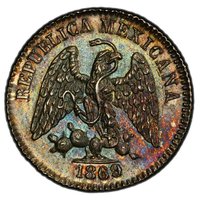
🌱 Fairly Common