

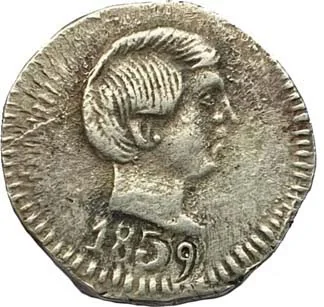
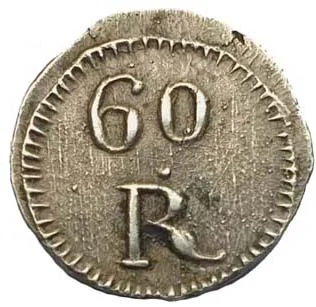
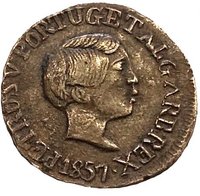
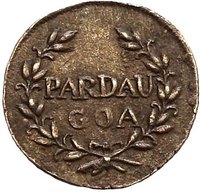
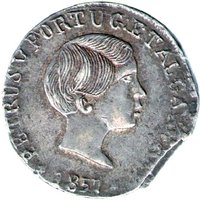
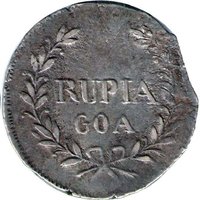
1 tanga – Portuguese India
Add to wishlist
India
Context
Years: 1856–1859
Country: India
Issuer: Portuguese India
Ruler: Pedro V
Currency:
(1706—1880)
Demonetized: Yes
Material
Diameter: 13 mm
Weight: 1.2 g
Silver Weight:: 1.20 g
Shape: Irregular round
Composition: Silver
Magnetic: No
Technique: Hammered
References
KM: #
Numista: #48668
Value
Bullion value: $2.92
Mints
| Name | Mark |
|---|---|
| Goa | — |
Mintings
| Year | Mint Mark | Mintage | Quality | Collection |
|---|---|---|---|---|
| 1856 | — | — | ||
| 1858 | — | — | ||
| 1859 | — | — |
Historical background
In 1856, the currency situation in Portuguese India, comprising the territories of Goa, Daman, and Diu, was a complex and fragmented system characterized by the simultaneous circulation of multiple coinages. The official Portuguese currency, the réis, formed the theoretical backbone, with coins like the tangas and xerafins (worth 300 and 600 réis, respectively) minted locally in Goa. However, the economic reality was dominated by foreign silver, particularly the British Indian rupee and its fractions (annas and pice), which circulated widely due to the region's extensive trade links with British India and the broader Indian Ocean world.
This monetary pluralism created chronic instability. The exchange rates between the various coins—Portuguese, British, and also older indigenous and Mughal issues—fluctuated frequently, causing confusion in commerce and daily transactions. The Portuguese administration struggled to enforce its own currency as the sole legal tender, as the populace and merchants often preferred the more stable and internationally recognized rupee for significant trade. This effectively created a dual-currency economy where state accounts were kept in réis, but much of the actual business was conducted in rupees.
The year 1856 fell within a period of prolonged monetary crisis and debate. Portuguese authorities recognized the inefficiency and were actively seeking reform, culminating a few years later in the significant currency reform of 1859. That reform officially pegged the Portuguese Indian xerafim to the British Indian rupee at a fixed rate of 1 xerafim = 1 rupee, finally acknowledging and systematizing the rupee's dominance in an attempt to bring stability to the colony's finances and integrate its economy more smoothly with its powerful British neighbor.
This monetary pluralism created chronic instability. The exchange rates between the various coins—Portuguese, British, and also older indigenous and Mughal issues—fluctuated frequently, causing confusion in commerce and daily transactions. The Portuguese administration struggled to enforce its own currency as the sole legal tender, as the populace and merchants often preferred the more stable and internationally recognized rupee for significant trade. This effectively created a dual-currency economy where state accounts were kept in réis, but much of the actual business was conducted in rupees.
The year 1856 fell within a period of prolonged monetary crisis and debate. Portuguese authorities recognized the inefficiency and were actively seeking reform, culminating a few years later in the significant currency reform of 1859. That reform officially pegged the Portuguese Indian xerafim to the British Indian rupee at a fixed rate of 1 xerafim = 1 rupee, finally acknowledging and systematizing the rupee's dominance in an attempt to bring stability to the colony's finances and integrate its economy more smoothly with its powerful British neighbor.
✨ Legendary