

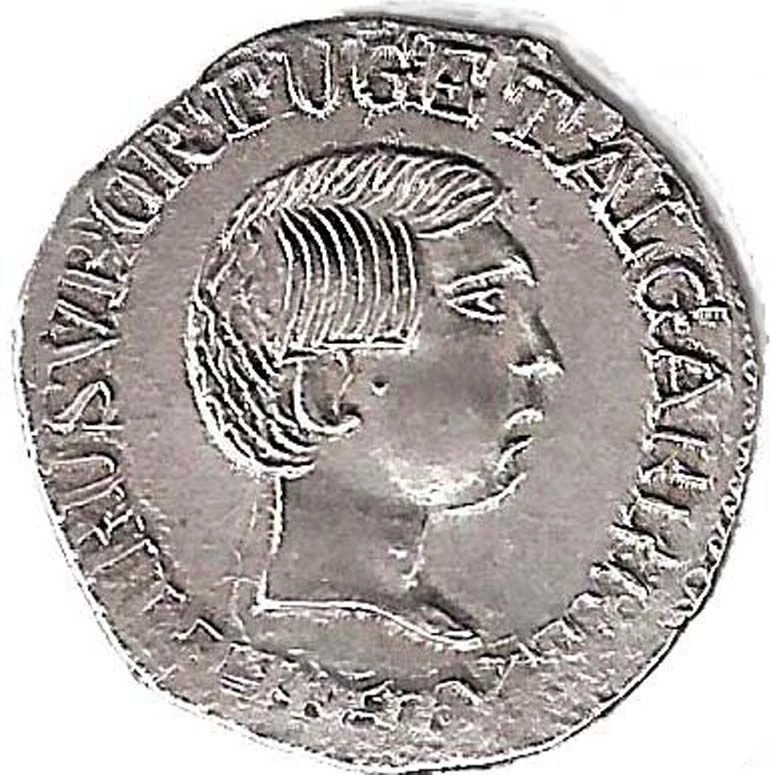
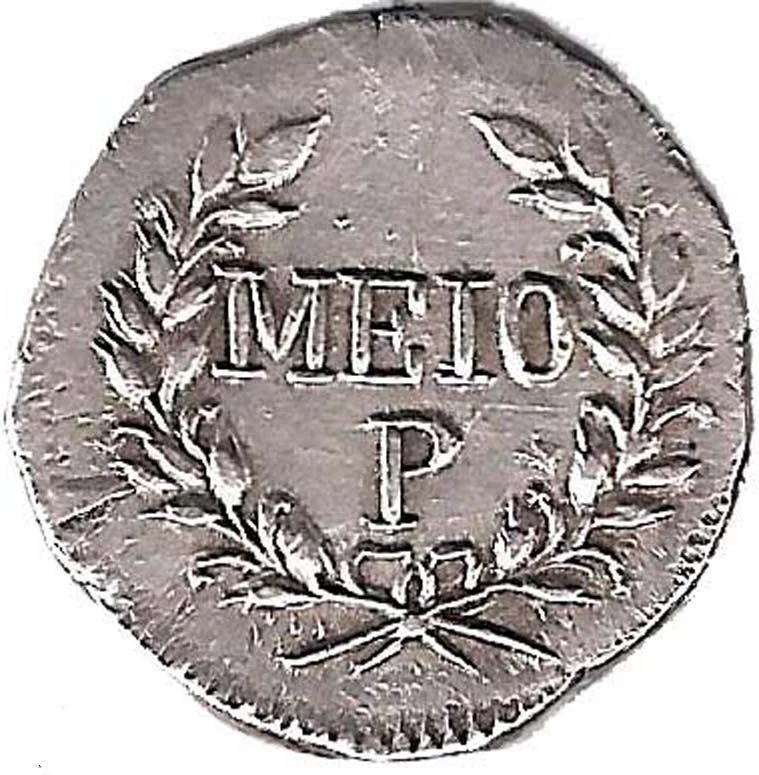
150 reis – Portuguese India
Add to wishlist
India
Context
Years: 1857–1861
Country: India
Issuer: Portuguese India
Ruler: Pedro V
Currency:
(1706—1880)
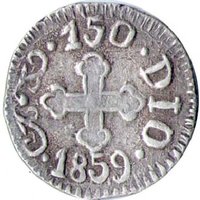
Subdivision: 150 reis = ½ Pardao=¼ Rupia
Demonetized: Yes
Material
Diameter: 15.5 mm
Weight: 2.6 g
Silver Weight:: 2.60 g
Shape: Irregular round
Composition: Silver
Magnetic: No
Technique: Hammered
References
KM: #
Numista: #48664
Value
Bullion value: $6.33
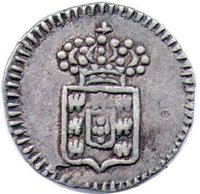
Obverse
Inscription:
PETRUS V PORTUG ET ALGARB REX
1857
1857
Script: Latin
Edge
Mints
| Name | Mark |
|---|---|
| Goa | — |
Mintings
| Year | Mint Mark | Mintage | Quality | Collection |
|---|---|---|---|---|
| 1857 | — | — | ||
| 1860 | — | — | ||
| 1861 | — | — |
Historical background
In 1857, the currency situation in Portuguese India (Goa, Daman, and Diu) was characterized by a complex and often chaotic multiplicity of circulating coins, reflecting its position at the intersection of Portuguese colonial administration, regional Indian economies, and wider international trade. The official currency was the Portuguese Indian Rupia (divided into 16 tangas or 960 réis), but its circulation was limited and competed with a plethora of other coins. Most prevalent in daily commerce were various silver rupees from neighbouring British India, particularly those minted by the Bombay Presidency, alongside older Mughal and Maratha coins, and even gold moidores and silver cruzados from earlier Portuguese eras. This created a challenging environment for trade and taxation, requiring constant exchange calculations and assaying of coins for weight and purity.
The Portuguese administration struggled with chronic fiscal deficits and had limited capacity to enforce a uniform currency system. While the Casa da Moeda (mint) in Goa periodically issued coins, their output was insufficient to dominate the monetary supply. Furthermore, the value of coins was intrinsically tied to their metallic content, leading to frequent episodes of Gresham's Law, where undervalued or debased official Portuguese coins drove "good" full-weight silver rupees out of circulation or into hoards. The situation was exacerbated by the global inflow of silver and the economic dominance of the British East India Company, whose rupees were often preferred for their consistent silver content and wider acceptance in regional trade networks.
Thus, the currency landscape of 1857 was one of de facto bimetallism and hybridity, rather than orderly colonial control. The Portuguese Rupia served as a unit of account for government dealings, but the actual money in circulation was a diverse, fragmented assemblage of foreign and domestic specie. This monetary instability mirrored the broader political and economic fragility of Portuguese India, which was increasingly overshadowed by the British Raj. A genuine standardization of currency would only begin decades later with more substantive monetary reforms.
The Portuguese administration struggled with chronic fiscal deficits and had limited capacity to enforce a uniform currency system. While the Casa da Moeda (mint) in Goa periodically issued coins, their output was insufficient to dominate the monetary supply. Furthermore, the value of coins was intrinsically tied to their metallic content, leading to frequent episodes of Gresham's Law, where undervalued or debased official Portuguese coins drove "good" full-weight silver rupees out of circulation or into hoards. The situation was exacerbated by the global inflow of silver and the economic dominance of the British East India Company, whose rupees were often preferred for their consistent silver content and wider acceptance in regional trade networks.
Thus, the currency landscape of 1857 was one of de facto bimetallism and hybridity, rather than orderly colonial control. The Portuguese Rupia served as a unit of account for government dealings, but the actual money in circulation was a diverse, fragmented assemblage of foreign and domestic specie. This monetary instability mirrored the broader political and economic fragility of Portuguese India, which was increasingly overshadowed by the British Raj. A genuine standardization of currency would only begin decades later with more substantive monetary reforms.
✨ Legendary