

⅛ rupee – Hyderabad-Gadwal Feudatory
Add to wishlist
India
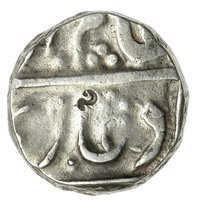
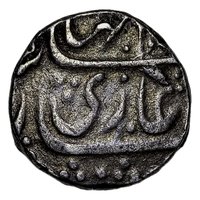
Obverse
Description:
Persian legends.
Inscription:
سکہ شاہ عالم بہادر بادشاہ غازی
Translation:
Coin of Shah Alam Bahadur, the Warrior Emperor
Language: Persian
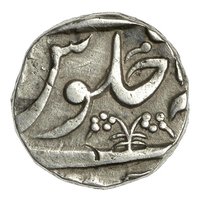
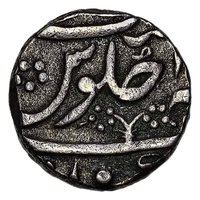
Reverse
Description:
Persian legends, floral bouquet (Mintmark) below "Julus", frozen year (AH1186) above "Sanat".
Inscription:
صنعت ١١۸٦ يوليو ميمنات مانوس زرب أكروان
Translation:
Minted 1186 July, in the prosperous city of Manus, the mint of Akroan.
Language: Arabic
Edge
Plain
Mintings
| Year | Mint Mark | Mintage | Quality | Collection |
|---|---|---|---|---|
| 1840 | — | — |
Historical background
In 1840, the currency situation in the Gadwal Feudatory, a samsthanam (estate) under the suzerainty of the Nizam of Hyderabad, was characterized by a complex and layered monetary system. The primary authority was the Hyderabad state, which minted its own distinctive currency, most notably the silver Rupee featuring the Charminar (issued from 1803) and the gold Hun. However, the Nizam's currency circulated alongside older Mughal and British East India Company coins, creating a multi-standard environment where exchange rates and values were often negotiated.
As a feudatory, the Gadwal rulers did not possess the right to issue their own sovereign coinage. The practical economy within the samsthanam likely operated using the Hyderabad Rupee for larger transactions, while smaller, everyday commerce depended heavily on copper Falus and Dubs from the Hyderabad mint. The persistence of barter, especially in rural areas, remained significant. Furthermore, given Gadwal's geographical position bordering the Madras Presidency, it is probable that British Company Rupees and their fractional coins also infiltrated the local market, adding another layer of complexity for merchants and administrators.
This period was one of quiet transition. While the Hyderabad monetary system was dominant, the political and economic influence of the British Raj was steadily growing. The currency situation in Gadwal in 1840 thus reflected a moment of equilibrium before a major shift; the feudal order under the Nizam remained intact, but the standardized coinage of British India, which would eventually supplant all regional systems after the annexation of Hyderabad in 1948, was already making its presence felt on the margins of the economy.
As a feudatory, the Gadwal rulers did not possess the right to issue their own sovereign coinage. The practical economy within the samsthanam likely operated using the Hyderabad Rupee for larger transactions, while smaller, everyday commerce depended heavily on copper Falus and Dubs from the Hyderabad mint. The persistence of barter, especially in rural areas, remained significant. Furthermore, given Gadwal's geographical position bordering the Madras Presidency, it is probable that British Company Rupees and their fractional coins also infiltrated the local market, adding another layer of complexity for merchants and administrators.
This period was one of quiet transition. While the Hyderabad monetary system was dominant, the political and economic influence of the British Raj was steadily growing. The currency situation in Gadwal in 1840 thus reflected a moment of equilibrium before a major shift; the feudal order under the Nizam remained intact, but the standardized coinage of British India, which would eventually supplant all regional systems after the annexation of Hyderabad in 1948, was already making its presence felt on the margins of the economy.

✨ Legendary