

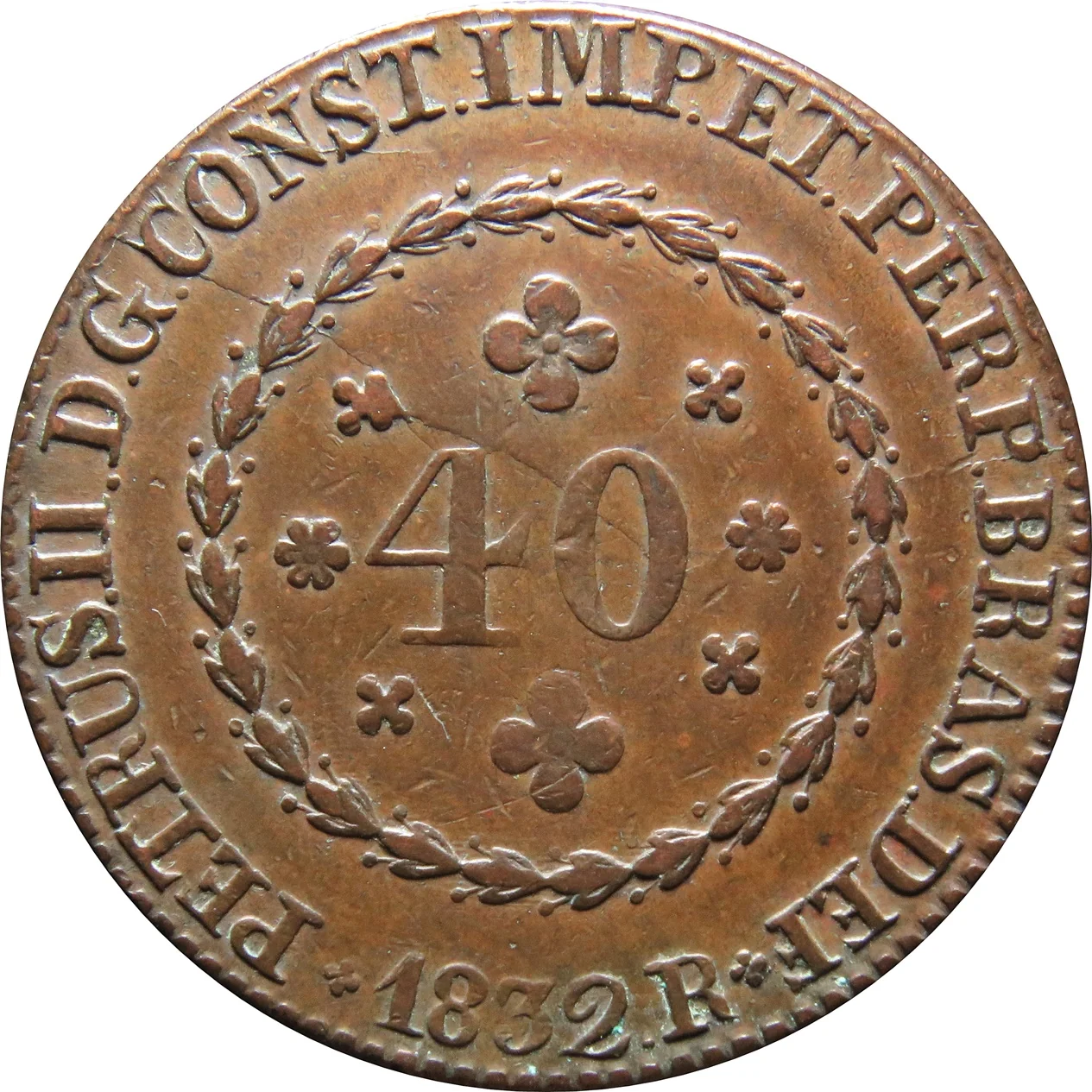
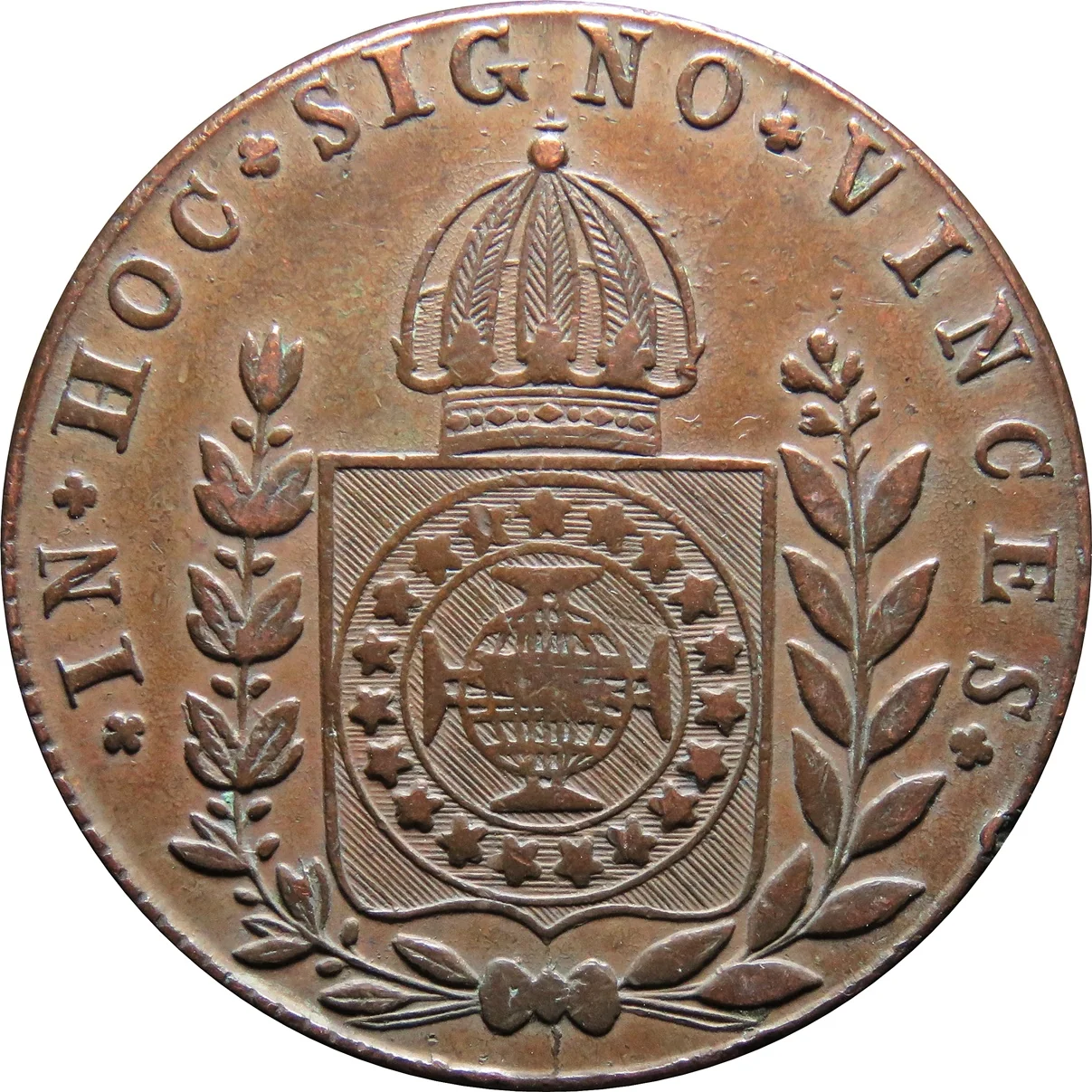
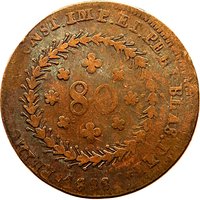
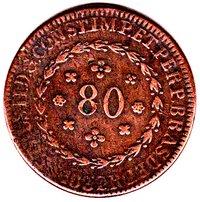
Obverse
Description:
Leafy circle with surrounding legend.
Inscription:
PETRUS II D.G.CONST.IMP.ET.PERP.BRAS.DEF
40
1832.R
40
1832.R
Script: Latin
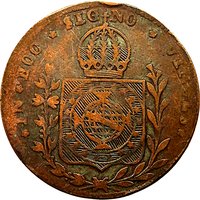
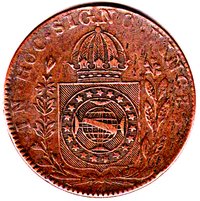
Reverse
Edge
Plain
Mintings
| Year | Mint Mark | Mintage | Quality | Collection |
|---|---|---|---|---|
| 1831 | R | — | ||
| 1832 | R | 816,000 |
Historical background
In 1831, Brazil's currency situation was chaotic and inflationary, a direct legacy of the political and economic turbulence following independence from Portugal in 1822. The government, first under Emperor Pedro I and then the Regency following his abdication in April 1831, faced chronic budget deficits. To cover expenses, it heavily relied on the issuance of paper money, primarily bilhetes de tesouro (treasury notes), which were not backed by gold or silver reserves. This led to a severe loss of confidence, as the value of paper money plummeted against copper and silver coins, creating a system where multiple mediums of exchange circulated with wildly fluctuating values.
The monetary landscape was a complex and dysfunctional patchwork. Alongside the depreciated paper notes, there circulated a vast array of physical coins: Portuguese réis, British sovereigns, and coins from other nations. Most importantly, the government had begun striking low-quality copper coins, known as ceitis, which were easily counterfeited. This proliferation of dubious copper and unbacked paper drove "good" silver coinage out of circulation (Gresham's Law in action), further crippling everyday commerce. Prices were often quoted in réis, but the actual means of payment and its real value were subjects of constant negotiation and confusion.
This monetary instability had profound social and economic consequences. It eroded savings, disrupted trade, and fueled social unrest, as wages failed to keep pace with rising prices. The fledgling Regency government, preoccupied with containing separatist revolts and establishing political order, lacked the resources and authority to implement a decisive monetary reform. Therefore, the currency crisis of 1831 was not an isolated issue but a core symptom of the broader challenges of state-building, reflecting a struggling young nation attempting to establish its financial credibility and economic sovereignty.
The monetary landscape was a complex and dysfunctional patchwork. Alongside the depreciated paper notes, there circulated a vast array of physical coins: Portuguese réis, British sovereigns, and coins from other nations. Most importantly, the government had begun striking low-quality copper coins, known as ceitis, which were easily counterfeited. This proliferation of dubious copper and unbacked paper drove "good" silver coinage out of circulation (Gresham's Law in action), further crippling everyday commerce. Prices were often quoted in réis, but the actual means of payment and its real value were subjects of constant negotiation and confusion.
This monetary instability had profound social and economic consequences. It eroded savings, disrupted trade, and fueled social unrest, as wages failed to keep pace with rising prices. The fledgling Regency government, preoccupied with containing separatist revolts and establishing political order, lacked the resources and authority to implement a decisive monetary reform. Therefore, the currency crisis of 1831 was not an isolated issue but a core symptom of the broader challenges of state-building, reflecting a struggling young nation attempting to establish its financial credibility and economic sovereignty.
💎 Very Rare