

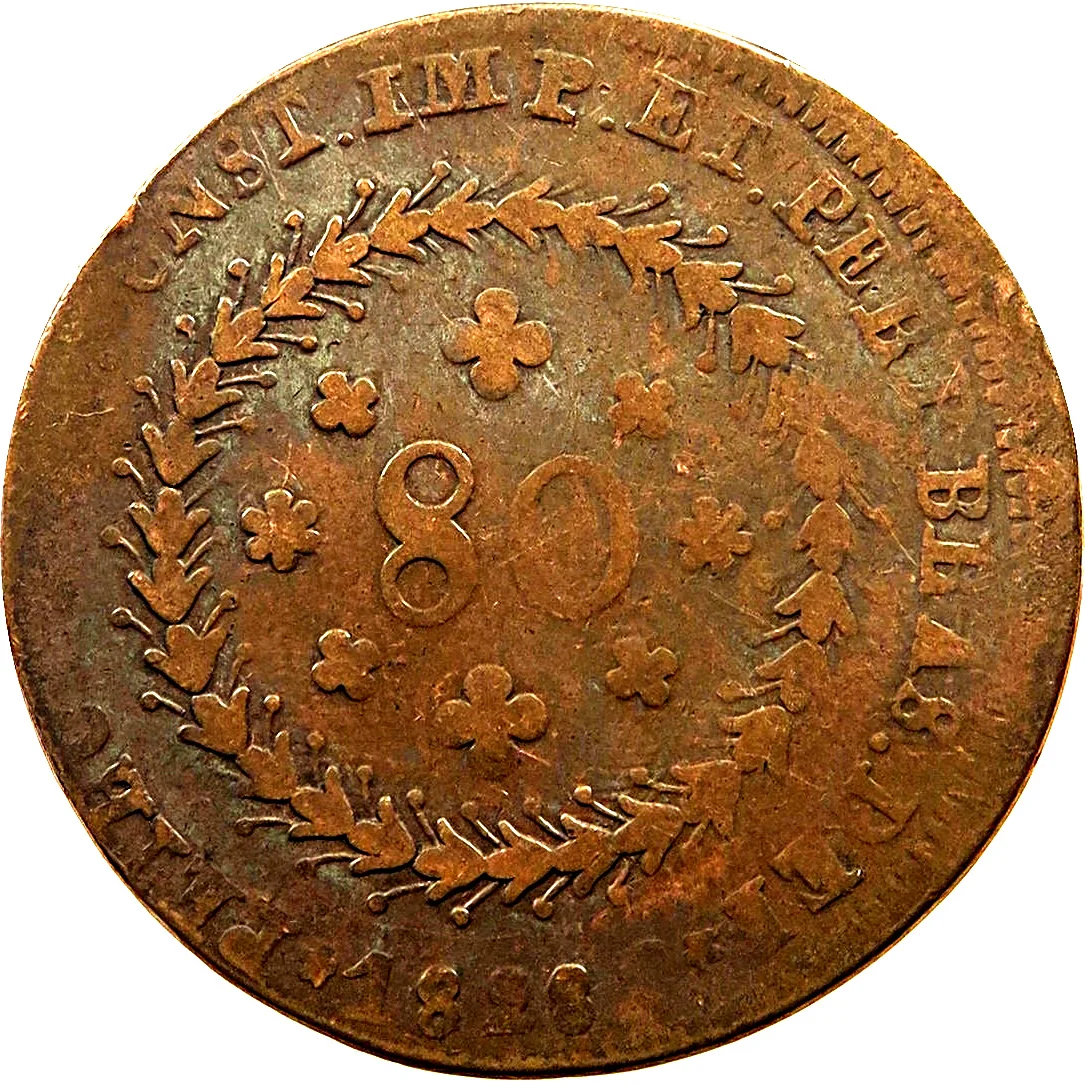
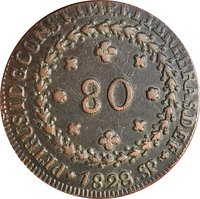
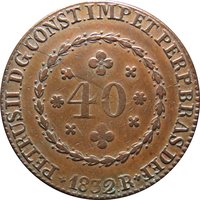
Obverse
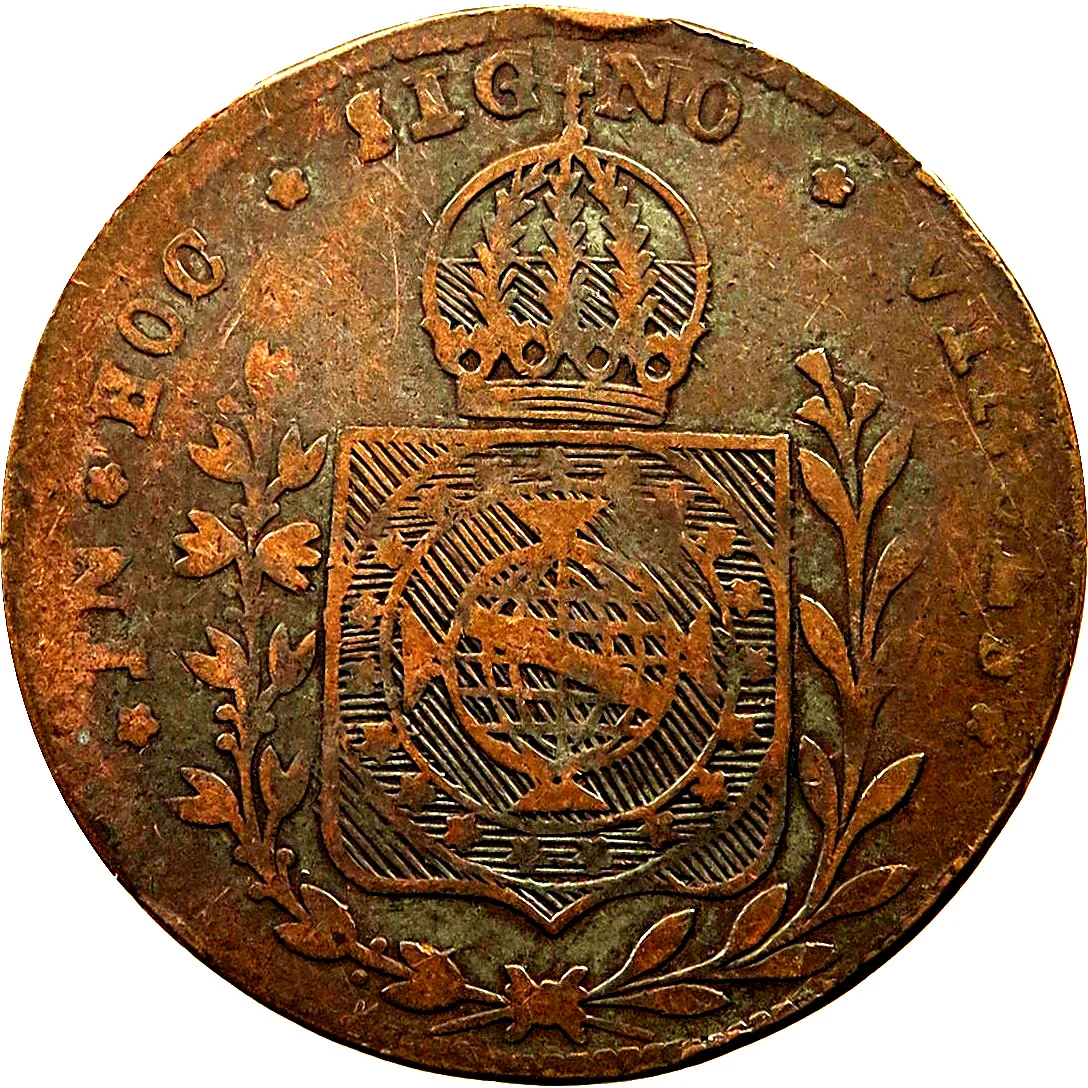
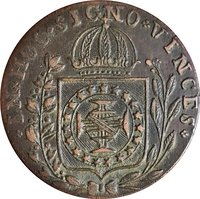
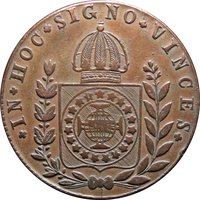
Reverse
Edge
SmoothLiso
Categories
| Symbols> Coat of Arms |
| Symbol> Wreath |
Mints
| Name | Mark |
|---|---|
| Cuiabá, Mato Grosso | C |
| Goiás | G |
Mintings
Historical background
In 1826, Brazil's currency situation was characterized by profound instability and inflationary pressures, a direct legacy of the colonial period and the costs of independence. The monetary system was a complex and chaotic mix, with various foreign coins, especially British sovereigns and Spanish-American pesos, circulating alongside depreciated Brazilian copper and silver coins. The most significant issue was the severe shortage of small-denomination currency for everyday transactions, leading to the widespread use of makeshift tokens issued by private merchants and even municipal authorities, further eroding uniform standards.
This monetary confusion was exacerbated by the fiscal policies of the new Empire. To finance the War of Independence from Portugal (1822-1823) and subsequent conflicts like the Cisplatine War, the government had resorted to issuing vast amounts of paper money, the papel-moeda, without adequate metallic backing. By 1826, this fiat currency had depreciated significantly, trading at a steep discount to gold and silver. The government's attempts to stabilize the situation, including the creation of the Banco do Brasil in 1808, had proven insufficient, as it continued to rely on the bank for loans, effectively monetizing the public debt.
Consequently, the economy suffered from a debilitating lack of confidence, price volatility, and hampered commerce. The coexistence of overvalued official exchange rates with market-driven depreciated rates created opportunities for speculation and arbitrage, rather than productive investment. This turbulent financial environment in 1826 underscored the immense challenge faced by Emperor Pedro I's government in establishing economic sovereignty and stability, a foundational problem that would plague the Brazilian Empire for decades and necessitate major monetary reforms later in the century.
This monetary confusion was exacerbated by the fiscal policies of the new Empire. To finance the War of Independence from Portugal (1822-1823) and subsequent conflicts like the Cisplatine War, the government had resorted to issuing vast amounts of paper money, the papel-moeda, without adequate metallic backing. By 1826, this fiat currency had depreciated significantly, trading at a steep discount to gold and silver. The government's attempts to stabilize the situation, including the creation of the Banco do Brasil in 1808, had proven insufficient, as it continued to rely on the bank for loans, effectively monetizing the public debt.
Consequently, the economy suffered from a debilitating lack of confidence, price volatility, and hampered commerce. The coexistence of overvalued official exchange rates with market-driven depreciated rates created opportunities for speculation and arbitrage, rather than productive investment. This turbulent financial environment in 1826 underscored the immense challenge faced by Emperor Pedro I's government in establishing economic sovereignty and stability, a foundational problem that would plague the Brazilian Empire for decades and necessitate major monetary reforms later in the century.
💎 Very Rare