

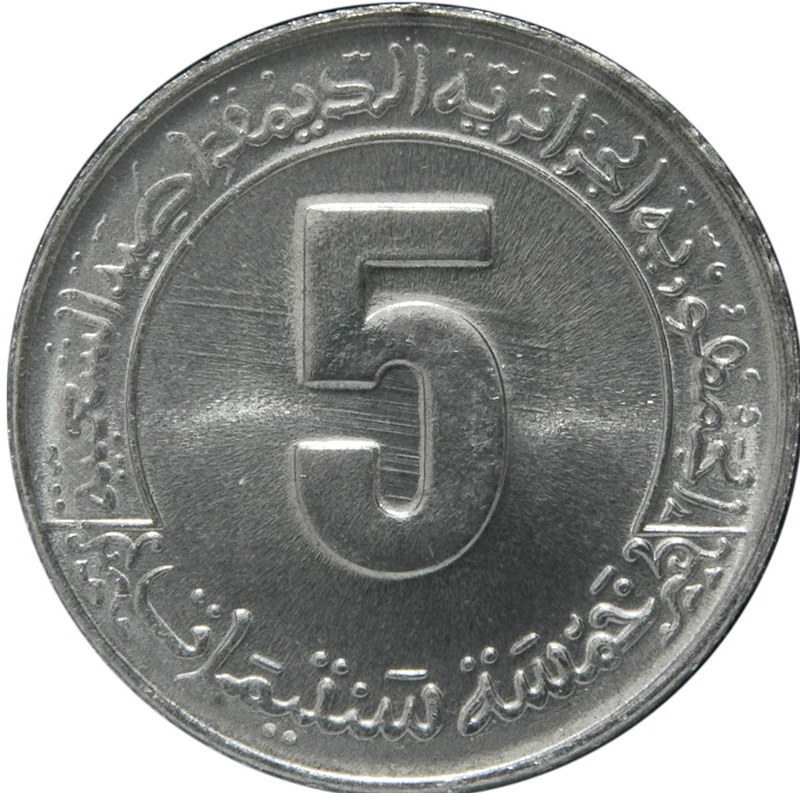
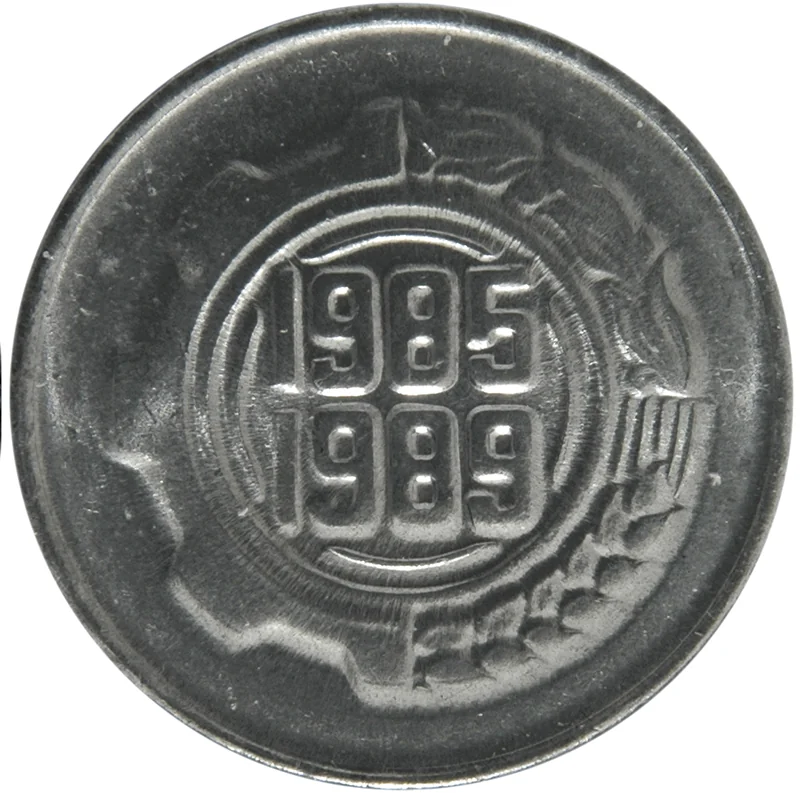
5 centimes – Algeria
Add to wishlist
Circulating commemorative coins
Commemoration: 2nd Quinquennial Plan
Algeria
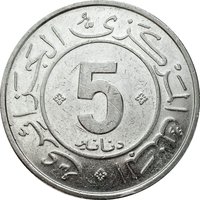
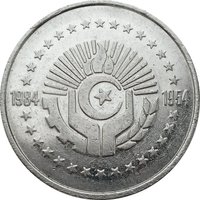
Obverse
Reverse
Edge
Plain
Categories
| Organization> FAO |
| Symbol> Wreath |
Mintings
| Year | Mint Mark | Mintage | Quality | Collection |
|---|---|---|---|---|
| 1985 | — | — |
Historical background
In 1985, Algeria's currency situation was defined by its rigid adherence to a state-controlled, socialist economic model and the profound influence of the global oil market. The Algerian dinar (DZD) operated under a strict fixed exchange rate system, pegged to a basket of currencies heavily weighted by the US dollar. This peg was maintained by the Banque d'Algérie at an official rate that was significantly overvalued, creating a wide disparity with the black-market rate where the dinar traded much weaker. This overvaluation was a policy choice to subsidize imports of essential goods and capital equipment for the state-led industrialization drive, but it rendered non-hydrocarbon exports uncompetitive and discouraged foreign investment.
The economy was overwhelmingly dependent on hydrocarbons, with oil and gas accounting for approximately 97% of total export earnings. Consequently, the dinar's stability and the government's entire fiscal policy were directly vulnerable to shifts in global oil prices. The sharp drop in oil prices beginning in 1986, on the horizon in 1985, would soon expose the fragility of this system. The state's extensive subsidies on basic goods and large-scale public spending, financed by petrodollars, created a growing imbalance as revenues began to soften, leading to increased external borrowing.
Internally, a complex system of exchange controls and import licenses restricted access to foreign currency, which was allocated by the state according to its planned economic priorities. This resulted in chronic shortages of consumer goods and spare parts, while fostering a thriving parallel market for foreign exchange. The currency regime in 1985, therefore, reflected the broader economic tensions of the era: an overvalued and artificially stable official dinar masking underlying structural weaknesses, extreme dependency on a single volatile resource, and mounting pressures that would culminate in a severe economic crisis by the end of the decade.
The economy was overwhelmingly dependent on hydrocarbons, with oil and gas accounting for approximately 97% of total export earnings. Consequently, the dinar's stability and the government's entire fiscal policy were directly vulnerable to shifts in global oil prices. The sharp drop in oil prices beginning in 1986, on the horizon in 1985, would soon expose the fragility of this system. The state's extensive subsidies on basic goods and large-scale public spending, financed by petrodollars, created a growing imbalance as revenues began to soften, leading to increased external borrowing.
Internally, a complex system of exchange controls and import licenses restricted access to foreign currency, which was allocated by the state according to its planned economic priorities. This resulted in chronic shortages of consumer goods and spare parts, while fostering a thriving parallel market for foreign exchange. The currency regime in 1985, therefore, reflected the broader economic tensions of the era: an overvalued and artificially stable official dinar masking underlying structural weaknesses, extreme dependency on a single volatile resource, and mounting pressures that would culminate in a severe economic crisis by the end of the decade.
🌱 Common