

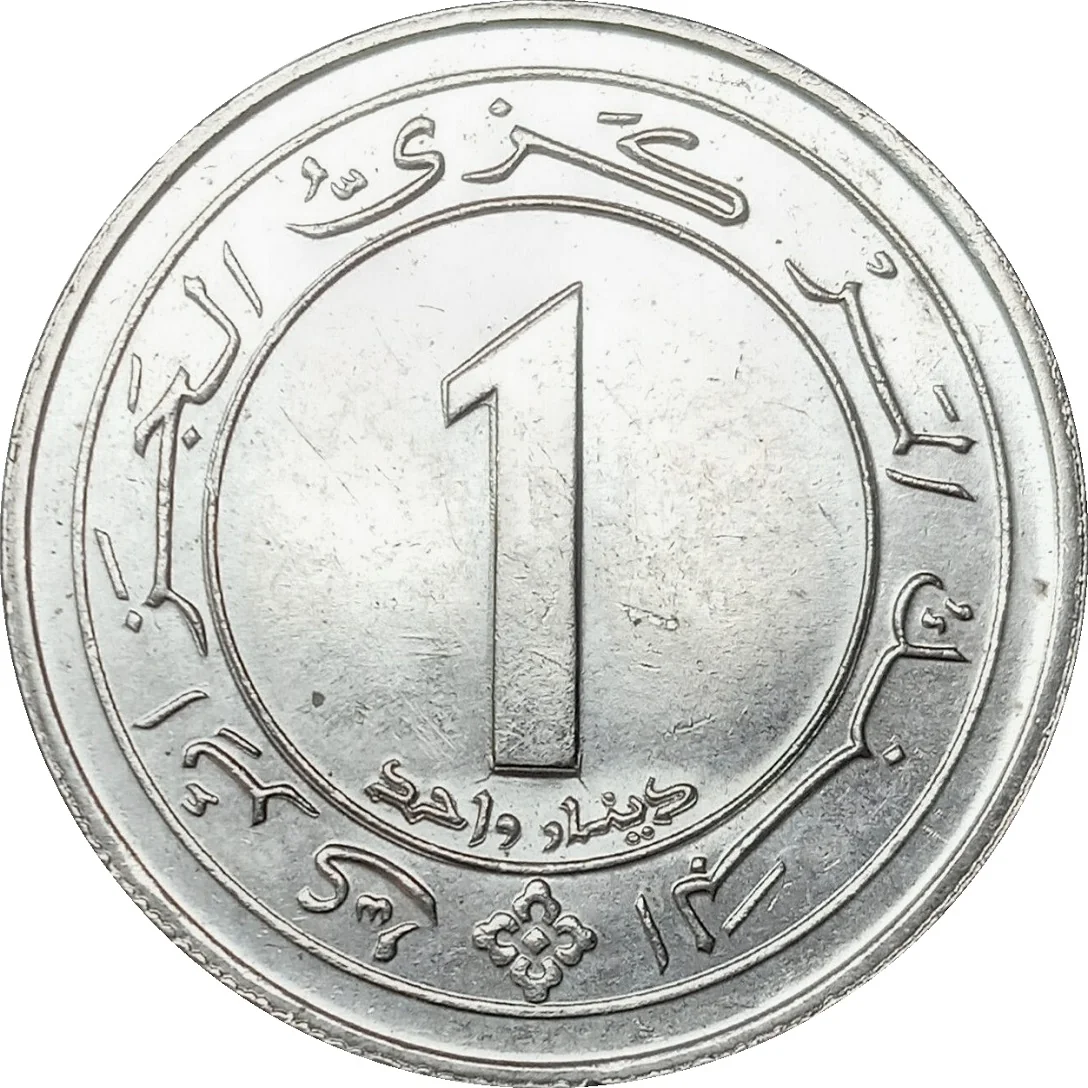
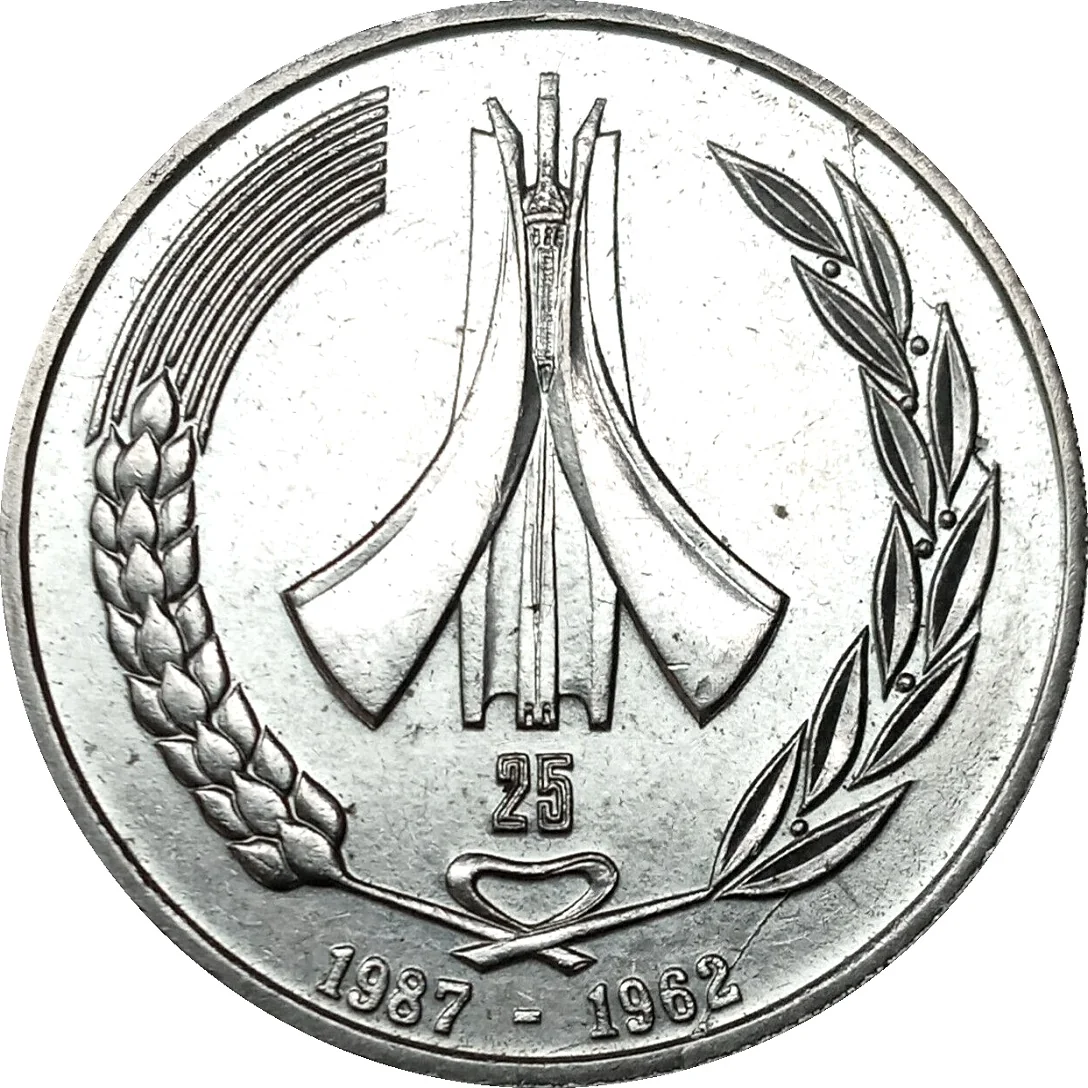
1 dinar (Independence) – Algeria
Add to wishlist
Circulating commemorative coins
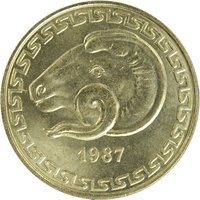
Commemoration: 25th Anniversary of Independence
Algeria
Context
Year: 1987
Issuer: Algeria
Period:
(since 1962)
Currency:
(since 1964)
Demonetized: Yes
Total mintage: 43,119,250
Material
References
KM: #
Numista: #2928
Value
Exchange value: 1 DZD
Obverse
Reverse
Edge
Milled
Mints
| Name | Mark |
|---|---|
| Algiers | — |
Mintings
| Year | Mint Mark | Mintage | Quality | Collection |
|---|---|---|---|---|
| 1987 | — | 43,119,250 |
Historical background
In 1987, Algeria's currency situation was deeply intertwined with the nation's broader economic crisis, characterized by the severe limitations of its centrally planned, hydrocarbon-dependent model. The Algerian dinar (DZD) operated under a complex and restrictive system of multiple exchange rates, a hallmark of the économie administrée. An official, heavily overvalued rate was used for priority imports like food and medicine, while a separate "financial" or "parallel" rate applied to other transactions. This system, managed by the Banque d'Algérie, created significant distortions, encouraged rent-seeking, and fueled a thriving black market for foreign currency where the dinar traded at a fraction of its official value.
The root cause was a sharp decline in global oil prices beginning in 1986, which devastated state revenues, as oil and gas exports accounted for over 95% of foreign exchange earnings. This external shock exposed the inefficiencies of Algeria's import-substituting industrialization and led to a critical shortage of hard currency. Consequently, the government struggled to finance essential imports, leading to growing external debt and severe shortages of consumer goods. The overvalued official dinar made non-energy exports uncompetitive and failed to reflect the true economic reality.
This currency rigidity was a key factor prompting the Algerian government, under President Chadli Bendjedid, to initiate a cautious and contested program of economic reforms (Infitah or "opening"). While a full devaluation and unification of exchange rates would not occur until the more comprehensive reforms of the 1990s, the debates and pressures of 1987 set the stage. The situation underscored the urgent need to move away from a rigid, state-controlled financial system toward greater convertibility and market alignment to address the mounting trade imbalances and liquidity crisis.
The root cause was a sharp decline in global oil prices beginning in 1986, which devastated state revenues, as oil and gas exports accounted for over 95% of foreign exchange earnings. This external shock exposed the inefficiencies of Algeria's import-substituting industrialization and led to a critical shortage of hard currency. Consequently, the government struggled to finance essential imports, leading to growing external debt and severe shortages of consumer goods. The overvalued official dinar made non-energy exports uncompetitive and failed to reflect the true economic reality.
This currency rigidity was a key factor prompting the Algerian government, under President Chadli Bendjedid, to initiate a cautious and contested program of economic reforms (Infitah or "opening"). While a full devaluation and unification of exchange rates would not occur until the more comprehensive reforms of the 1990s, the debates and pressures of 1987 set the stage. The situation underscored the urgent need to move away from a rigid, state-controlled financial system toward greater convertibility and market alignment to address the mounting trade imbalances and liquidity crisis.
🌱 Very Common