

2 euro (Parliament) – Finland
Add to wishlist
Circulating commemorative coins
Commemoration: 150th Anniversary of the Parliament
Finland
Obverse
Description:
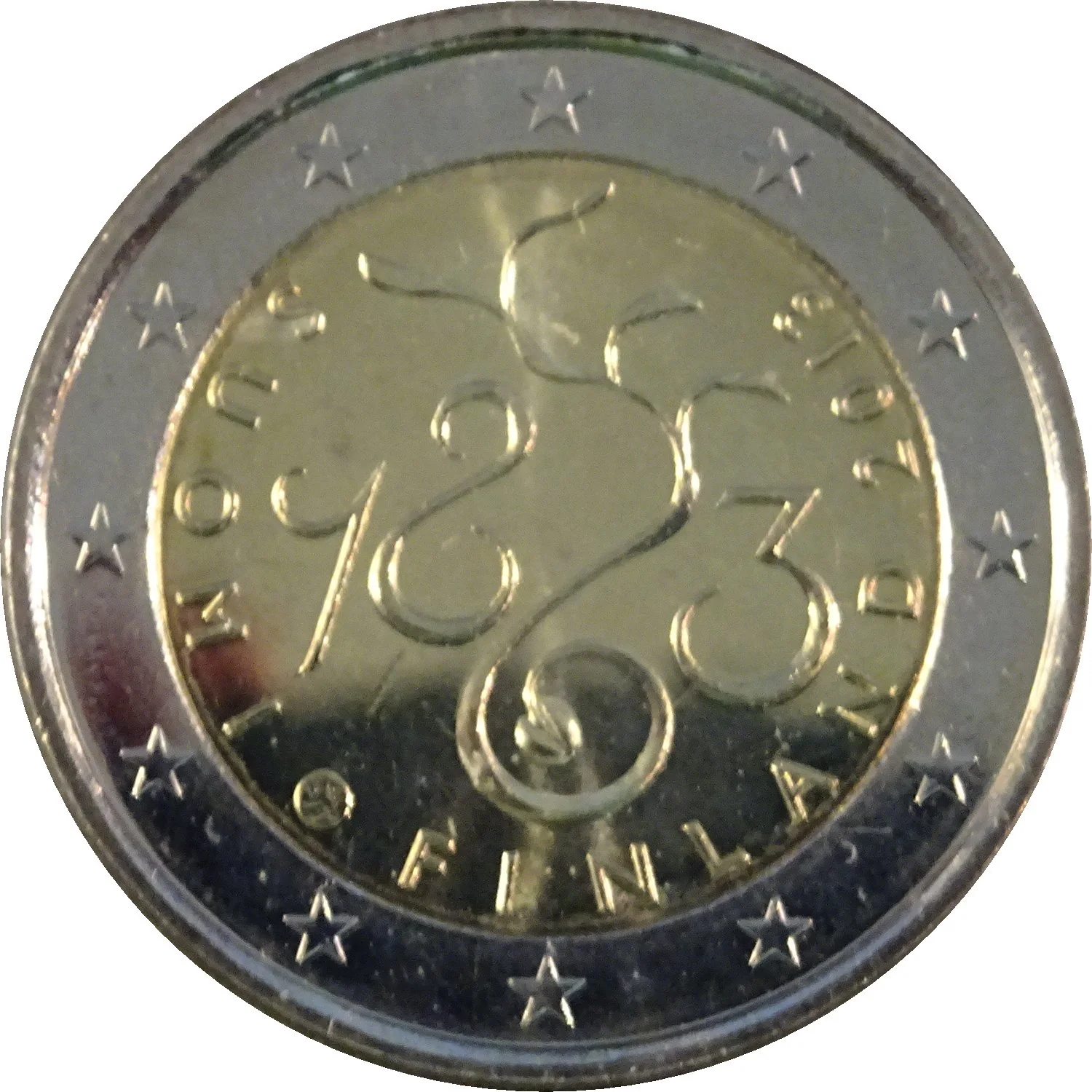
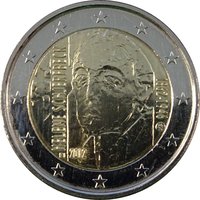
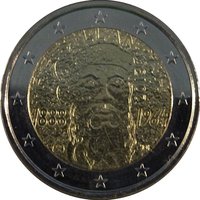
A shoot growing from 1863 symbolizes the start of Finnish democracy. Below, "SUOMI FINLAND" and "2013" flank the mint mark. The outer ring bears the 12 EU stars.
Inscription:
SUOMI FINLAND 2013
1863
1863
Translation:
SUOMI FINLAND 2013
1863
1863
Script: Latin
Engraver: Petri Neuvonen
Reverse
Categories
| Map |
Mints
| Name | Mark |
|---|---|
| Mint of Finland | — |
Mintings
| Year | Mint Mark | Mintage | Quality | Collection |
|---|---|---|---|---|
| 2013 | — | 989,000 | ||
| 2013 | — | 11,000 | Proof | |
| 2013 | — | — | BU |
Historical background
In 2013, Finland was a full and established member of the Eurozone, having adopted the euro as its official currency in 2002. The country's monetary policy was therefore set by the European Central Bank (ECB), with a primary focus on maintaining price stability across the entire euro area. Domestically, Finland's economic situation was challenging, marked by a protracted recession, declining competitiveness, and the well-publicized struggles of its flagship company, Nokia. These structural issues put significant pressure on the Finnish economy, but the currency itself was not a national policy tool; it was a shared instrument managed from Frankfurt.
The year was notably calm for the euro in the foreign exchange markets compared to the peak of the European debt crisis in 2011-2012. However, underlying tensions within the currency union persisted. For Finland, a key concern was its role as a "creditor nation" within the Eurozone crisis framework. The Finnish government, led by Prime Minister Jyrki Katainen, took a firm stance on fiscal discipline and was often vocal in its opposition to collective debt liability, such as eurobonds. This position was exemplified by Finland's insistence on receiving collateral from Greece for its bailout loans, a move that reflected both domestic political pressure and a deep-seated concern over the risks to its own public finances.
Consequently, the currency "situation" in Finland in 2013 was defined not by exchange rate volatility but by a political and economic debate about the future and governance of the euro itself. While the physical currency circulated without issue, Finnish policymakers were actively engaged in high-stakes negotiations over banking union and crisis management mechanisms. The domestic economic downturn also fueled a quiet but growing public discussion about the costs and benefits of euro membership, though this remained a minority view and did not threaten a serious push for exit. The year underscored Finland's dual reality: a stable currency at the transactional level, but deep integration into the complex and often contentious political project of the single currency.
The year was notably calm for the euro in the foreign exchange markets compared to the peak of the European debt crisis in 2011-2012. However, underlying tensions within the currency union persisted. For Finland, a key concern was its role as a "creditor nation" within the Eurozone crisis framework. The Finnish government, led by Prime Minister Jyrki Katainen, took a firm stance on fiscal discipline and was often vocal in its opposition to collective debt liability, such as eurobonds. This position was exemplified by Finland's insistence on receiving collateral from Greece for its bailout loans, a move that reflected both domestic political pressure and a deep-seated concern over the risks to its own public finances.
Consequently, the currency "situation" in Finland in 2013 was defined not by exchange rate volatility but by a political and economic debate about the future and governance of the euro itself. While the physical currency circulated without issue, Finnish policymakers were actively engaged in high-stakes negotiations over banking union and crisis management mechanisms. The domestic economic downturn also fueled a quiet but growing public discussion about the costs and benefits of euro membership, though this remained a minority view and did not threaten a serious push for exit. The year underscored Finland's dual reality: a stable currency at the transactional level, but deep integration into the complex and often contentious political project of the single currency.
Series: Finland 2 euro commemoratives
🌱 Very Common