

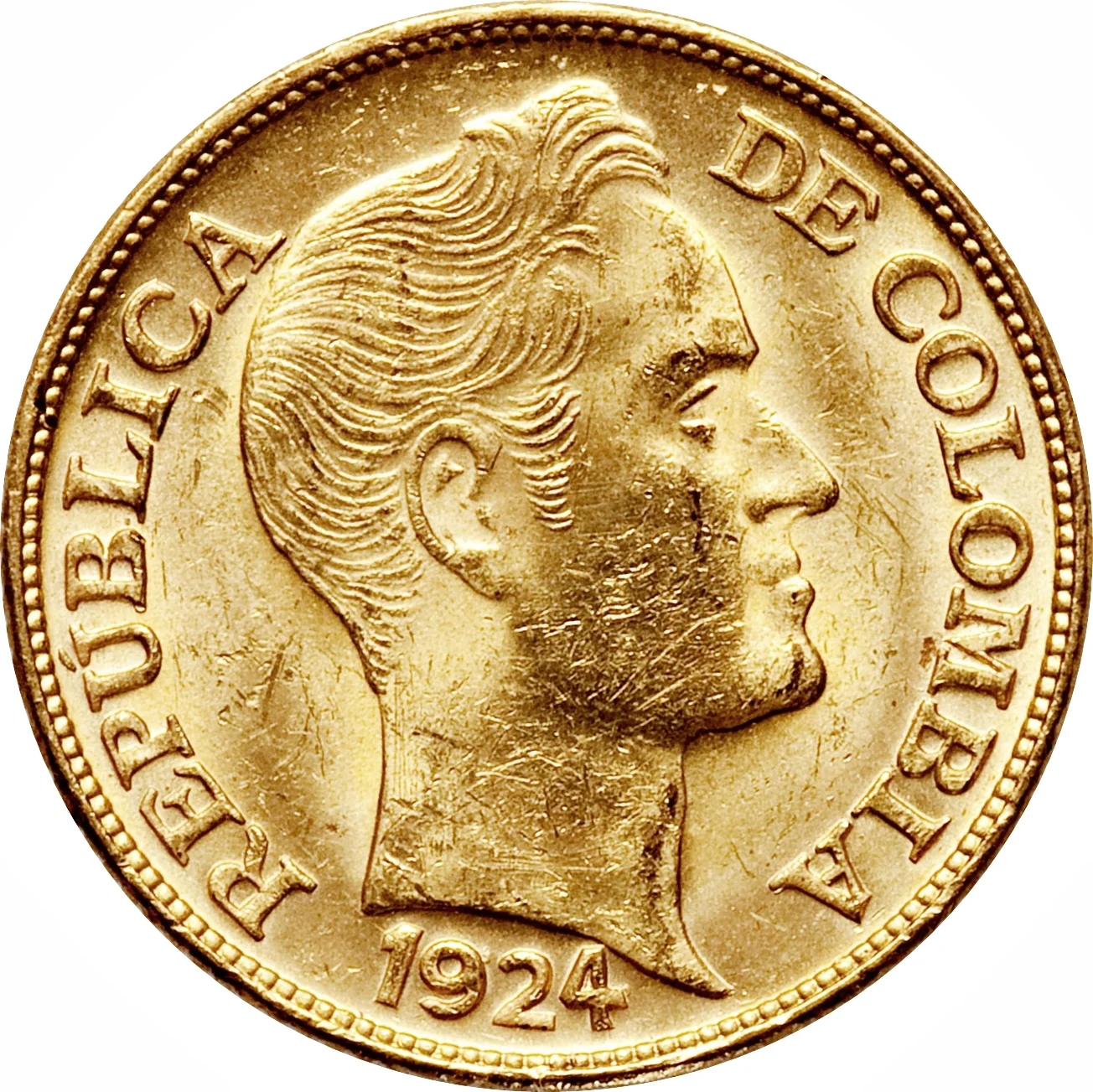
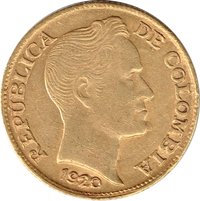
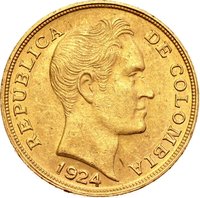
Obverse
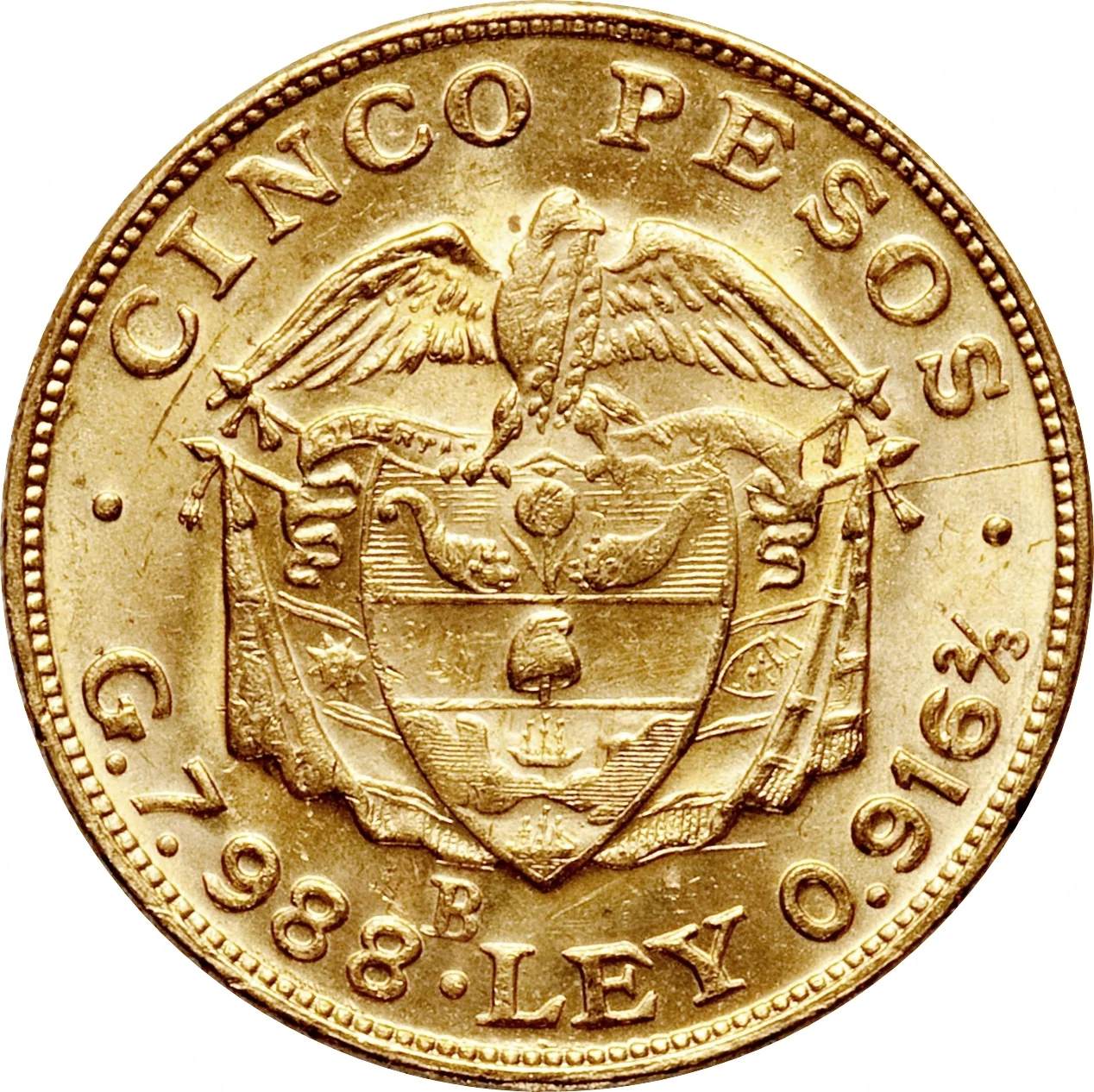
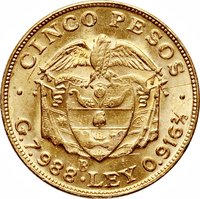
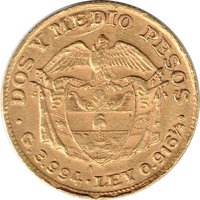
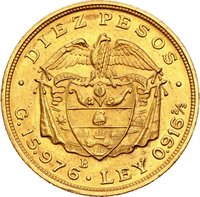
Reverse
Description:
Metal weight and purity.
Inscription:
• CINCO PESOS •
B
G.7.988•LEY 0.916 ⅔
B
G.7.988•LEY 0.916 ⅔
Script: Latin
Edge
Reeded
Categories
| Symbols> Coat of Arms |
| Person> Politician |
Mintings
| Year | Mint Mark | Mintage | Quality | Collection |
|---|---|---|---|---|
| 1919 | — | — | ||
| 1919 | A | — | ||
| 1919 | B | — | ||
| 1920 | A | — | ||
| 1920 | B | 108,000 | ||
| 1920 | — | 870,000 | ||
| 1921 | A | — | ||
| 1922 | B | 29,000 | ||
| 1923 | B | 74,000 | ||
| 1924 | B | 705,000 |
Historical background
In 1919, Colombia's currency situation was characterized by the lingering effects of the "Thousand Days' War" (1899-1902) and the disruptive economic impact of World War I. The nation operated on a bimetallic system, but in practice, the paper peso (peso papel) was the dominant circulating medium. This fiat currency, not backed by gold or silver, had experienced significant depreciation and instability for decades, creating a profound distrust among the public and merchants, who often preferred transactions in gold or even foreign currency for major contracts.
The First World War had a paradoxical effect. Initially, it caused a sharp decline in Colombia's key exports, like coffee, disrupting the inflow of foreign exchange. However, by 1919, the post-war global boom led to a dramatic surge in coffee prices. This resulted in a massive inflow of gold and foreign currency, particularly U.S. dollars, which began to stabilize the economy and strengthen the government's fiscal position. This influx provided the necessary reserves for a major monetary reform that was already in the planning stages.
Consequently, 1919 stands as a pivotal year just before a fundamental transformation. The government, under President Marco Fidel Suárez and with guidance from financial experts like Esteban Jaramillo, was finalizing plans to abandon the discredited paper peso and establish a new, gold-backed currency. This reform would culminate in Law 45 of 1923, which created the Banco de la República and introduced the peso oro, pegging it to the British pound and, by extension, the gold standard. Thus, the currency situation in 1919 was one of a fragile paper system temporarily buoyed by a coffee boom, on the cusp of a definitive shift toward monetary orthodoxy and stability.
The First World War had a paradoxical effect. Initially, it caused a sharp decline in Colombia's key exports, like coffee, disrupting the inflow of foreign exchange. However, by 1919, the post-war global boom led to a dramatic surge in coffee prices. This resulted in a massive inflow of gold and foreign currency, particularly U.S. dollars, which began to stabilize the economy and strengthen the government's fiscal position. This influx provided the necessary reserves for a major monetary reform that was already in the planning stages.
Consequently, 1919 stands as a pivotal year just before a fundamental transformation. The government, under President Marco Fidel Suárez and with guidance from financial experts like Esteban Jaramillo, was finalizing plans to abandon the discredited paper peso and establish a new, gold-backed currency. This reform would culminate in Law 45 of 1923, which created the Banco de la República and introduced the peso oro, pegging it to the British pound and, by extension, the gold standard. Thus, the currency situation in 1919 was one of a fragile paper system temporarily buoyed by a coffee boom, on the cusp of a definitive shift toward monetary orthodoxy and stability.
⭐ Rare