

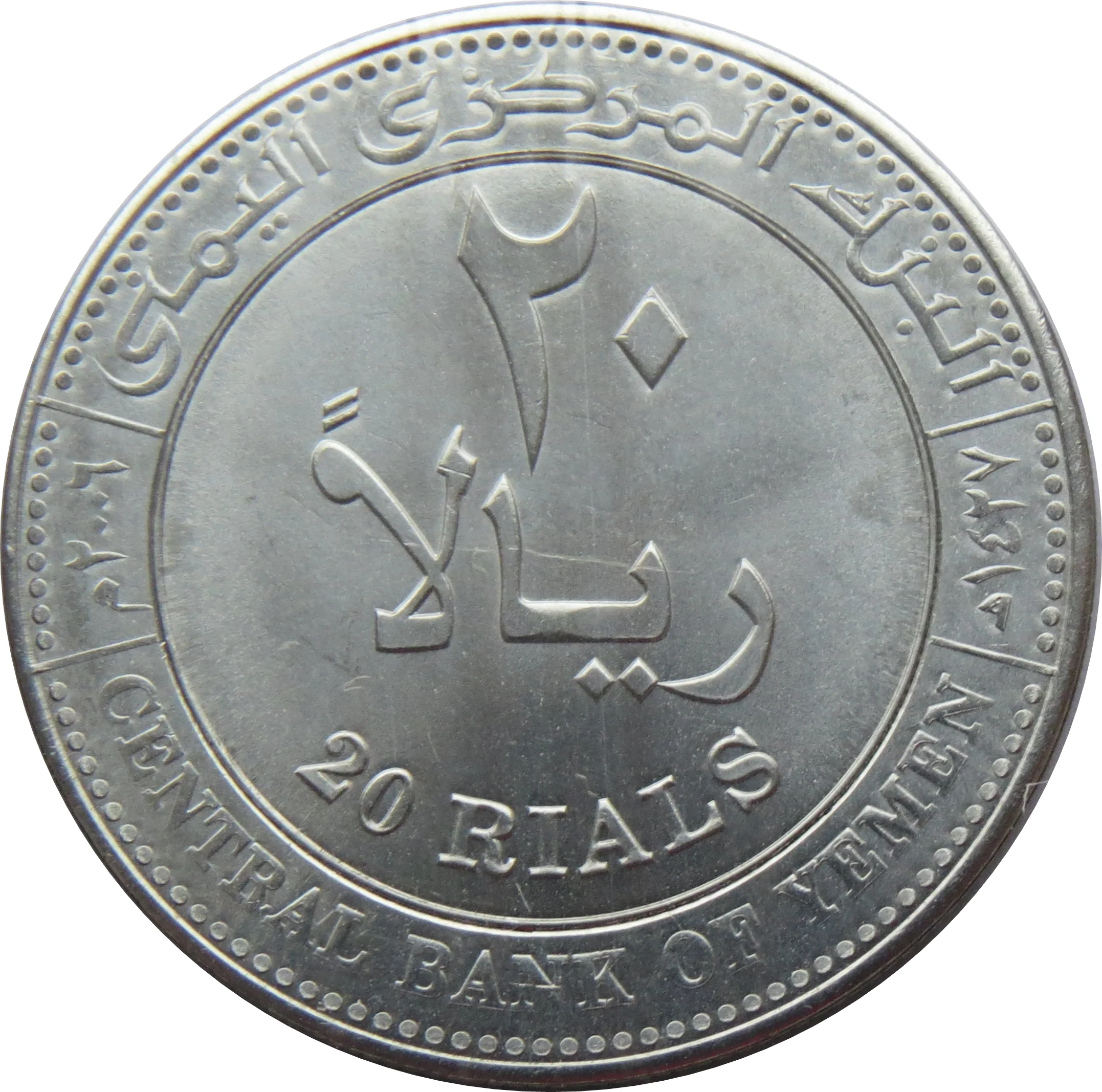
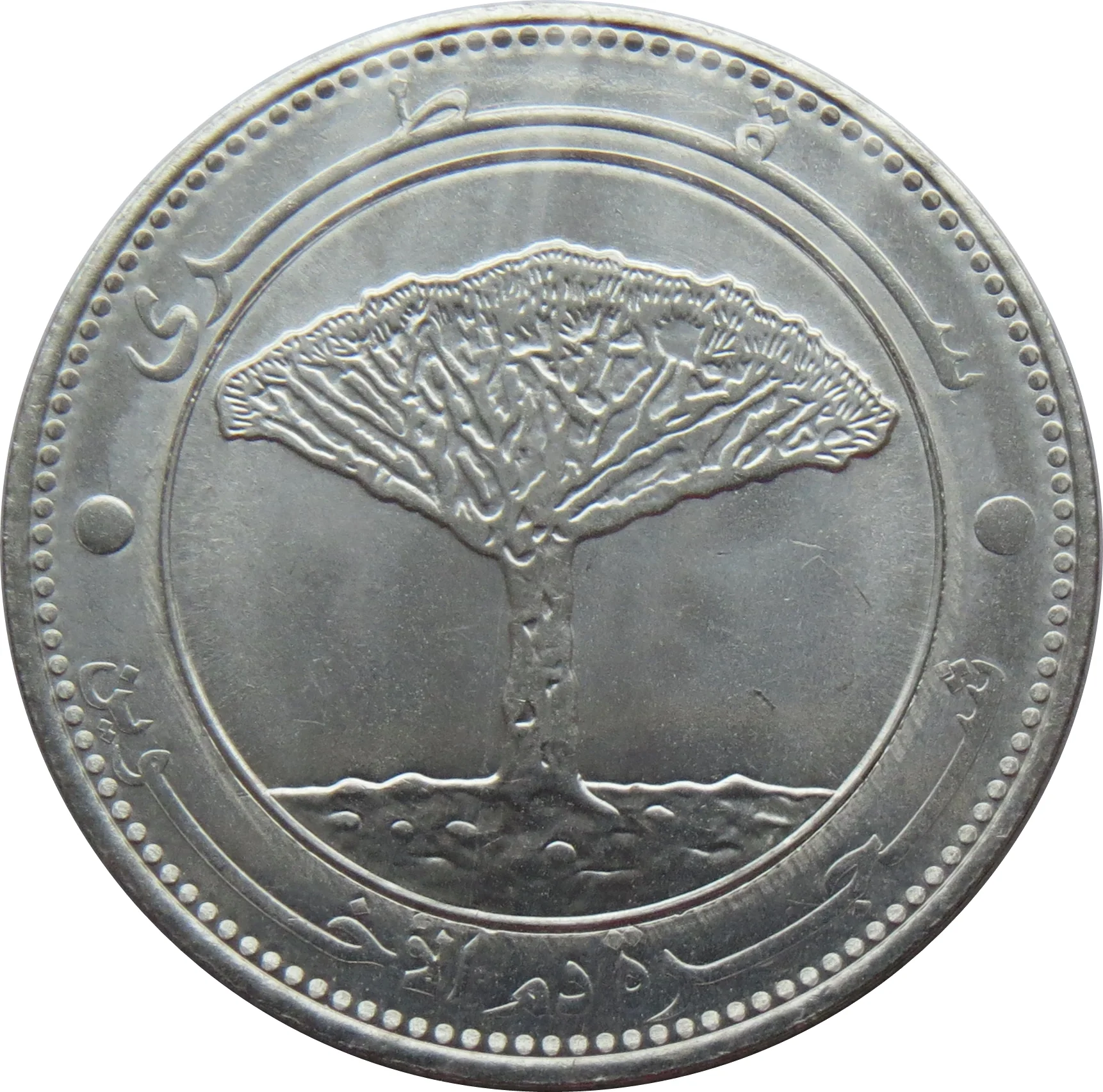
20 rials – Yemen
Add to wishlist
Yemen
Context
Year: 2006
Islamic (Hijri) Year:: 1427
Issuer: Yemen
Issuing organization: Central Bank of Yemen
Period:
(since 1990)
Currency:
(since 1990)
Material
Diameter: 30 mm
Weight: 6.62 g
Thickness: 1.4 mm
Shape: Round
Composition: Stainless steel
Technique: Milled
Alignment: Medal alignment
flip
References
KM: #
Numista: #4831
Value
Exchange value: 20 YER
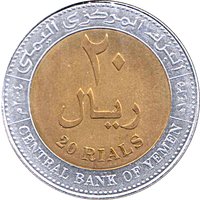
Obverse
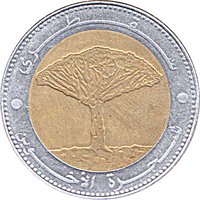
Reverse
Edge
Reeded
Mints
| Name | Mark |
|---|---|
| Monnaie de Paris | — |
Mintings
| Year | Mint Mark | Mintage | Quality | Collection |
|---|---|---|---|---|
| 2006 | — | — |
Historical background
In 2006, Yemen's currency situation was characterized by relative stability but underlying fragility, with the Yemeni rial (YER) facing persistent long-term pressures. The country operated with a unified exchange rate system managed by the Central Bank of Yemen (CBY), which pegged the rial to the US dollar at a stable but gradually depreciating official rate, averaging around 199 rials to the dollar for the year. This stability was largely artificial, propped up by central bank interventions using finite foreign reserves earned from oil exports, which constituted roughly 85% of government revenue and 70% of export earnings.
However, this apparent stability masked significant structural economic weaknesses. Yemen was grappling with declining oil production from its mature fields, a rapidly growing population, widespread poverty, and substantial fiscal deficits. These factors created consistent inflationary pressures and a growing black-market premium for hard currency, as commercial demand often outstripped the official supply. The economy's heavy dependence on a single, dwindling resource raised serious concerns among international observers about long-term sustainability and the potential for a balance of payments crisis.
Consequently, 2006 represented a calm before the storm. While the currency was not in immediate crisis, the government and the CBY were under increasing pressure from international financial institutions like the IMF to implement economic reforms, including reducing fuel subsidies and diversifying the economy. The failure to adequately address these underlying vulnerabilities left the rial and the broader economy highly exposed to future shocks, a foreshadowing of the severe monetary crises that would erupt following the political upheavals of 2011 and the subsequent civil war.
However, this apparent stability masked significant structural economic weaknesses. Yemen was grappling with declining oil production from its mature fields, a rapidly growing population, widespread poverty, and substantial fiscal deficits. These factors created consistent inflationary pressures and a growing black-market premium for hard currency, as commercial demand often outstripped the official supply. The economy's heavy dependence on a single, dwindling resource raised serious concerns among international observers about long-term sustainability and the potential for a balance of payments crisis.
Consequently, 2006 represented a calm before the storm. While the currency was not in immediate crisis, the government and the CBY were under increasing pressure from international financial institutions like the IMF to implement economic reforms, including reducing fuel subsidies and diversifying the economy. The failure to adequately address these underlying vulnerabilities left the rial and the broader economy highly exposed to future shocks, a foreshadowing of the severe monetary crises that would erupt following the political upheavals of 2011 and the subsequent civil war.

🌱 Very Common