

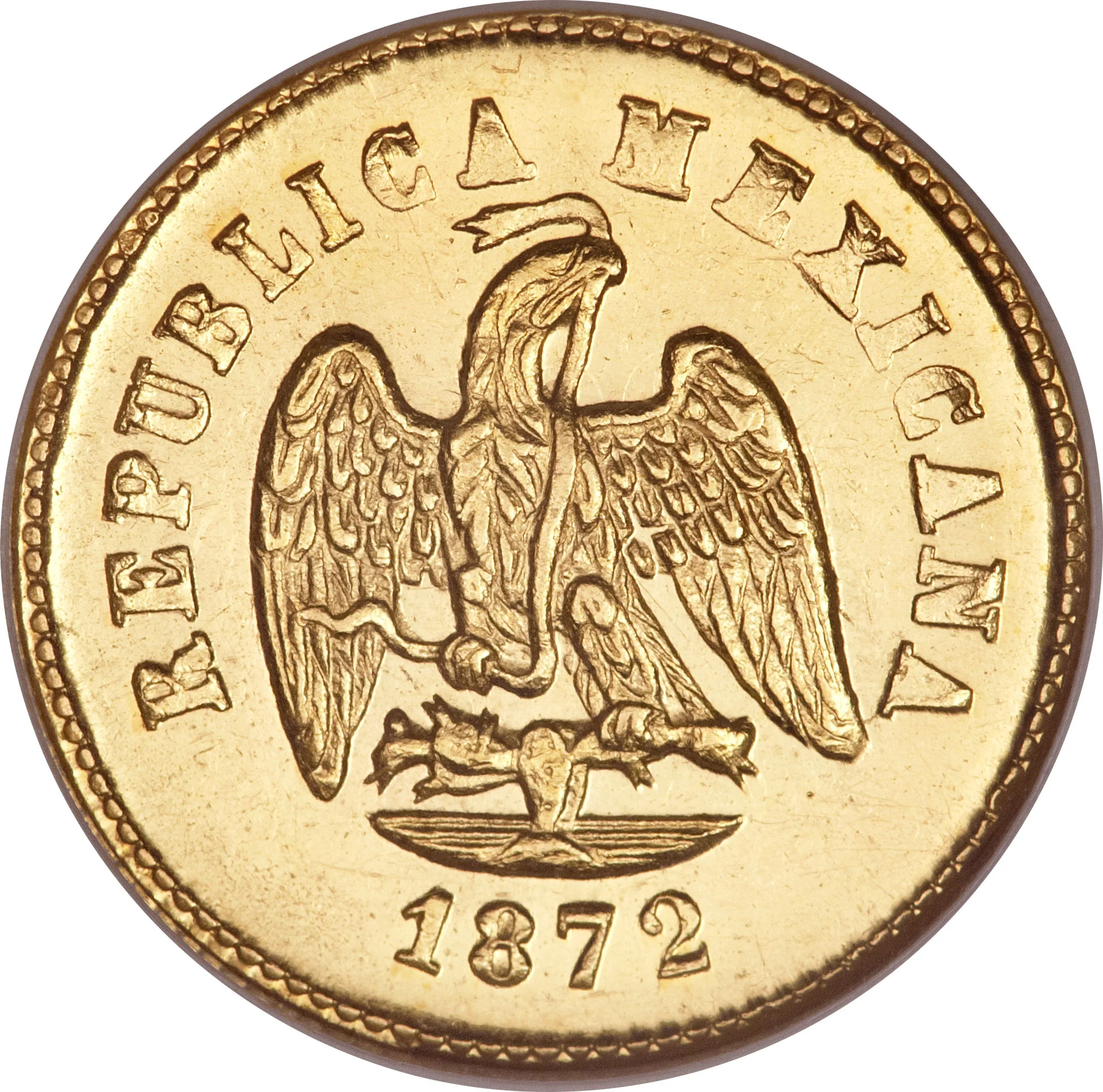
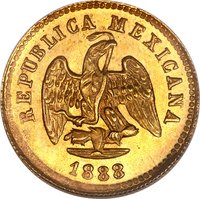
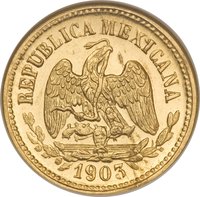
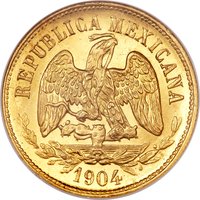
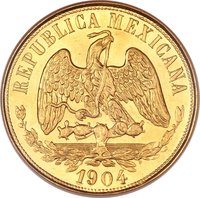
Obverse
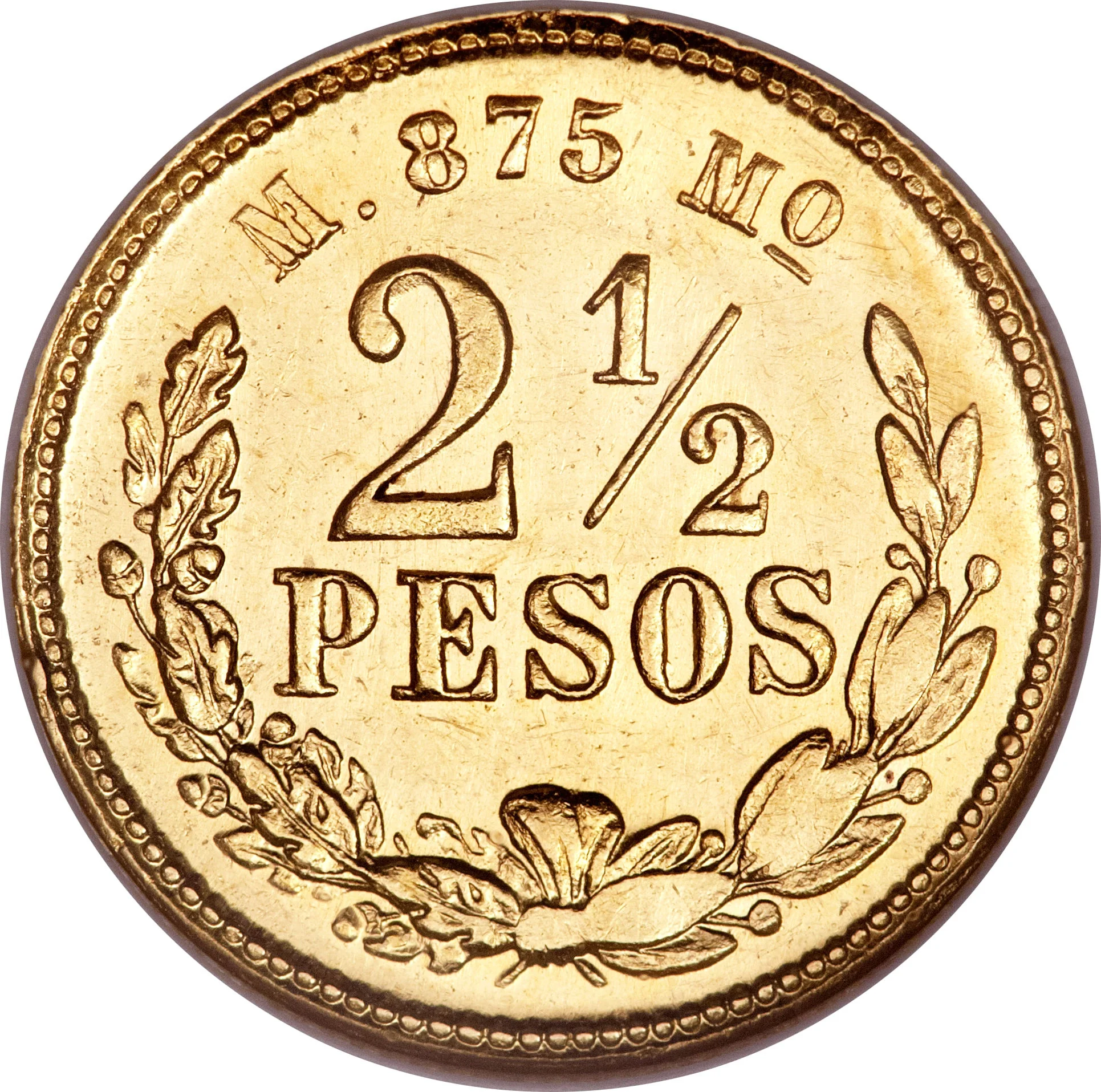
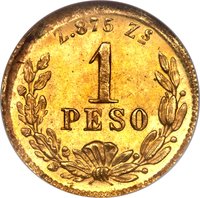
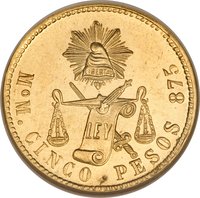
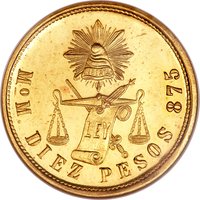
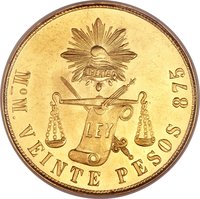
Reverse
Edge
Mintings
| Year | Mint Mark | Mintage | Quality | Collection |
|---|---|---|---|---|
| 1870 | Mo | 820 | ||
| 1871 | Go | 600 | ||
| 1872 | Mo | — | ||
| 1873 | Mo | — | ||
| 1873 | Zs | — | ||
| 1874 | Ho | — | ||
| 1874 | Mo | — | ||
| 1875 | Zs | — | ||
| 1875 | Mo | — | ||
| 1876 | Mo | — | ||
| 1877 | Mo | — | ||
| 1877 | Zs | — | ||
| 1878 | Mo | 400 | ||
| 1878 | Zs | 300 | ||
| 1879 | Mo | — | ||
| 1880 | Mo | — | ||
| 1881 | Mo | 400 | ||
| 1882 | Mo | — | ||
| 1883 | Mo | 400 | ||
| 1884 | Mo | — | ||
| 1885 | Mo | — | ||
| 1886 | Mo | 400 | ||
| 1887 | Mo | 400 | ||
| 1888 | As/MoL | — | ||
| 1888 | Do | — | ||
| 1888 | Go/MoR | 110 | ||
| 1888 | Ho | — | ||
| 1888 | Mo | 540 | ||
| 1888 | Zs/MoS | 80 | ||
| 1889 | Mo | 240 | ||
| 1889 | Zs/MoZ | 184 | ||
| 1890 | Mo | 420 | ||
| 1890 | Zs | 326 | ||
| 1891 | Mo | 188 | ||
| 1892 | Mo | 240 | ||
| 1893 | Cn | — |
Historical background
In 1870, Mexico's currency system was a complex and chaotic reflection of its turbulent post-independence and post-war history. Following the War of the Reform (1857-1861) and the subsequent French Intervention (1862-1867), the nation's finances were in disarray. The monetary landscape was a fragmented mix of coins from different eras and origins, including old Spanish colonial coins, Republican issues, and even French imperial coins from the recent occupation. The most critical problem was the severe shortage of fractional silver and copper coins for daily transactions, leading to widespread use of privately issued tokens (fichas) and clipped or debased coinage, which eroded public trust.
The official framework, established by the Monetary Law of 1867, attempted to create a unified system based on the decimal peso, divided into 100 centavos, and tied to the international silver standard. However, the government lacked the resources to produce enough new coinage to replace the old mixed circulation. Consequently, foreign coins, particularly Spanish reales and U.S. gold dollars, still circulated at negotiated values, creating confusion in commerce. The scarcity of small change crippled local markets and wages, while the central government's inability to control the money supply hindered economic recovery and state-building efforts.
This unstable currency situation was a major impediment to President Benito Juárez's efforts to modernize and stabilize the nation during the República Restaurada (Restored Republic). The monetary disorder discouraged foreign investment, complicated tax collection, and symbolized the broader challenges of integrating a fractured nation. The pressing need for a uniform, trustworthy currency would eventually lead to significant reforms under Porfirio Díaz in the following decades, but in 1870, Mexico's money remained a tangible reminder of its recent strife and a significant obstacle to its future progress.
The official framework, established by the Monetary Law of 1867, attempted to create a unified system based on the decimal peso, divided into 100 centavos, and tied to the international silver standard. However, the government lacked the resources to produce enough new coinage to replace the old mixed circulation. Consequently, foreign coins, particularly Spanish reales and U.S. gold dollars, still circulated at negotiated values, creating confusion in commerce. The scarcity of small change crippled local markets and wages, while the central government's inability to control the money supply hindered economic recovery and state-building efforts.
This unstable currency situation was a major impediment to President Benito Juárez's efforts to modernize and stabilize the nation during the República Restaurada (Restored Republic). The monetary disorder discouraged foreign investment, complicated tax collection, and symbolized the broader challenges of integrating a fractured nation. The pressing need for a uniform, trustworthy currency would eventually lead to significant reforms under Porfirio Díaz in the following decades, but in 1870, Mexico's money remained a tangible reminder of its recent strife and a significant obstacle to its future progress.
Series: 1870 Mexico circulation coins
💎 Extremely Rare