

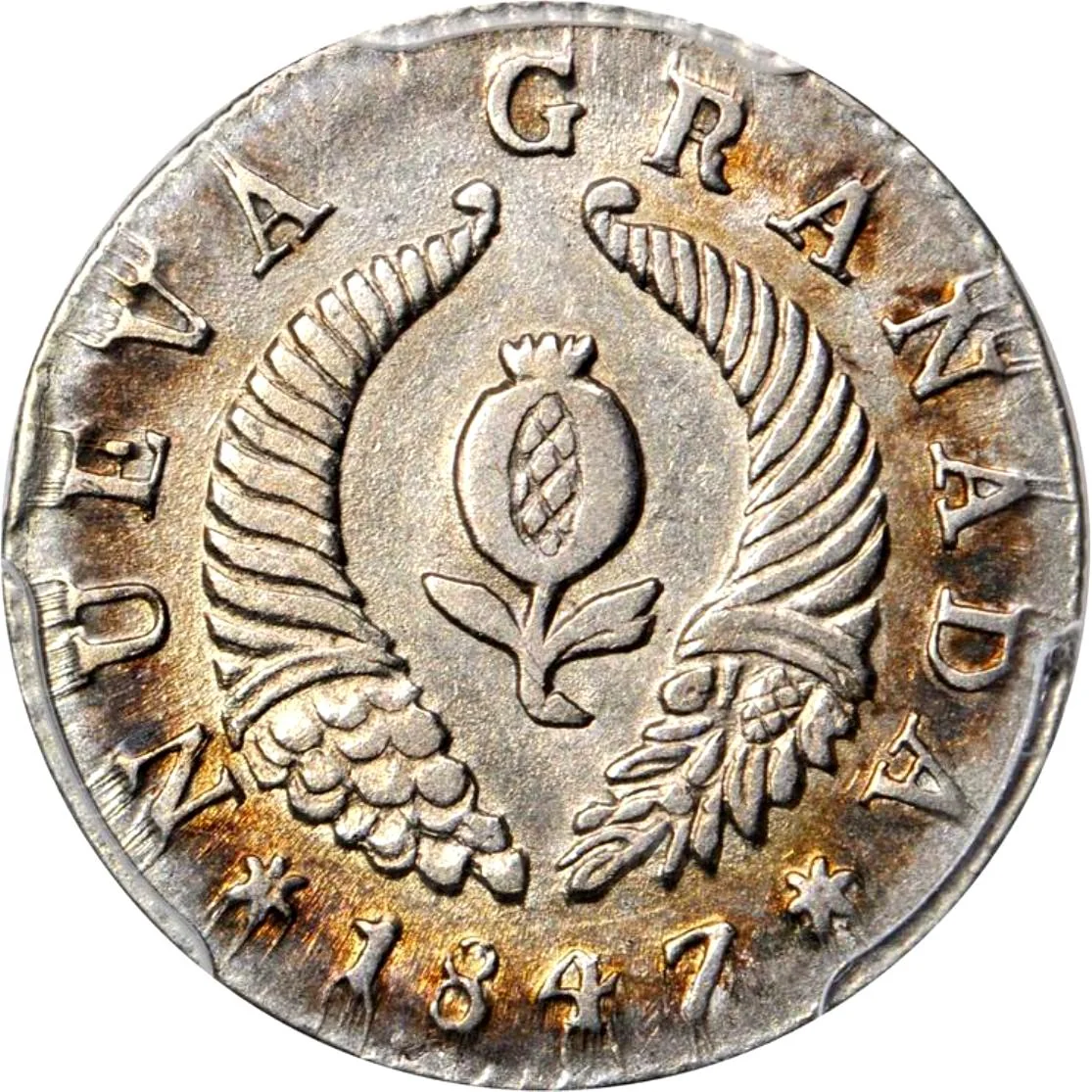

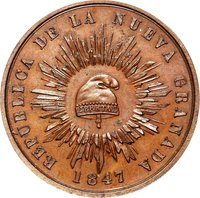
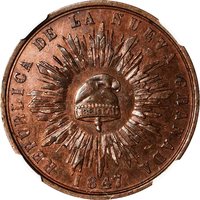
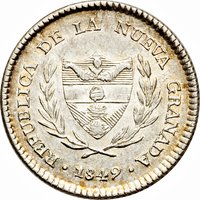
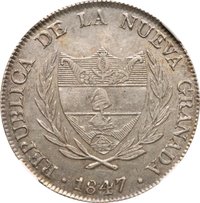
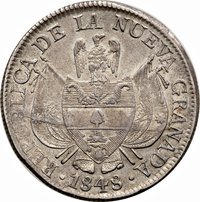
Obverse
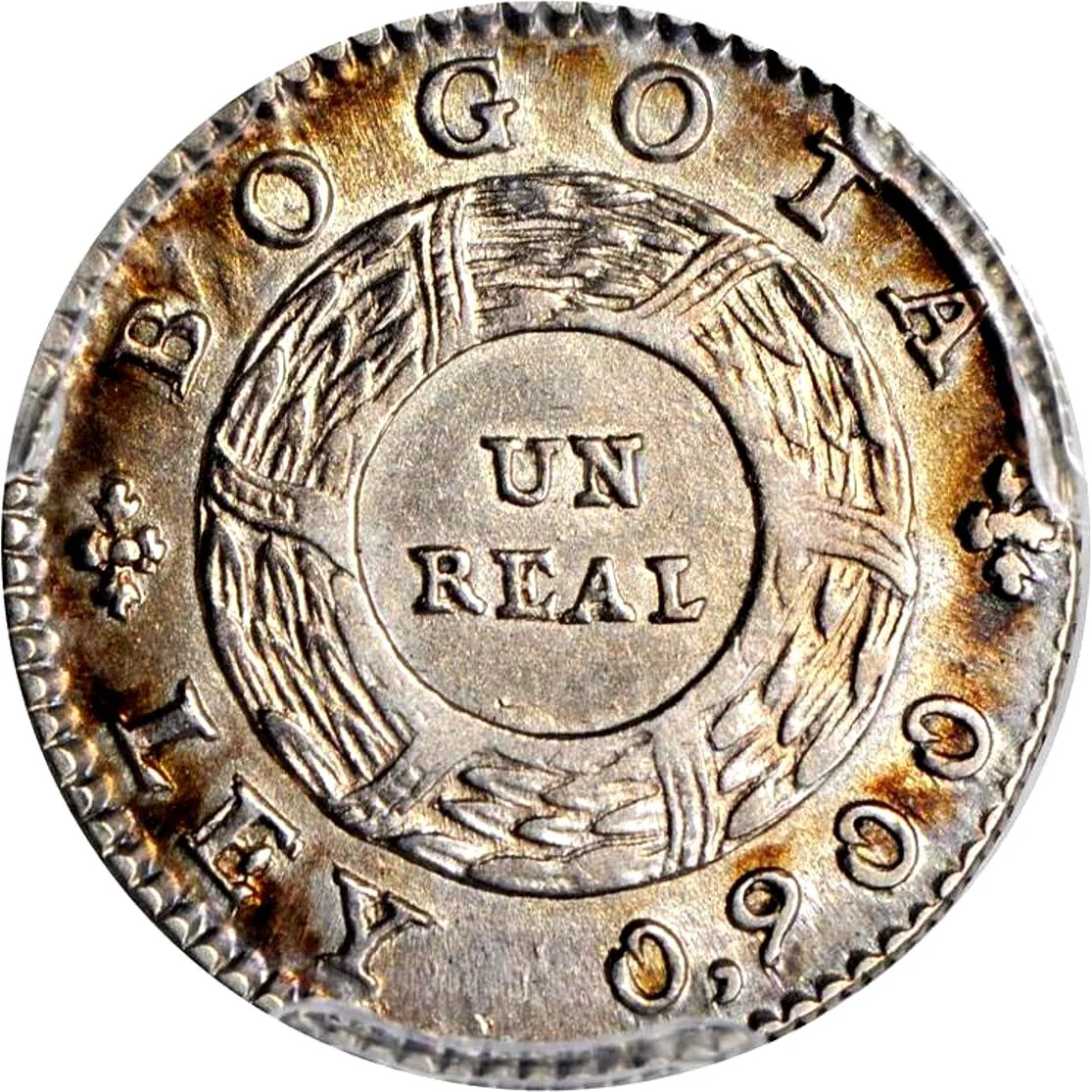
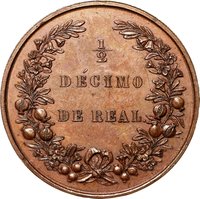
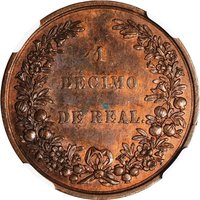
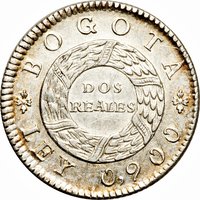
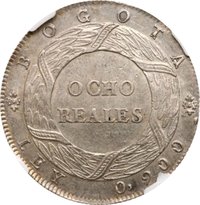
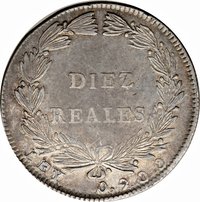
Reverse
Edge
Reeded
Mints
| Name | Mark |
|---|---|
| Bogota Mint | BOGOTA |
Mintings
| Year | Mint Mark | Mintage | Quality | Collection |
|---|---|---|---|---|
| 1847 | — | — |
Historical background
In 1847, Colombia existed as the Republic of New Granada, a decentralized state emerging from the dissolution of Gran Colombia. The nation's currency situation was characterized by profound disorder and regional fragmentation. There was no unified, state-controlled monetary system; instead, a chaotic mix of foreign and domestic coins circulated. These included Spanish colonial reales, coins from other Latin American nations, and even counterfeits, all valued by weight and metal content rather than a stable face value. This lack of a standard national currency severely hampered commerce, credit, and economic integration.
The primary response to this crisis was the liberal monetary law of June 12, 1847. This legislation attempted to impose order by officially adopting a bimetallic standard, pegging the new Colombian real to both gold and silver at a fixed ratio. Crucially, it authorized private mints, allowing individuals to bring bullion to be stamped into official coinage for a small fee. While aiming to increase the money supply and legitimize circulating metal, this policy effectively ceded a core function of sovereignty to private interests. The law also legally recognized the widespread use of macuquinas (old, irregularly cut Spanish colonial coins) for daily transactions, acknowledging the practical impossibility of immediately replacing them.
The long-term effects of the 1847 law were mixed. In the short term, it did little to create true monetary unity, as private minting led to variations in coin quality and the persistent circulation of foreign specie. The fixed gold-to-silver ratio also proved vulnerable to international market fluctuations, leading to the eventual disappearance of one metal from circulation (Gresham's Law). However, the law represented a critical, if flawed, step toward modern monetary policy by asserting a national unit of account and attempting to systematize a chaotic reality. It set the stage for future reforms in the 1850s and beyond, which would gradually centralize coinage and establish a stronger state role in monetary affairs.
The primary response to this crisis was the liberal monetary law of June 12, 1847. This legislation attempted to impose order by officially adopting a bimetallic standard, pegging the new Colombian real to both gold and silver at a fixed ratio. Crucially, it authorized private mints, allowing individuals to bring bullion to be stamped into official coinage for a small fee. While aiming to increase the money supply and legitimize circulating metal, this policy effectively ceded a core function of sovereignty to private interests. The law also legally recognized the widespread use of macuquinas (old, irregularly cut Spanish colonial coins) for daily transactions, acknowledging the practical impossibility of immediately replacing them.
The long-term effects of the 1847 law were mixed. In the short term, it did little to create true monetary unity, as private minting led to variations in coin quality and the persistent circulation of foreign specie. The fixed gold-to-silver ratio also proved vulnerable to international market fluctuations, leading to the eventual disappearance of one metal from circulation (Gresham's Law). However, the law represented a critical, if flawed, step toward modern monetary policy by asserting a national unit of account and attempting to systematize a chaotic reality. It set the stage for future reforms in the 1850s and beyond, which would gradually centralize coinage and establish a stronger state role in monetary affairs.
Series: 1847 Colombia circulation coins
💎 Extremely Rare