

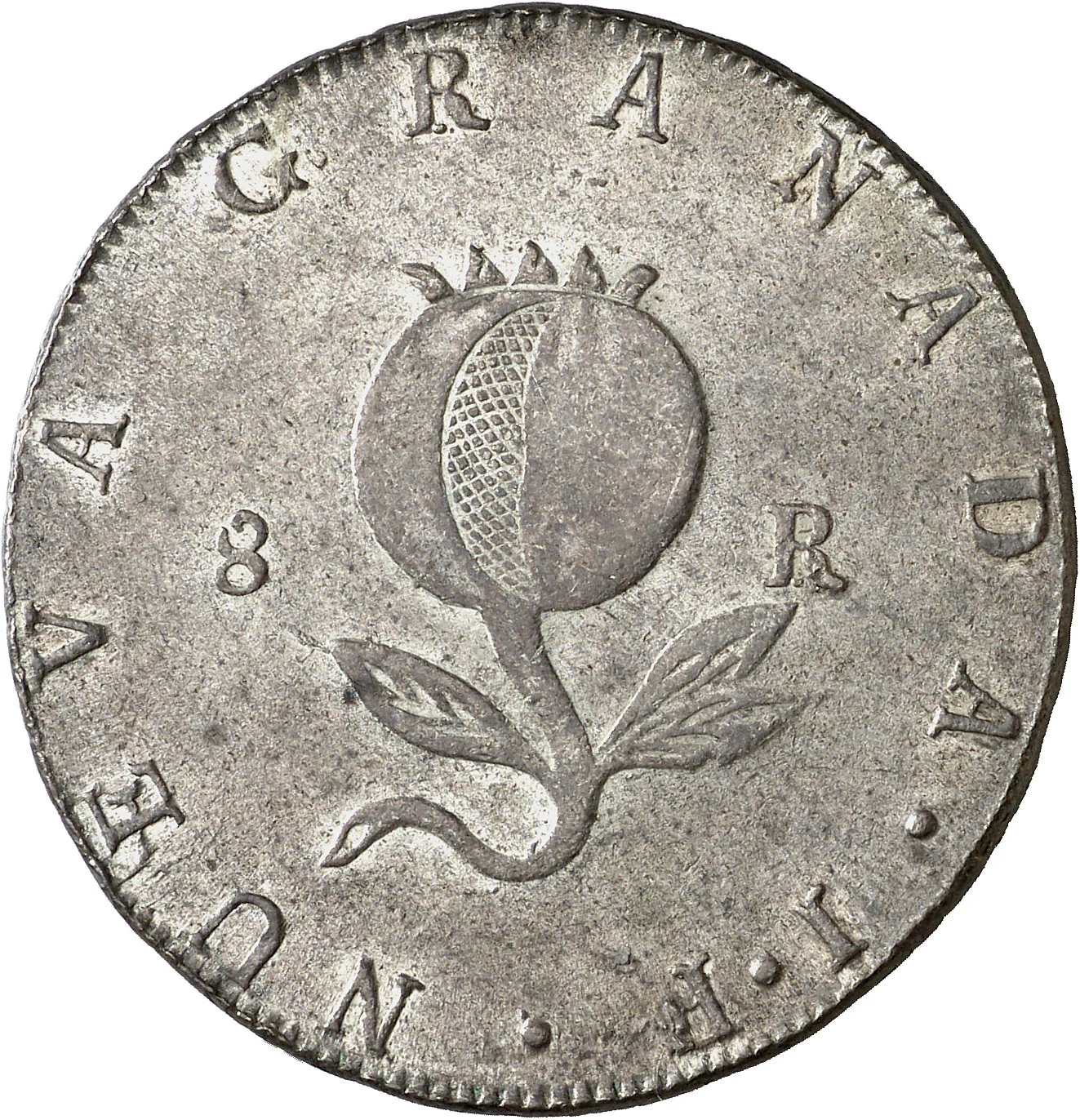
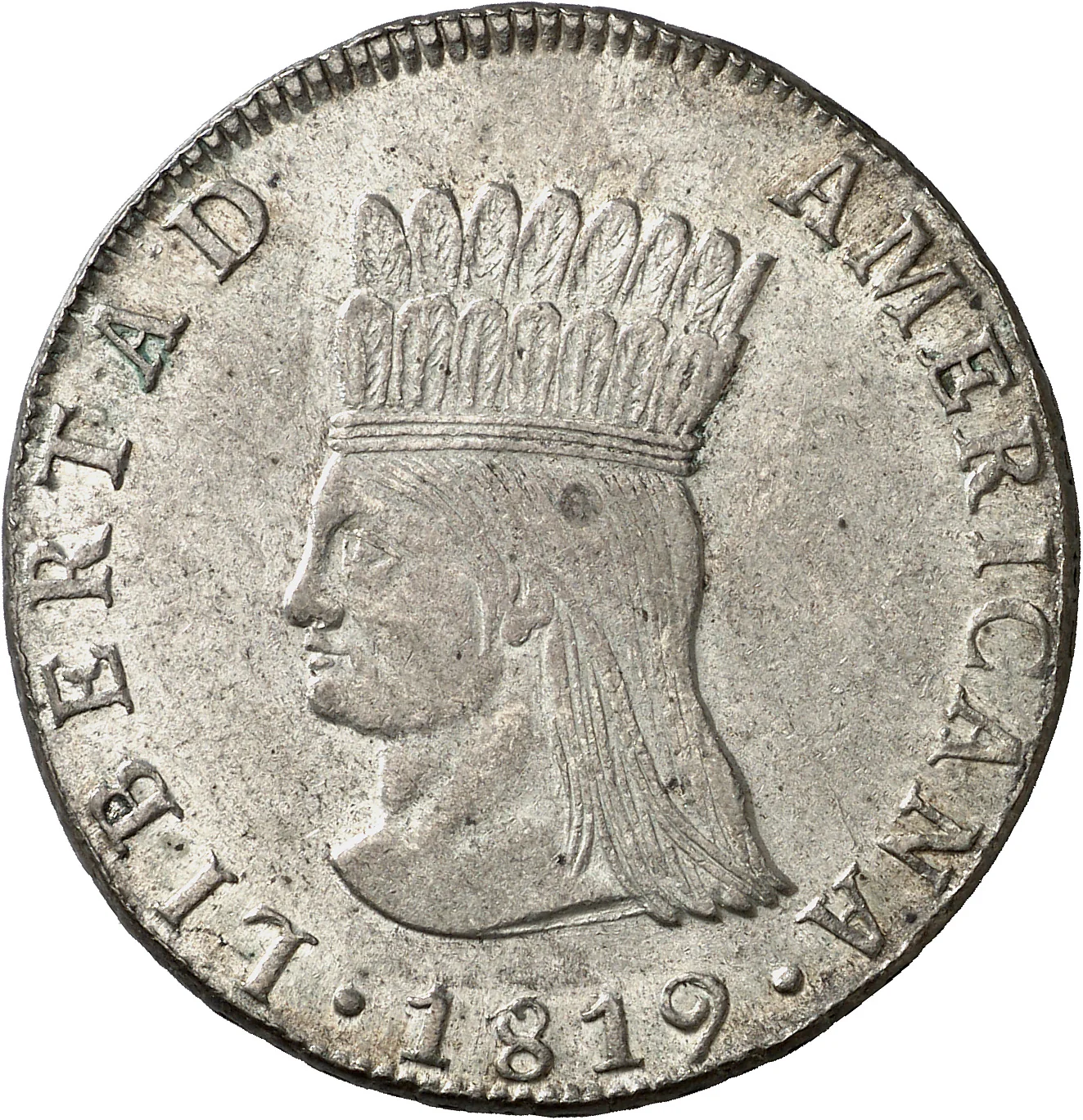
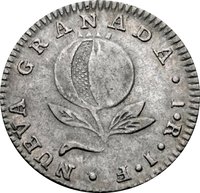
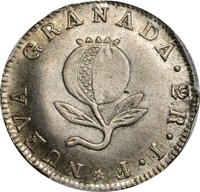
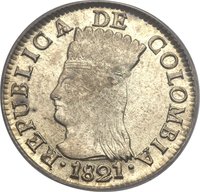
Obverse
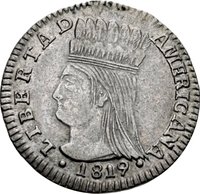
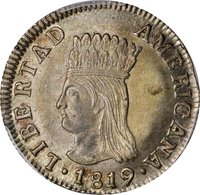
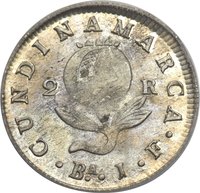
Reverse
Edge
Mintings
| Year | Mint Mark | Mintage | Quality | Collection |
|---|---|---|---|---|
| 1819 | JF | — | ||
| 1820 | JF | — |
Historical background
In 1819, Colombia's currency situation was one of profound instability and fragmentation, a direct reflection of the chaotic final phase of the War of Independence. The territory was divided between the Spanish Royalists, who controlled key areas like Santa Fe de Bogotá and Cartagena, and the Republican forces under Simón Bolívar, who were advancing from the Venezuelan plains. Each political entity financed its war effort by issuing its own money, leading to a bewildering array of circulating mediums. The Royalist authorities relied heavily on debased coinage and forced loans, while the Patriots issued paper money (papel moneda) that was not backed by specie and quickly depreciated, fostering widespread distrust.
The monetary landscape was a complex patchwork of old and new, legitimate and illegitimate. The Spanish colonial silver peso, or "real de a ocho," remained a trusted standard but was increasingly scarce due to hoarding and the disruption of mining. Into this vacuum flowed a flood of low-quality copper coinage minted by both sides, as well as crude emergency issues and even cut or countermarked coins. Furthermore, the economic blockade and the collapse of central authority crippled tax collection and foreign trade, severing the vital inflow of precious metals that had traditionally underpinned the currency system.
This monetary anarchy had severe consequences for the population and the patriot cause. Hyperinflation eroded purchasing power, causing hardship and complicating the logistics of Bolívar's liberating army. As Bolívar secured victory at the Battle of Boyacá in August 1819, one of his most urgent tasks for the nascent Republic of Gran Colombia was to impose monetary order. The chaotic currency of 1819 thus set the stage for the monumental challenge of creating a unified, trustworthy monetary system for a new nation born from a shattered economy.
The monetary landscape was a complex patchwork of old and new, legitimate and illegitimate. The Spanish colonial silver peso, or "real de a ocho," remained a trusted standard but was increasingly scarce due to hoarding and the disruption of mining. Into this vacuum flowed a flood of low-quality copper coinage minted by both sides, as well as crude emergency issues and even cut or countermarked coins. Furthermore, the economic blockade and the collapse of central authority crippled tax collection and foreign trade, severing the vital inflow of precious metals that had traditionally underpinned the currency system.
This monetary anarchy had severe consequences for the population and the patriot cause. Hyperinflation eroded purchasing power, causing hardship and complicating the logistics of Bolívar's liberating army. As Bolívar secured victory at the Battle of Boyacá in August 1819, one of his most urgent tasks for the nascent Republic of Gran Colombia was to impose monetary order. The chaotic currency of 1819 thus set the stage for the monumental challenge of creating a unified, trustworthy monetary system for a new nation born from a shattered economy.
💎 Extremely Rare