

5 dirhams – Qatar
Add to wishlist
Qatar
Context
Years: 1973–1978
Issuer: Qatar
Ruler: Khalifa bin Hamad Al Thani
Currency:
(since 1973)
Total mintage: 2,000,000
Material
References
KM: #
Numista: #4827
Value
Exchange value: 0.05 QAR
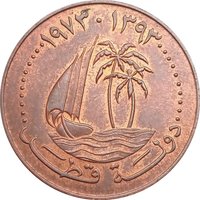
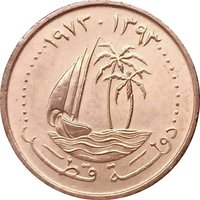
Obverse
Description:
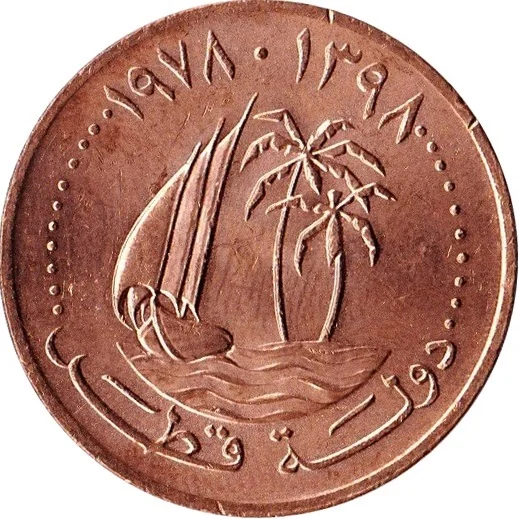
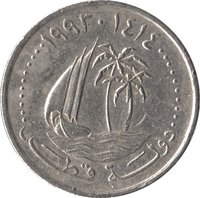
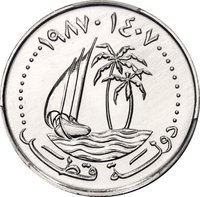
Top: dates. Emblem: a dhow sailing beside a palm-tree island.
Inscription:
١٣٩٨ · ١٩٧٨
دولَة قطَر
دولَة قطَر
Translation:
1398 · 1978
State of Qatar
State of Qatar
Script: Arabic
Language: Arabic
Engraver: Norman Sillman
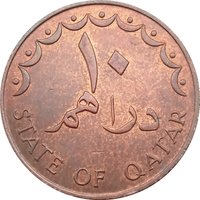
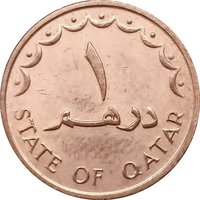
Reverse
Description:
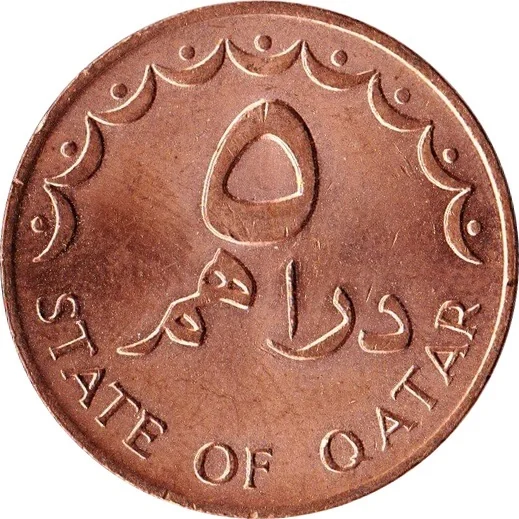
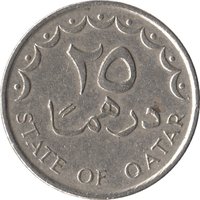
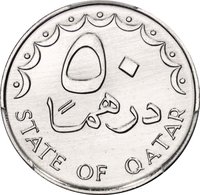
Denomination
Inscription:
٥
دراهمـ
STATE OF QATAR
دراهمـ
STATE OF QATAR
Translation:
Five Dirhams
State of Qatar
State of Qatar
Language: Arabic
Engraver: Norman Sillman
Edge
Plain
Categories
| Symbols> Coat of Arms |
| Transportation> Watercraft |
| Plant> Tree |
Mints
| Name | Mark |
|---|---|
| Royal Mint | — |
Mintings
| Year | Mint Mark | Mintage | Quality | Collection |
|---|---|---|---|---|
| 1973 | — | 1,000,000 | ||
| 1978 | — | 1,000,000 |
Historical background
In 1973, Qatar's currency situation was fundamentally shaped by its recent independence and the region's economic integration efforts. Following its separation from the British protectorate in 1971, Qatar initially used the Gulf rupee and then the Saudi riyal as transitional currencies. However, the key development was its participation in the newly formed Gulf Currency Agreement with Bahrain, Abu Dhabi, and Dubai. This pact led to the introduction of the Qatar-Dubai riyal in 1966, a shared currency pegged to the British pound sterling, which was still in circulation as the primary legal tender in early 1973.
This arrangement, however, faced a significant external shock in 1973: the collapse of the Bretton Woods system and the subsequent floating of major world currencies, including the British pound. The peg to the volatile pound became increasingly problematic for Qatar's growing economy, which was simultaneously experiencing a dramatic surge in oil revenue following the 1973 oil crisis. The need for monetary stability and greater independent control over its burgeoning wealth prompted Qatar to reconsider its currency union.
Consequently, 1973 became the final year of the Qatar-Dubai riyal. Recognizing the limitations of a shared currency and the unsuitability of the pound sterling peg, Qatar took decisive sovereign action. On May 19, 1973, the State issued the Qatari riyal (QAR) as its exclusive national currency, replacing the Qatar-Dubai riyal at par. Crucially, the new riyal was pegged not to the pound, but to the Special Drawing Rights (SDR) of the International Monetary Fund, a more stable basket of currencies, marking the beginning of Qatar's modern and independent monetary policy.
This arrangement, however, faced a significant external shock in 1973: the collapse of the Bretton Woods system and the subsequent floating of major world currencies, including the British pound. The peg to the volatile pound became increasingly problematic for Qatar's growing economy, which was simultaneously experiencing a dramatic surge in oil revenue following the 1973 oil crisis. The need for monetary stability and greater independent control over its burgeoning wealth prompted Qatar to reconsider its currency union.
Consequently, 1973 became the final year of the Qatar-Dubai riyal. Recognizing the limitations of a shared currency and the unsuitability of the pound sterling peg, Qatar took decisive sovereign action. On May 19, 1973, the State issued the Qatari riyal (QAR) as its exclusive national currency, replacing the Qatar-Dubai riyal at par. Crucially, the new riyal was pegged not to the pound, but to the Special Drawing Rights (SDR) of the International Monetary Fund, a more stable basket of currencies, marking the beginning of Qatar's modern and independent monetary policy.
Series: 1973 Qatar circulation coins
🌱 Very Common