

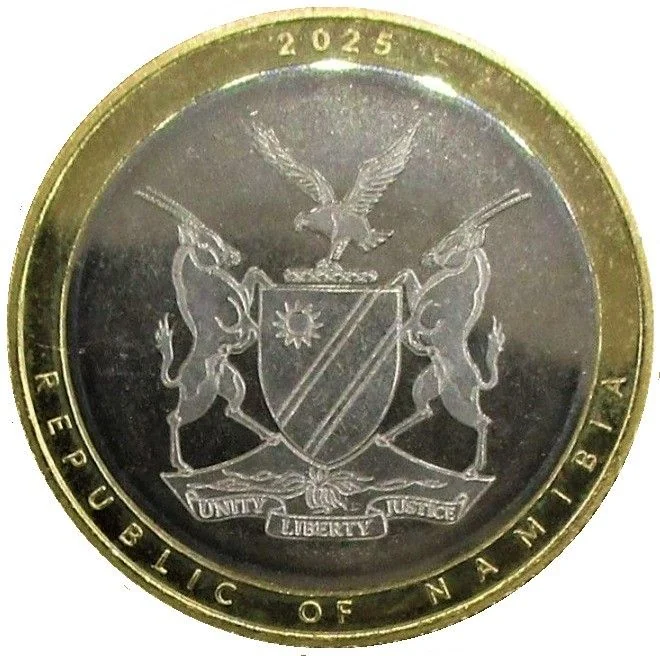
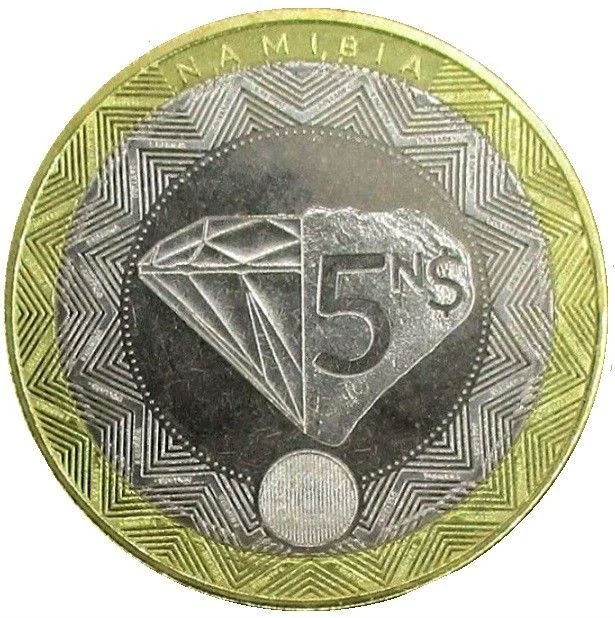
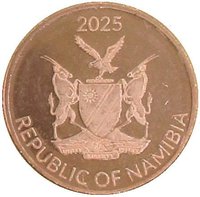
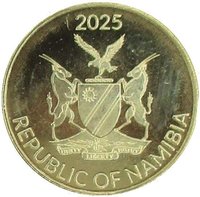
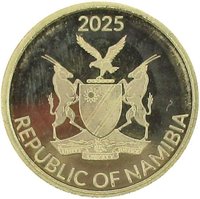
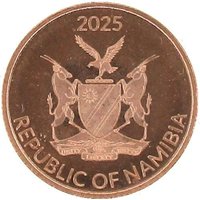
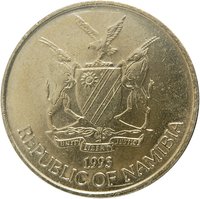
Obverse
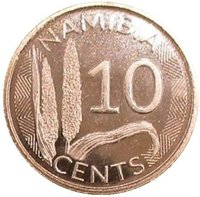
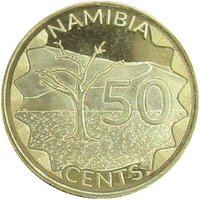
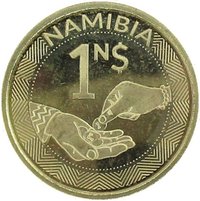
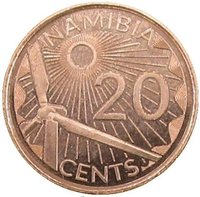
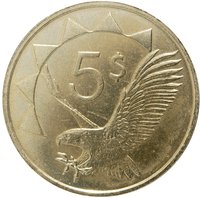
Reverse
Edge
Alternating plain and reeded edge.
Categories
| Industry |
| Symbols> Coat of Arms |
Mints
| Name | Mark |
|---|---|
| Mint of Poland | — |
Mintings
| Year | Mint Mark | Mintage | Quality | Collection |
|---|---|---|---|---|
| 2025 | — | — |
Historical background
As of 2025, Namibia's currency situation remains defined by its long-standing peg to the South African Rand (ZAR) through the Common Monetary Area (CMA). The Namibian Dollar (NAD) is pegged at a 1:1 parity with the Rand and is legal tender alongside it, a arrangement that provides monetary stability and facilitates seamless trade with its largest economic partner, South Africa. However, this linkage also means Namibia imports South Africa's monetary policy and is vulnerable to external shocks affecting the Rand, limiting the Bank of Namibia's independent policy tools to address domestic economic conditions.
The primary economic pressures in 2025 stem from persistent structural challenges rather than a currency crisis. High public debt, elevated unemployment, and recurring droughts continue to strain the economy. While the peg provides stability, it has at times contributed to imported inflation when the Rand weakens, complicating price stability efforts. Furthermore, the reliance on the Rand peg underscores Namibia's ongoing economic dependency, a topic of periodic debate among policymakers and economists about the long-term feasibility of greater monetary sovereignty.
Looking forward, the key discussions in financial circles focus not on abandoning the peg—which is still viewed as a necessary anchor—but on enhancing economic resilience alongside it. The government's focus is on fiscal consolidation, attracting investment into non-mining sectors, and developing the green hydrogen industry to diversify foreign exchange earnings. Digital currency exploration by the Bank of Namibia continues cautiously, aimed at modernizing the payment system rather than replacing the physical NAD. The currency's stability in 2025 thus hinges on prudent fiscal management, regional economic performance in South Africa, and progress in diversifying the domestic economic base.
The primary economic pressures in 2025 stem from persistent structural challenges rather than a currency crisis. High public debt, elevated unemployment, and recurring droughts continue to strain the economy. While the peg provides stability, it has at times contributed to imported inflation when the Rand weakens, complicating price stability efforts. Furthermore, the reliance on the Rand peg underscores Namibia's ongoing economic dependency, a topic of periodic debate among policymakers and economists about the long-term feasibility of greater monetary sovereignty.
Looking forward, the key discussions in financial circles focus not on abandoning the peg—which is still viewed as a necessary anchor—but on enhancing economic resilience alongside it. The government's focus is on fiscal consolidation, attracting investment into non-mining sectors, and developing the green hydrogen industry to diversify foreign exchange earnings. Digital currency exploration by the Bank of Namibia continues cautiously, aimed at modernizing the payment system rather than replacing the physical NAD. The currency's stability in 2025 thus hinges on prudent fiscal management, regional economic performance in South Africa, and progress in diversifying the domestic economic base.
Series: 2025 Namibia circulation coins
✨ Legendary