

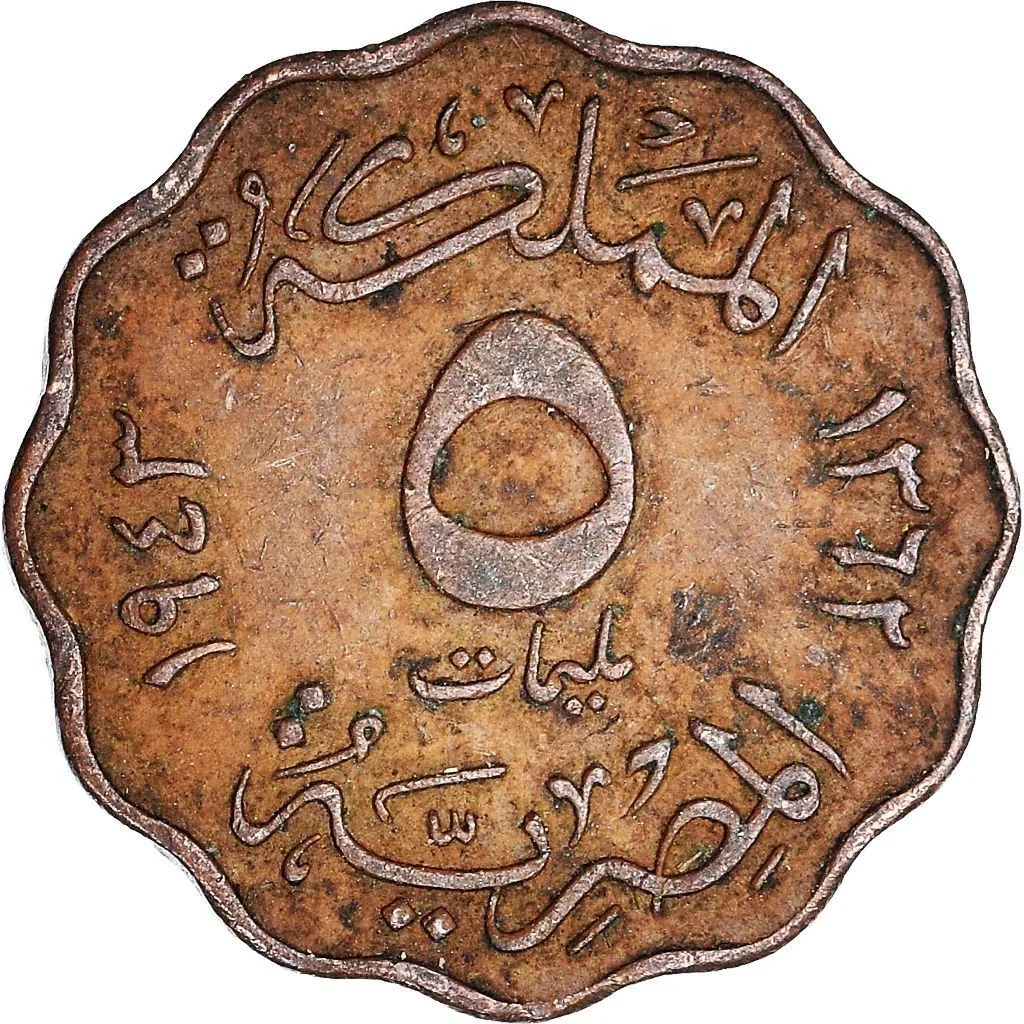
5 milliemes – Egypt
Add to wishlist
Egypt
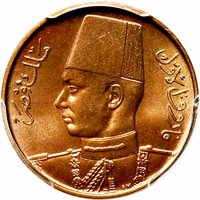
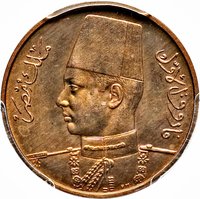
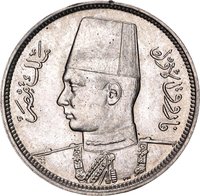
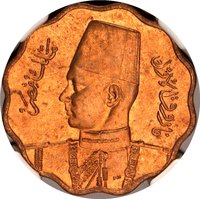
Obverse
Description:
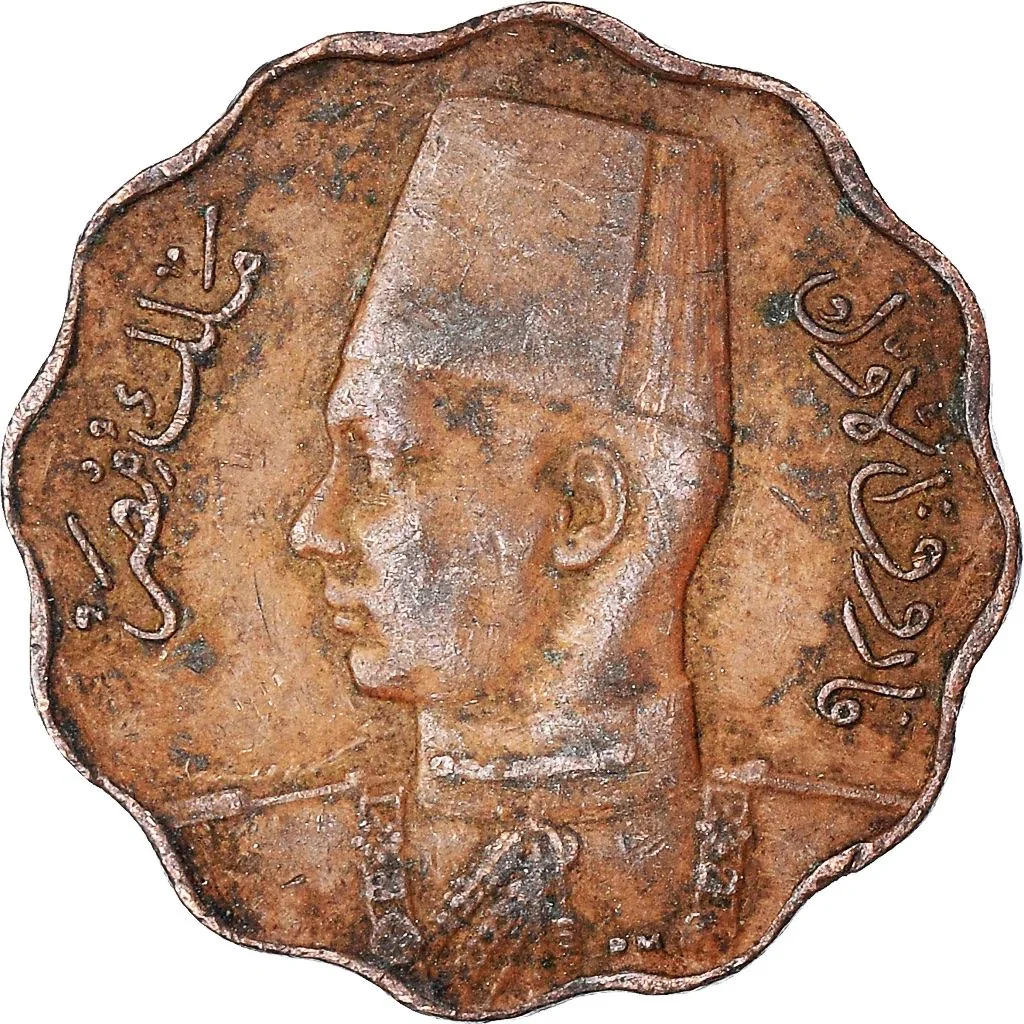
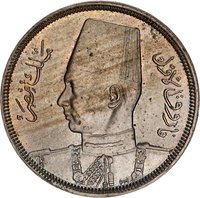
Portrait of Farouk I in military uniform and fez, facing left.
Inscription:
فاروق الأوّل
ملك مصر
PM
ملك مصر
PM
Translation:
Farouk the First
King of Egypt
King of Egypt
Language: Arabic
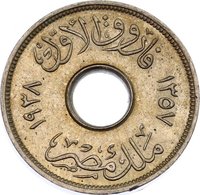
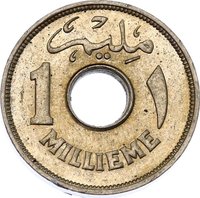
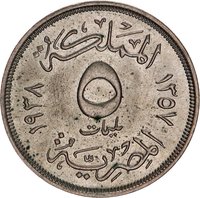
Engraver: Percy Metcalfe
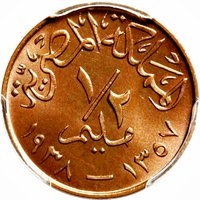
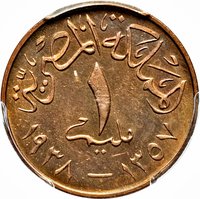
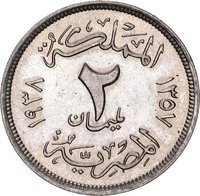
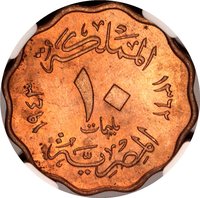
Reverse
Edge
Plain
Mints
| Name | Mark |
|---|---|
| Mumbai / Bombay | — |
| Royal Mint (Tower Hill) | — |
Mintings
| Year | Mint Mark | Mintage | Quality | Collection |
|---|---|---|---|---|
| 1938 | — | — | ||
| 1938 | — | — | Proof | |
| 1943 | — | — |
Historical background
In 1938, Egypt's currency situation was defined by its integration into the British Sterling Area and the operation of a currency board system. The Egyptian pound (EE) was pegged to and fully backed by British sterling reserves, with a fixed parity established at EE1 = £1 0s 6d (one pound and sixpence sterling). This arrangement, managed by the National Bank of Egypt acting as the currency board, ensured high monetary stability and full convertibility. The system mandated that every Egyptian pound note in circulation be backed by sterling assets held in London, which instilled confidence but also explicitly tied Egypt's economic fortunes to the British economy and its fiscal policies.
This monetary framework was a direct legacy of Britain's political and financial influence over Egypt, which was still nominally independent but under significant British oversight following its unilateral independence in 1922. The economy was heavily reliant on cotton exports, and the sterling peg facilitated stable trade and investment flows with its primary partner, the United Kingdom. However, it also meant Egypt had no independent monetary policy; interest rates and money supply were effectively determined by the Bank of England's decisions and the flow of sterling reserves. This limited the government's ability to respond to domestic economic challenges using monetary tools.
By the late 1930s, the system was stable but increasingly seen as an anachronism by a growing Egyptian nationalist movement seeking greater economic sovereignty. The accumulation of large sterling reserves during World War II, due to Allied military spending, would later intensify debates about delinking from sterling and establishing a central bank. Thus, in 1938, Egypt's currency was robust and predictable, yet it represented a colonial-era financial dependency that would become a central point of contention in the post-war period as the nation moved toward full political and economic autonomy.
This monetary framework was a direct legacy of Britain's political and financial influence over Egypt, which was still nominally independent but under significant British oversight following its unilateral independence in 1922. The economy was heavily reliant on cotton exports, and the sterling peg facilitated stable trade and investment flows with its primary partner, the United Kingdom. However, it also meant Egypt had no independent monetary policy; interest rates and money supply were effectively determined by the Bank of England's decisions and the flow of sterling reserves. This limited the government's ability to respond to domestic economic challenges using monetary tools.
By the late 1930s, the system was stable but increasingly seen as an anachronism by a growing Egyptian nationalist movement seeking greater economic sovereignty. The accumulation of large sterling reserves during World War II, due to Allied military spending, would later intensify debates about delinking from sterling and establishing a central bank. Thus, in 1938, Egypt's currency was robust and predictable, yet it represented a colonial-era financial dependency that would become a central point of contention in the post-war period as the nation moved toward full political and economic autonomy.
Series: 1938 Egypt circulation coins
🌱 Very Common