

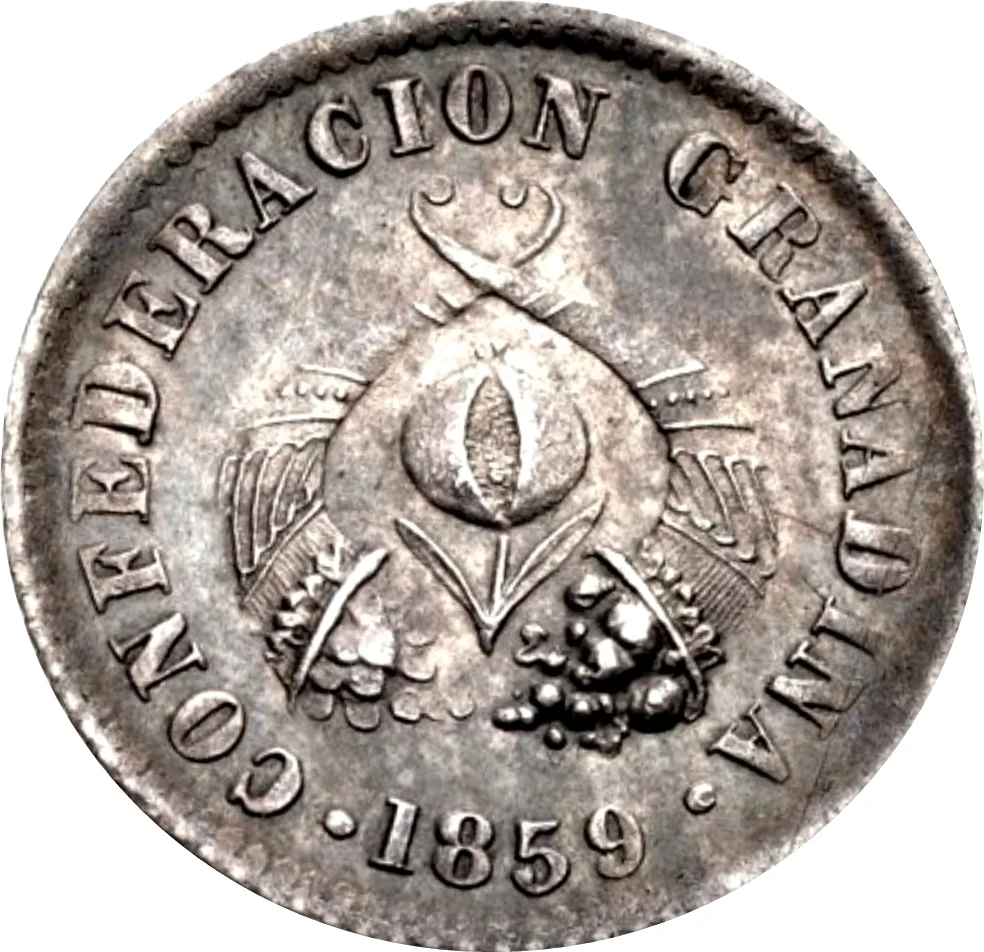
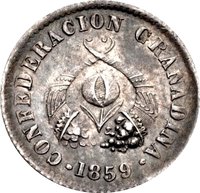
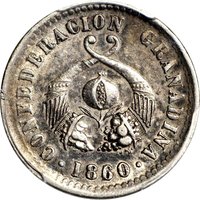
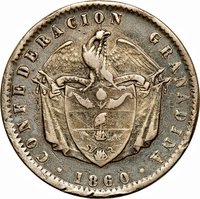
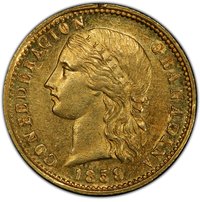
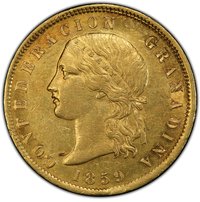
Obverse
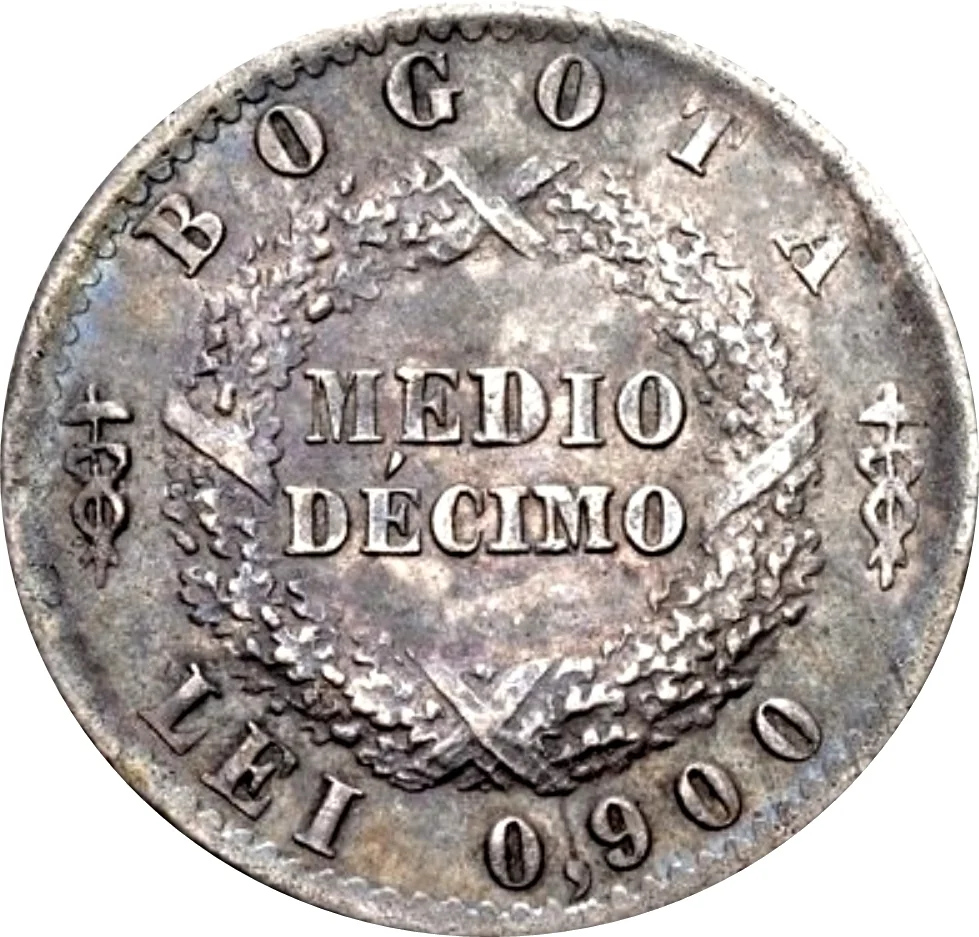
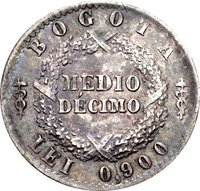
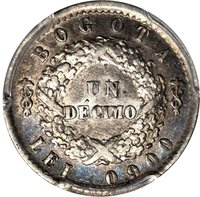
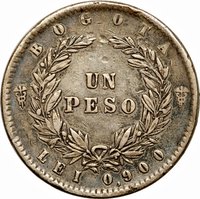
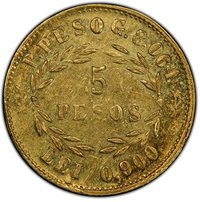
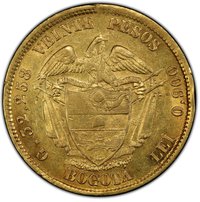
Reverse
Description:
Mint above, denomination within a central wreath flanked by caducei, fineness below.
Inscription:
BOGOTA
MEDIO
DECIMO
LEI 0,900
MEDIO
DECIMO
LEI 0,900
Script: Latin
Edge
Mints
| Name | Mark |
|---|---|
| Bogota Mint | — |
Mintings
| Year | Mint Mark | Mintage | Quality | Collection |
|---|---|---|---|---|
| 1859 | — | — | ||
| 1860 | — | — | ||
| 1861 | — | — |
Historical background
In 1859, Colombia was not the unified nation we know today, but the Granadine Confederation, a fragile and decentralized union of sovereign states. This political fragmentation was directly mirrored in its monetary chaos. There was no single, authoritative national currency. Instead, the monetary landscape was a bewildering patchwork where foreign coins—particularly British sovereigns, French francs, and U.S. gold dollars—circulated freely alongside a limited and inconsistent supply of domestic coinage minted in Bogotá. The lack of a strong central bank or uniform fiscal policy meant each state essentially operated within its own financial sphere, severely hindering national commerce and economic integration.
The primary unit of account was the peso, but its value was unstable and its physical representation inconsistent. The most trusted and sought-after medium for large transactions was gold, especially foreign gold coins whose purity and weight were internationally recognized. For everyday trade, people relied on a jumble of silver reales and even low-value copper coinage, which often suffered from counterfeiting and wear. This system created constant difficulties in exchange rates and valuations, as merchants and citizens had to navigate the fluctuating values of multiple metallic currencies against one another.
This monetary disarray was both a symptom and a cause of the profound political instability of the era. The chronic shortage of reliable specie stifled economic development and federal projects, while the central government's inability to control the currency underscored its weakness. The financial confusion of 1859 contributed directly to the escalating tensions that would erupt the following year in the War of 1859-1862, a brutal civil conflict that would ultimately dissolve the Granadine Confederation and give rise to the United States of Colombia in 1863, a entity that would again attempt, with limited success, to reform the nation's chaotic currency system.
The primary unit of account was the peso, but its value was unstable and its physical representation inconsistent. The most trusted and sought-after medium for large transactions was gold, especially foreign gold coins whose purity and weight were internationally recognized. For everyday trade, people relied on a jumble of silver reales and even low-value copper coinage, which often suffered from counterfeiting and wear. This system created constant difficulties in exchange rates and valuations, as merchants and citizens had to navigate the fluctuating values of multiple metallic currencies against one another.
This monetary disarray was both a symptom and a cause of the profound political instability of the era. The chronic shortage of reliable specie stifled economic development and federal projects, while the central government's inability to control the currency underscored its weakness. The financial confusion of 1859 contributed directly to the escalating tensions that would erupt the following year in the War of 1859-1862, a brutal civil conflict that would ultimately dissolve the Granadine Confederation and give rise to the United States of Colombia in 1863, a entity that would again attempt, with limited success, to reform the nation's chaotic currency system.
Series: 1859 Colombia circulation coins
✨ Legendary