

50 Francs – Afars and Issas
Djibouti
Context
Years: 1970–1975
Country: Djibouti 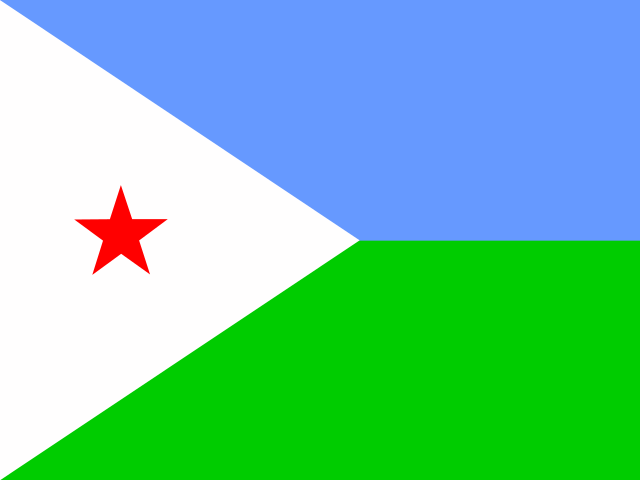
Issuer: Afars and Issas
Period:
(1967—1977)
Currency:
(1967—1977)
Demonetized: Yes
Total mintage: 780,000
Material
References
KM: #Click to copy to clipboard18
Numista: #4808
Obverse
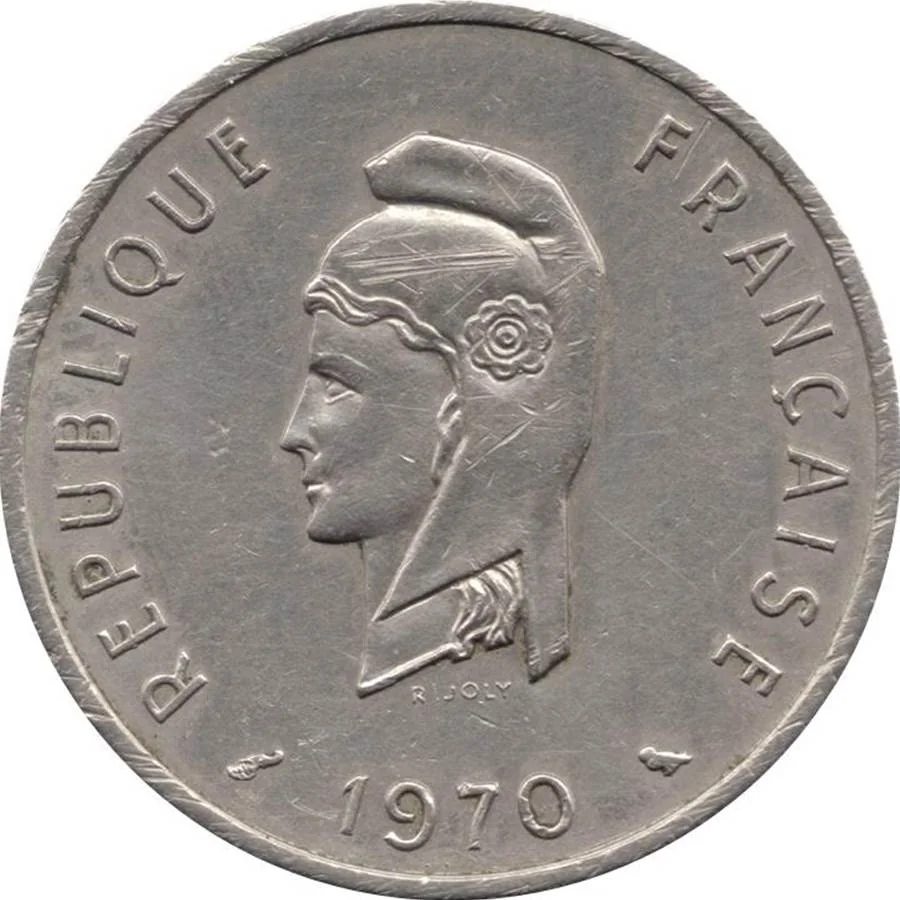
Description:
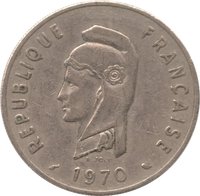
Marianne facing left in a Phrygian cap, date below.
Inscription:
REPUBLIQUE FRANÇAISE
R. JOLY
1970
R. JOLY
1970
Translation:
FRENCH REPUBLIC
R. JOLY
1970
R. JOLY
1970
Script: Latin
Language: French
Engraver: Raymond Joly
Reverse
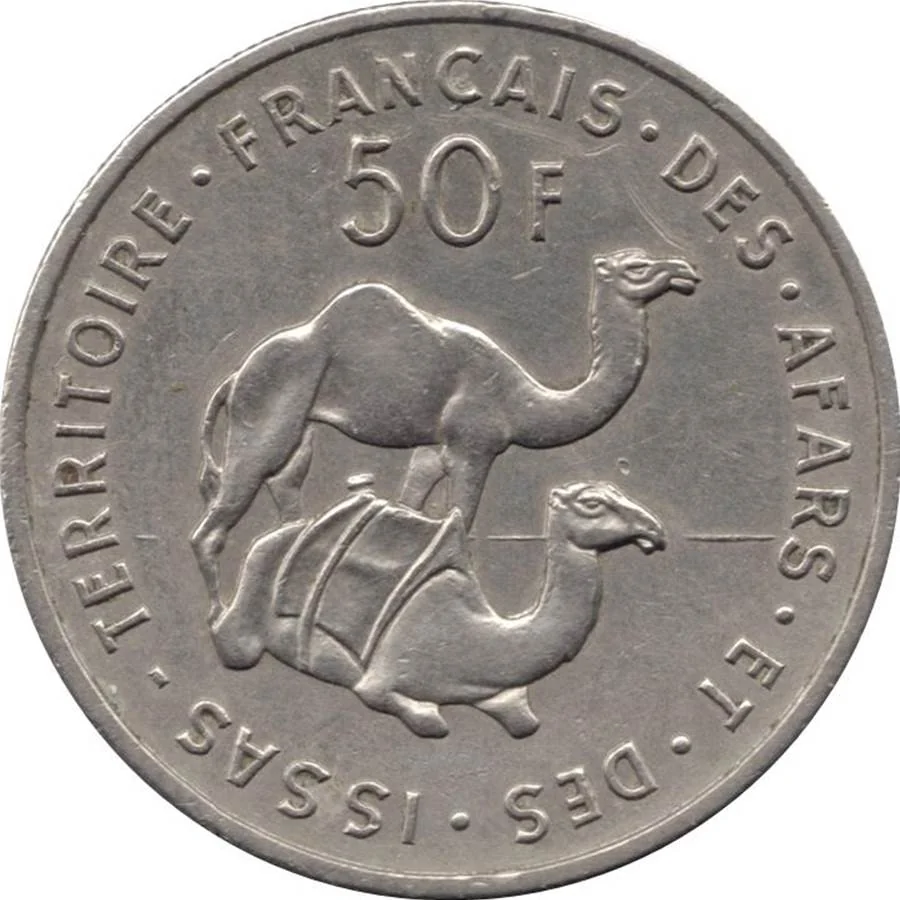
Description:
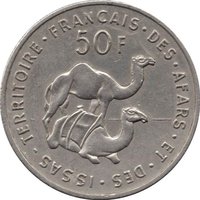
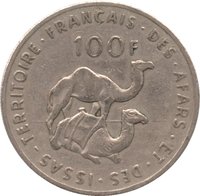
Two dromedary camels: one standing, one kneeling; denomination above.
Inscription:
TERRITOIRE·FRANÇAIS·DES·AFARS·ET·DES·ISSAS ·
50 F
50 F
Translation:
FRENCH TERRITORY OF THE AFARS AND THE ISSAS
50 FRANCS
50 FRANCS
Script: Latin
Language: French
Engraver: Raymond Joly
Edge
Reeded
Mints
| Name | Mark |
|---|---|
| Monnaie de Paris | — |
Mintings
| Year | Mint Mark | Mintage | Quality | Collection |
|---|---|---|---|---|
| 1970 | — | 600,000 | ||
| 1975 | — | 180,000 |
Historical background
In 1970, the currency situation in the French Territory of the Afars and the Issas (TFAI) was a direct reflection of its colonial status and strategic position. The territory, which would become the independent nation of Djibouti in 1977, did not have its own independent currency. Instead, it operated within the monetary framework of France, using the CFA franc as its sole legal tender. This currency was issued by a common central bank for the region, the Banque Centrale des États de l'Afrique de l'Ouest (BCEAO), and was pegged at a fixed and guaranteed rate to the French franc (FF 1 = CFAF 50).
This arrangement provided significant monetary stability for the territory, which was a key objective for its primary economic asset: the port of Djibouti. As a major commercial and refueling hub for the Red Sea and Suez Canal route, the territory relied on international trade and shipping. The fixed, convertible CFA franc facilitated this commerce by eliminating exchange rate risk with France and its other African partners, ensuring predictable transactions for the shipping companies, merchants, and the critical French military base located there.
However, this currency system also underscored the territory's economic dependence and limited autonomy. Monetary policy was entirely controlled from outside, dictated by the BCEAO's board in Dakar and ultimately guaranteed by the French Treasury. While this brought stability, it also meant the local administration had no direct lever to manage its economy through currency valuation or independent issuance. The currency situation in 1970 was thus a double-edged sword: a tool for commercial stability in a strategic location, yet a clear symbol of its impending need to navigate a path toward financial sovereignty upon the independence that was already being actively debated.
This arrangement provided significant monetary stability for the territory, which was a key objective for its primary economic asset: the port of Djibouti. As a major commercial and refueling hub for the Red Sea and Suez Canal route, the territory relied on international trade and shipping. The fixed, convertible CFA franc facilitated this commerce by eliminating exchange rate risk with France and its other African partners, ensuring predictable transactions for the shipping companies, merchants, and the critical French military base located there.
However, this currency system also underscored the territory's economic dependence and limited autonomy. Monetary policy was entirely controlled from outside, dictated by the BCEAO's board in Dakar and ultimately guaranteed by the French Treasury. While this brought stability, it also meant the local administration had no direct lever to manage its economy through currency valuation or independent issuance. The currency situation in 1970 was thus a double-edged sword: a tool for commercial stability in a strategic location, yet a clear symbol of its impending need to navigate a path toward financial sovereignty upon the independence that was already being actively debated.
🌱 Common