

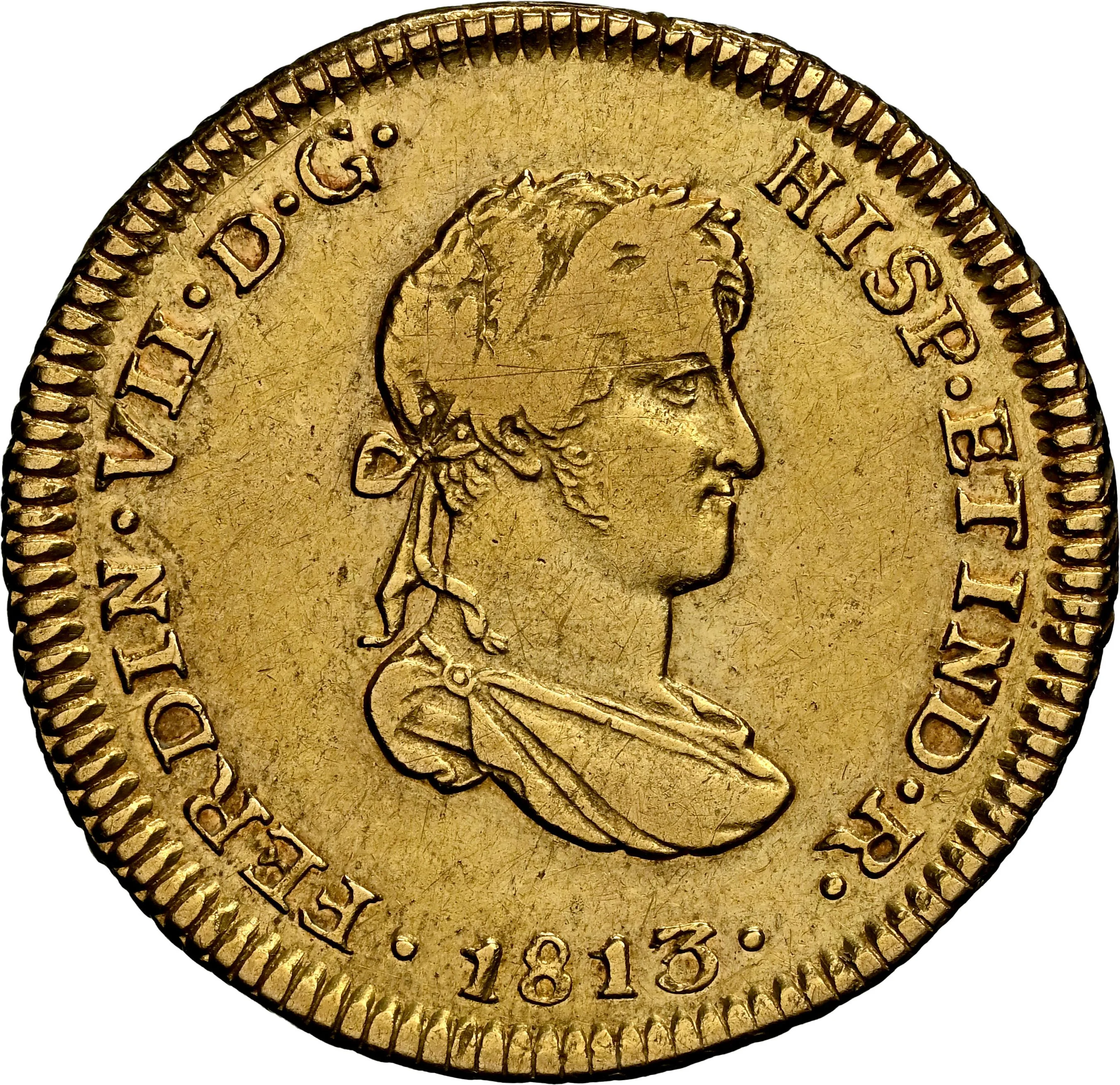
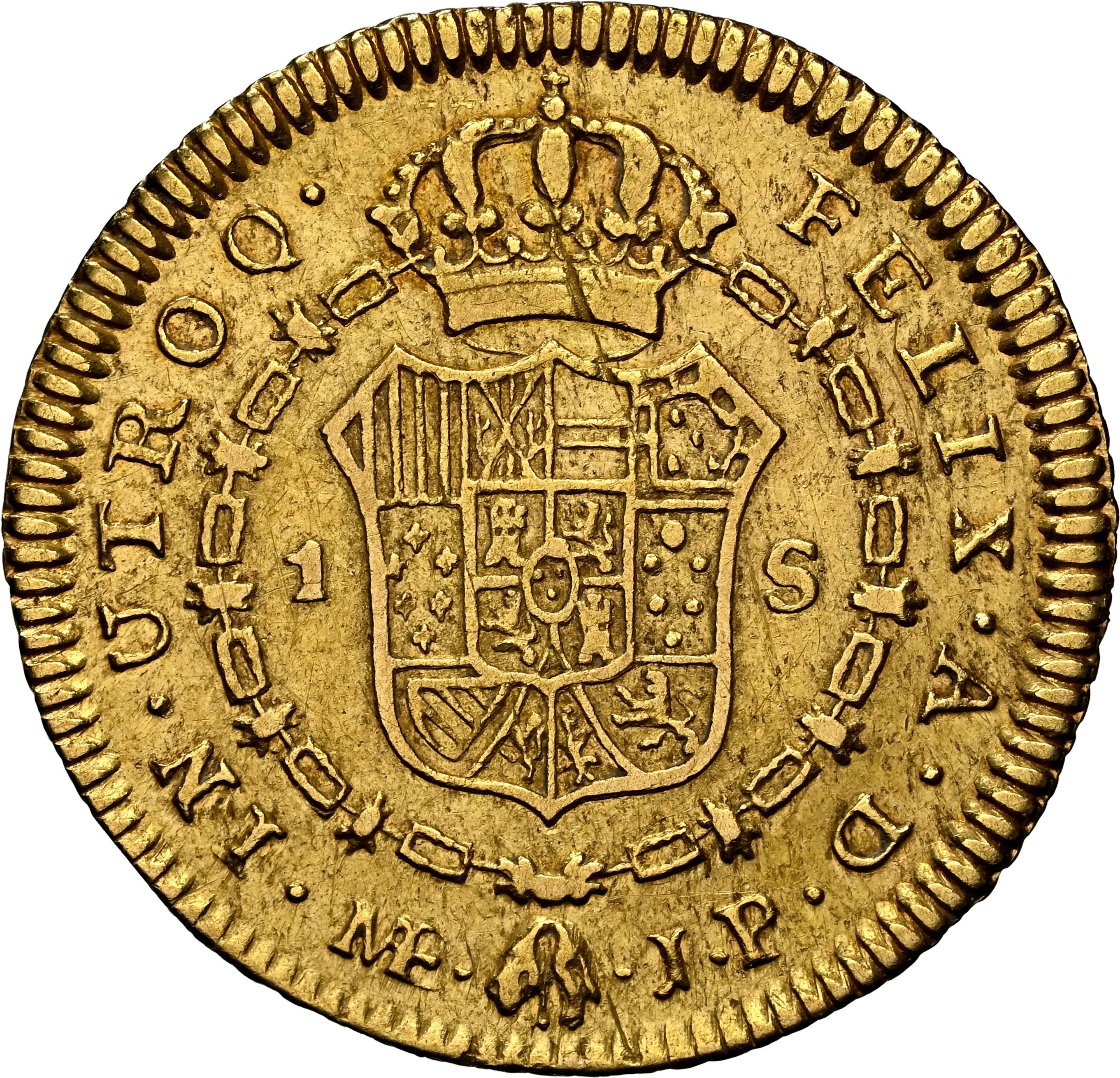
1 escudo – Peru
Add to wishlist
Peru
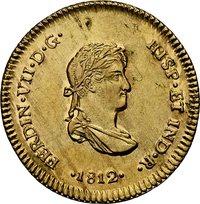
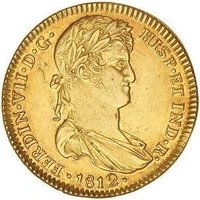
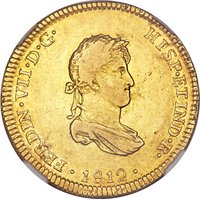
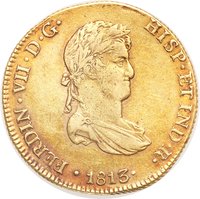
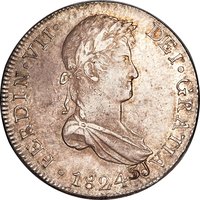
Obverse
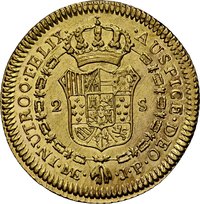
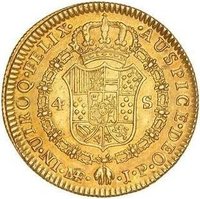
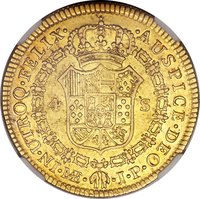
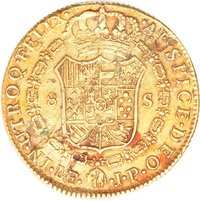
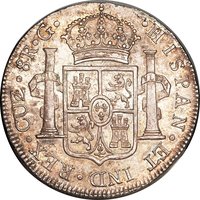
Reverse
Description:
Crowned coat of arms flanked by value. Circular legend.
Inscription:
·IN·UTROQ·
FELIX·A·D·
1 S
LIMAE· ·J·P·
FELIX·A·D·
1 S
LIMAE· ·J·P·
Script: Latin
Edge
Mints
| Name | Mark |
|---|---|
| Lima | LIMAE |
Historical background
In 1812, Peru remained the most staunchly royalist region in Spanish South America, a bulwark of the colonial system amidst the revolutionary fervor sweeping the continent. The currency situation reflected this political and economic stability, as the Viceroyalty of Peru continued to operate under the established Spanish monetary system centered on the silver real and the gold escudo. The primary source of this currency was the legendary silver output of the mines at Potosí (in the Audiencia of Charcas, still under Peruvian administration at the time) and Cerro de Pasco, which fed the Lima mint (Casa de Moneda). Unlike neighboring regions where wars of independence had disrupted mining and minting, causing severe coin shortages and the issuance of emergency paper money, Peru's royalist control ensured the continuous production and circulation of high-quality silver coins, known as "pieces of eight" (8 reales).
Economically, this reliable silver currency facilitated both internal trade and Lima's crucial role as a financial and administrative hub for the Spanish crown. However, the period was not without monetary pressure. The wider Peninsular War in Spain (1808-1814) and the cutting off of regular transatlantic subsidies from the metropolis placed a strain on the viceregal treasury. Viceroy José Fernando de Abascal y Sousa financed the royalist military campaigns against insurgents from Argentina to Ecuador primarily through increased local taxation, forced loans (donativos), and the confiscation of property from suspected patriots, rather than by debasing the coinage or issuing fiduciary currency. Consequently, while the intrinsic value of the coinage in circulation remained strong, the overall economic climate was one of extraction and fiscal strain to fund the counter-revolution.
Thus, in 1812, Peru presented a monetary paradox: it possessed the most stable and sound metallic currency in South America, a direct result of its unwavering colonial status and intact silver mining, but this stability was underwritten by an increasingly burdensome and coercive fiscal regime. The Spanish Constitution of 1812, promulgated that year, had little immediate impact on this monetary landscape. The real threat to Peru's currency system would only emerge in the following decade, as the independence movements finally reached Peru's heartland, disrupting the mines and minting operations that had sustained its royalist financial order for so long.
Economically, this reliable silver currency facilitated both internal trade and Lima's crucial role as a financial and administrative hub for the Spanish crown. However, the period was not without monetary pressure. The wider Peninsular War in Spain (1808-1814) and the cutting off of regular transatlantic subsidies from the metropolis placed a strain on the viceregal treasury. Viceroy José Fernando de Abascal y Sousa financed the royalist military campaigns against insurgents from Argentina to Ecuador primarily through increased local taxation, forced loans (donativos), and the confiscation of property from suspected patriots, rather than by debasing the coinage or issuing fiduciary currency. Consequently, while the intrinsic value of the coinage in circulation remained strong, the overall economic climate was one of extraction and fiscal strain to fund the counter-revolution.
Thus, in 1812, Peru presented a monetary paradox: it possessed the most stable and sound metallic currency in South America, a direct result of its unwavering colonial status and intact silver mining, but this stability was underwritten by an increasingly burdensome and coercive fiscal regime. The Spanish Constitution of 1812, promulgated that year, had little immediate impact on this monetary landscape. The real threat to Peru's currency system would only emerge in the following decade, as the independence movements finally reached Peru's heartland, disrupting the mines and minting operations that had sustained its royalist financial order for so long.
Series: 1812 Peru circulation coins
✨ Legendary