

3 Rigsbankskilling – Denmark
Denmark
Context

Material
References
KM: #Click to copy to clipboard729
Numista: #47999
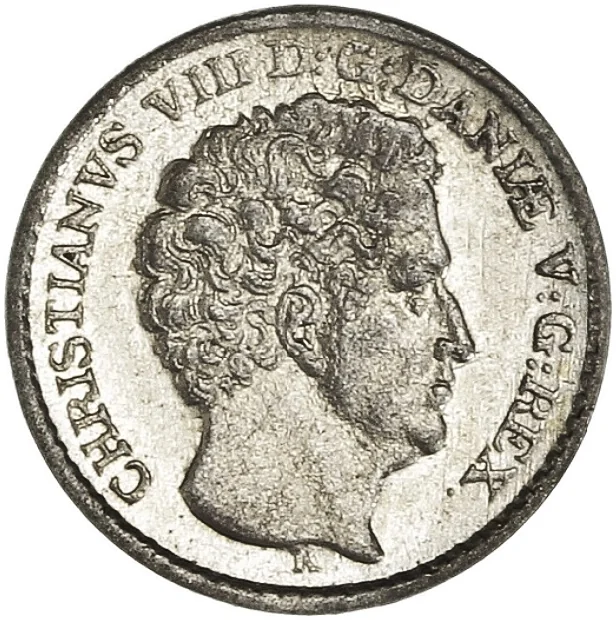
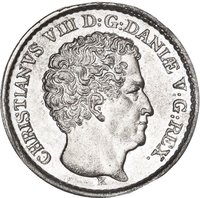
Obverse
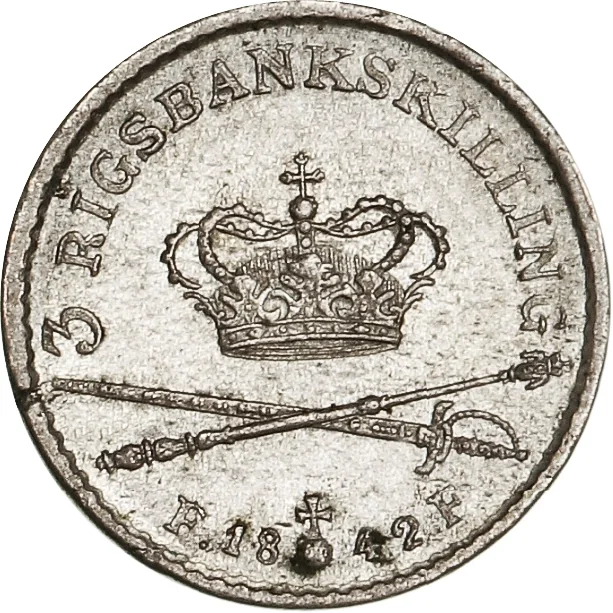
Reverse
Description:
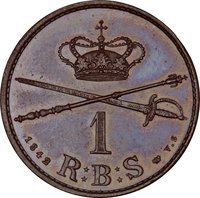
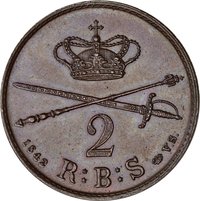
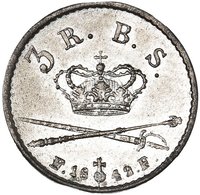
Crown above crossed sword and scepter; value above; orb divides date and initials below.
Inscription:
3 RIGSBANKSKILLING
F . 18 ♁ 42 . F .
F . 18 ♁ 42 . F .
Script: Latin
Edge
Mints
| Name | Mark |
|---|---|
| Altona, Schleswig-Holstein | ♁ |
Mintings
| Year | Mint Mark | Mintage | Quality | Collection |
|---|---|---|---|---|
| 1842 | ♁ | — |
Historical background
In 1842, Denmark was navigating a complex and transitional monetary system, caught between old traditions and the practical demands of a modernizing economy. The official currency was the rigsdaler, divided into 96 skilling. This cumbersome base-96 system, a legacy of the past, was poorly suited for everyday commerce and calculation. Furthermore, the kingdom operated on a silver standard, but the actual circulating money was a heterogeneous mix: silver coins of full intrinsic value, depreciated paper notes issued by the state treasury (Kurant), and even foreign coins, all circulating simultaneously at fluctuating values.
This chaotic situation was a direct result of the state’s financial crises, particularly the aftermath of the Napoleonic Wars and the costly naval conflicts of the early 19th century. To cover enormous debts, the government had issued vast amounts of paper money, which were not fully convertible to silver and had thus lost value against the silver rigsdaler. Consequently, two parallel systems existed: the rigsdaler specie (silver) and the less valuable rigsdaler courant (paper). This duality created confusion, hindered trade, and undermined public trust in the currency.
By 1842, pressure for reform was building. The inefficiencies of the system were widely recognized as an obstacle to both domestic stability and international commerce. Economic thinkers and policymakers were increasingly influenced by the monetary reforms occurring elsewhere in Europe. Therefore, the year 1842 represents a point of mounting tension just a few years before a major overhaul; a comprehensive currency reform would finally be enacted in 1854, introducing the rigsdaler divided into 100 øre and firmly pegging it to the silver standard, bringing much-needed order to Denmark's finances.
This chaotic situation was a direct result of the state’s financial crises, particularly the aftermath of the Napoleonic Wars and the costly naval conflicts of the early 19th century. To cover enormous debts, the government had issued vast amounts of paper money, which were not fully convertible to silver and had thus lost value against the silver rigsdaler. Consequently, two parallel systems existed: the rigsdaler specie (silver) and the less valuable rigsdaler courant (paper). This duality created confusion, hindered trade, and undermined public trust in the currency.
By 1842, pressure for reform was building. The inefficiencies of the system were widely recognized as an obstacle to both domestic stability and international commerce. Economic thinkers and policymakers were increasingly influenced by the monetary reforms occurring elsewhere in Europe. Therefore, the year 1842 represents a point of mounting tension just a few years before a major overhaul; a comprehensive currency reform would finally be enacted in 1854, introducing the rigsdaler divided into 100 øre and firmly pegging it to the silver standard, bringing much-needed order to Denmark's finances.
Series: 1842 Denmark circulation coins
🌟 Limited