

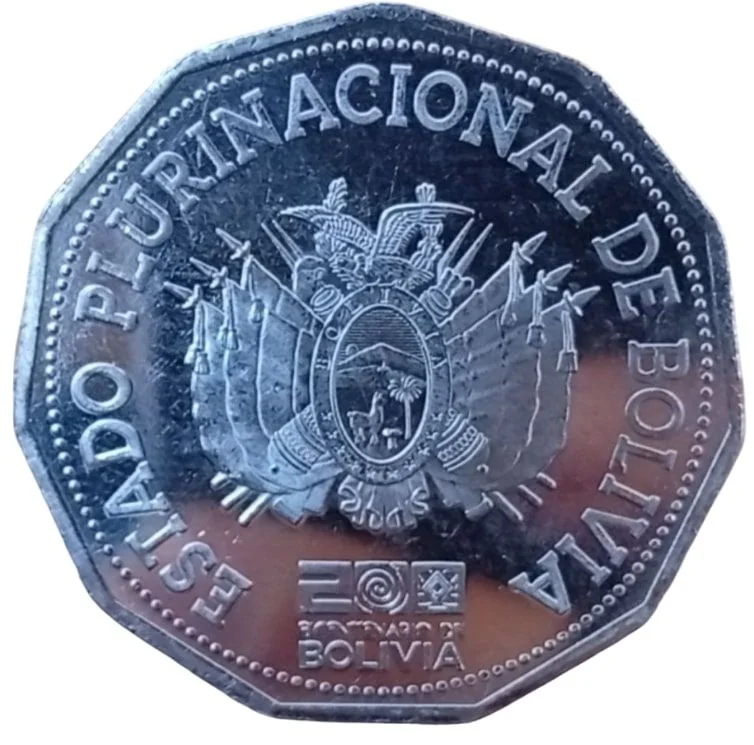
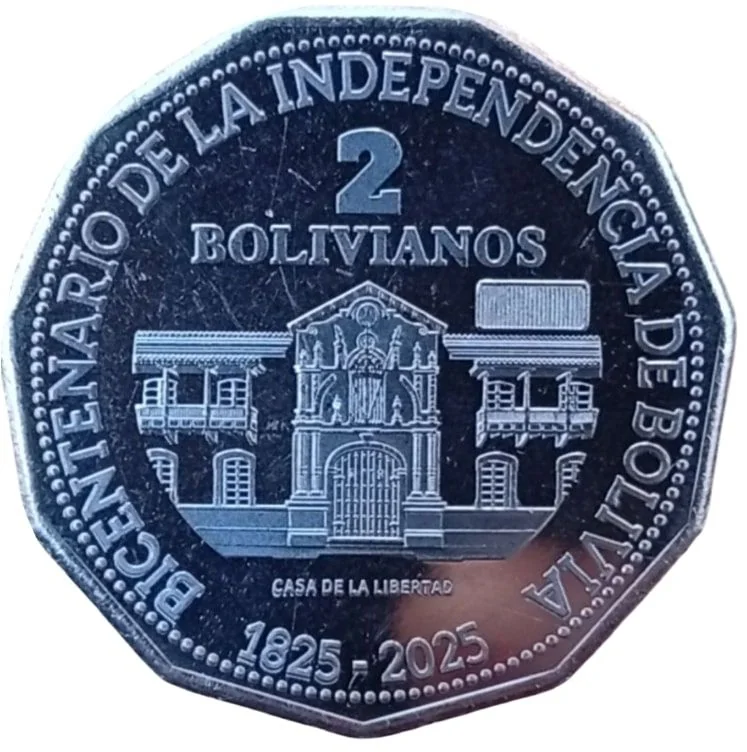
2 bolivianos – Bolivia
Add to wishlist
Circulating commemorative coins
Commemoration: Bicentennial of the Independence of Bolivia
Bolivia
Context
Material
Diameter: 29 mm
Weight: 6.4 g
Thickness: 1.4 mm
Shape: Hendecagonal
Composition: Stainless steel
Technique: Milled
Alignment: Coin alignment
flip
References
Numista: #479832
Value
Exchange value: 2 BOB
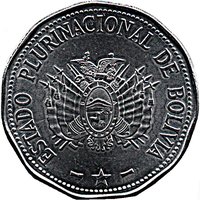
Obverse
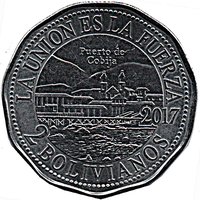
Reverse
Edge
Plain
Categories
| Building |
| Event> Independence |
| Symbols> Coat of Arms |
Mints
| Name | Mark |
|---|---|
| Mint of Poland | — |
Mintings
| Year | Mint Mark | Mintage | Quality | Collection |
|---|---|---|---|---|
| 2025 | — | 13,000,000 |
Historical background
In 2025, Bolivia's currency situation remains defined by a prolonged period of relative stability for the Boliviano (BOB), a notable outlier in a region often plagued by volatility. This stability is primarily anchored by a managed exchange rate regime, where the Central Bank of Bolivia (BCB) actively intervenes to peg the Boliviano to a basket of currencies, heavily weighted toward the US dollar. This policy, maintained for over a decade, has successfully controlled hyperinflation and provided predictability for domestic pricing and contracts. However, it is sustained at a significant cost, reliant on the continuous depletion of dwindling foreign exchange reserves, which are used to defend the fixed rate in the face of a persistent trade deficit and limited access to international capital markets.
The core challenge in 2025 is the growing unsustainability of this model. Reserves have fallen to critically low levels, pressured by years of fiscal deficits, low prices for key natural gas exports, and stagnant domestic production that increases reliance on imports. The official exchange rate (approximately 6.96 BOB to 1 USD) is widely perceived as overvalued, creating a growing disparity with parallel market rates and discouraging non-hydrocarbon exports while making imports artificially cheap. This dynamic further erodes the country's dollar-generating capacity, creating a vicious cycle. The government continues to employ strict capital controls and import restrictions to manage the outflow of dollars, but these measures stifle economic growth and investment.
Looking forward, 2025 is a year of difficult choices. Authorities face mounting pressure from international financial institutions and economic analysts to implement a controlled devaluation or transition to a more flexible exchange rate to rebuild reserves and correct imbalances. However, the political and social risks of such a move are severe, as devaluation would immediately increase the cost of living for the population, potentially sparking significant social unrest. The government's strategy thus remains one of short-term management, seeking bridge financing and hoping for a rebound in commodity prices, while the underlying structural pressures on the Boliviano continue to build toward a potential tipping point.
The core challenge in 2025 is the growing unsustainability of this model. Reserves have fallen to critically low levels, pressured by years of fiscal deficits, low prices for key natural gas exports, and stagnant domestic production that increases reliance on imports. The official exchange rate (approximately 6.96 BOB to 1 USD) is widely perceived as overvalued, creating a growing disparity with parallel market rates and discouraging non-hydrocarbon exports while making imports artificially cheap. This dynamic further erodes the country's dollar-generating capacity, creating a vicious cycle. The government continues to employ strict capital controls and import restrictions to manage the outflow of dollars, but these measures stifle economic growth and investment.
Looking forward, 2025 is a year of difficult choices. Authorities face mounting pressure from international financial institutions and economic analysts to implement a controlled devaluation or transition to a more flexible exchange rate to rebuild reserves and correct imbalances. However, the political and social risks of such a move are severe, as devaluation would immediately increase the cost of living for the population, potentially sparking significant social unrest. The government's strategy thus remains one of short-term management, seeking bridge financing and hoping for a rebound in commodity prices, while the underlying structural pressures on the Boliviano continue to build toward a potential tipping point.
💎 Extremely Rare