

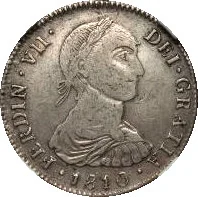
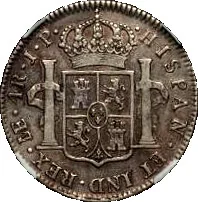
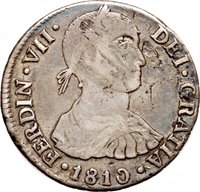
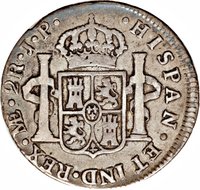
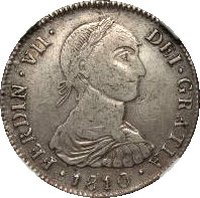
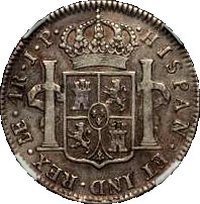
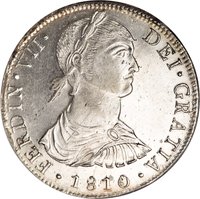
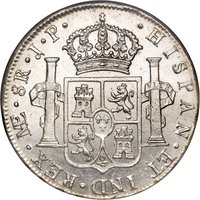
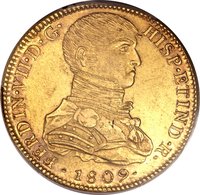
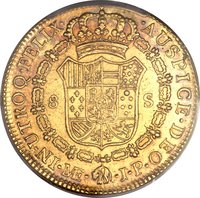
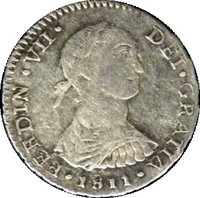
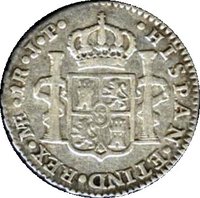
4 reales – Peru
Add to wishlist
Peru
Mintings
| Year | Mint Mark | Mintage | Quality | Collection |
|---|---|---|---|---|
| 1808 | JP | — | ||
| 1809 | JP | — | ||
| 1810 | JP | — | ||
| 1811 | JP | — |
Historical background
In 1808, the currency situation in the Viceroyalty of Peru was a complex and strained system, still officially operating under the Spanish colonial monetary standard. The legal tender was based on silver, primarily minted into pesos and reales at the Lima Mint, one of the most important in the Americas. The system was bimetallic, with gold escudos also in circulation, but silver from the rich mines of Potosí (in the associated territory of Upper Peru, modern Bolivia) was the economic lifeblood. However, the physical supply of coinage was often insufficient for the vast territory, leading to chronic shortages of circulating medium, especially in remote provinces where barter persisted.
This financial infrastructure was under severe pressure due to the broader imperial crisis. The Napoleonic invasion of Spain in 1808 and the capture of King Ferdinand VII created a political vacuum that disrupted transatlantic trade and the normal flow of royal authority and subsidy. While Peru itself remained outwardly loyal to the Spanish resistance junta, the events severed crucial economic links. The scarcity of new coins from Spain and the hoarding of existing specie due to uncertainty began to exacerbate the already limited money supply. Furthermore, the colonial government in Lima faced increasing military expenses to maintain royal control and suppress nascent unrest, straining its treasury.
Consequently, the period saw a growing reliance on credit instruments, promissory notes, and the continued use of heavily worn or cut coins in daily transactions. There was also an increase in the circulation of moneda macuquina—crude, hammer-struck silver pieces that were often irregular in shape and weight—alongside the more uniform milled coins. While no formal monetary revolution had yet occurred, the instability of 1808 laid the groundwork for the financial turmoil that would accompany the coming Wars of Independence, during which both royalist and patriot forces would eventually issue their own emergency currencies to fund their campaigns, further fracturing the unified colonial monetary system.
This financial infrastructure was under severe pressure due to the broader imperial crisis. The Napoleonic invasion of Spain in 1808 and the capture of King Ferdinand VII created a political vacuum that disrupted transatlantic trade and the normal flow of royal authority and subsidy. While Peru itself remained outwardly loyal to the Spanish resistance junta, the events severed crucial economic links. The scarcity of new coins from Spain and the hoarding of existing specie due to uncertainty began to exacerbate the already limited money supply. Furthermore, the colonial government in Lima faced increasing military expenses to maintain royal control and suppress nascent unrest, straining its treasury.
Consequently, the period saw a growing reliance on credit instruments, promissory notes, and the continued use of heavily worn or cut coins in daily transactions. There was also an increase in the circulation of moneda macuquina—crude, hammer-struck silver pieces that were often irregular in shape and weight—alongside the more uniform milled coins. While no formal monetary revolution had yet occurred, the instability of 1808 laid the groundwork for the financial turmoil that would accompany the coming Wars of Independence, during which both royalist and patriot forces would eventually issue their own emergency currencies to fund their campaigns, further fracturing the unified colonial monetary system.
Series: 1808 Peru circulation coins
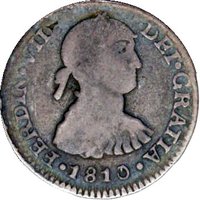
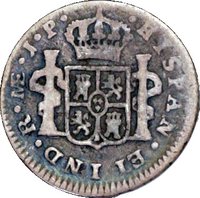
✨ Legendary