

6 pence – Rhodesia
Add to wishlist
Zimbabwe
Context
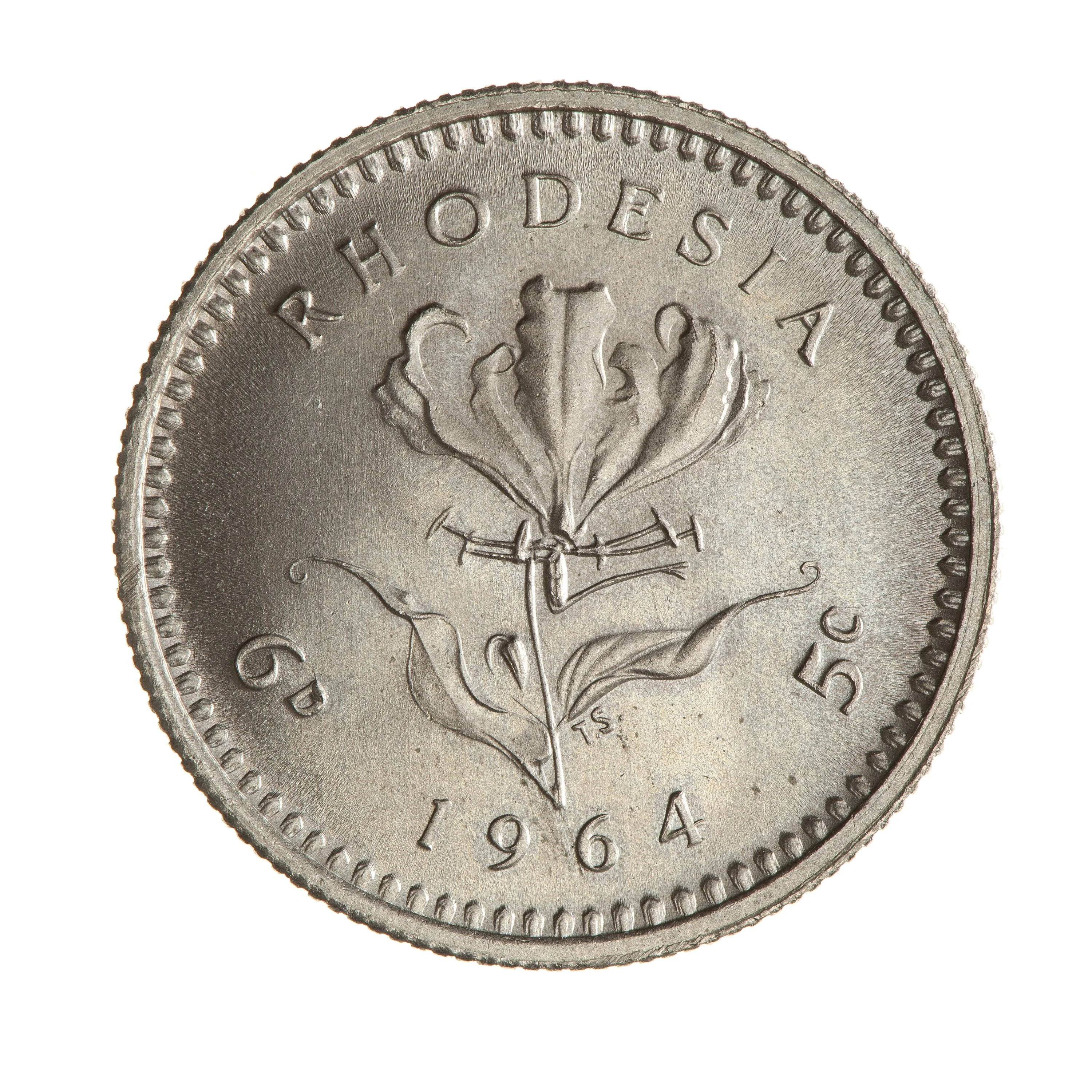
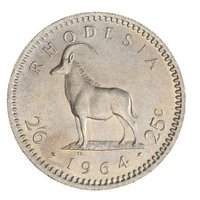
Year: 1964
Country: Zimbabwe
Issuer: Rhodesia
Ruler: Elizabeth II
Currency:
(1964—1970)
Demonetized: Yes
Total mintage: 13,502,060
Material
Diameter: 19 mm
Weight: 2.8 g
Thickness: 1.2 mm
Shape: Round
Composition: Copper-nickel
Technique: Milled
Alignment: Medal alignment
flip
References
KM: #
Numista: #4794
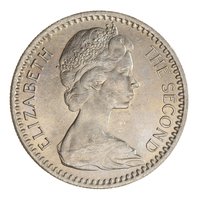
Obverse
Description:
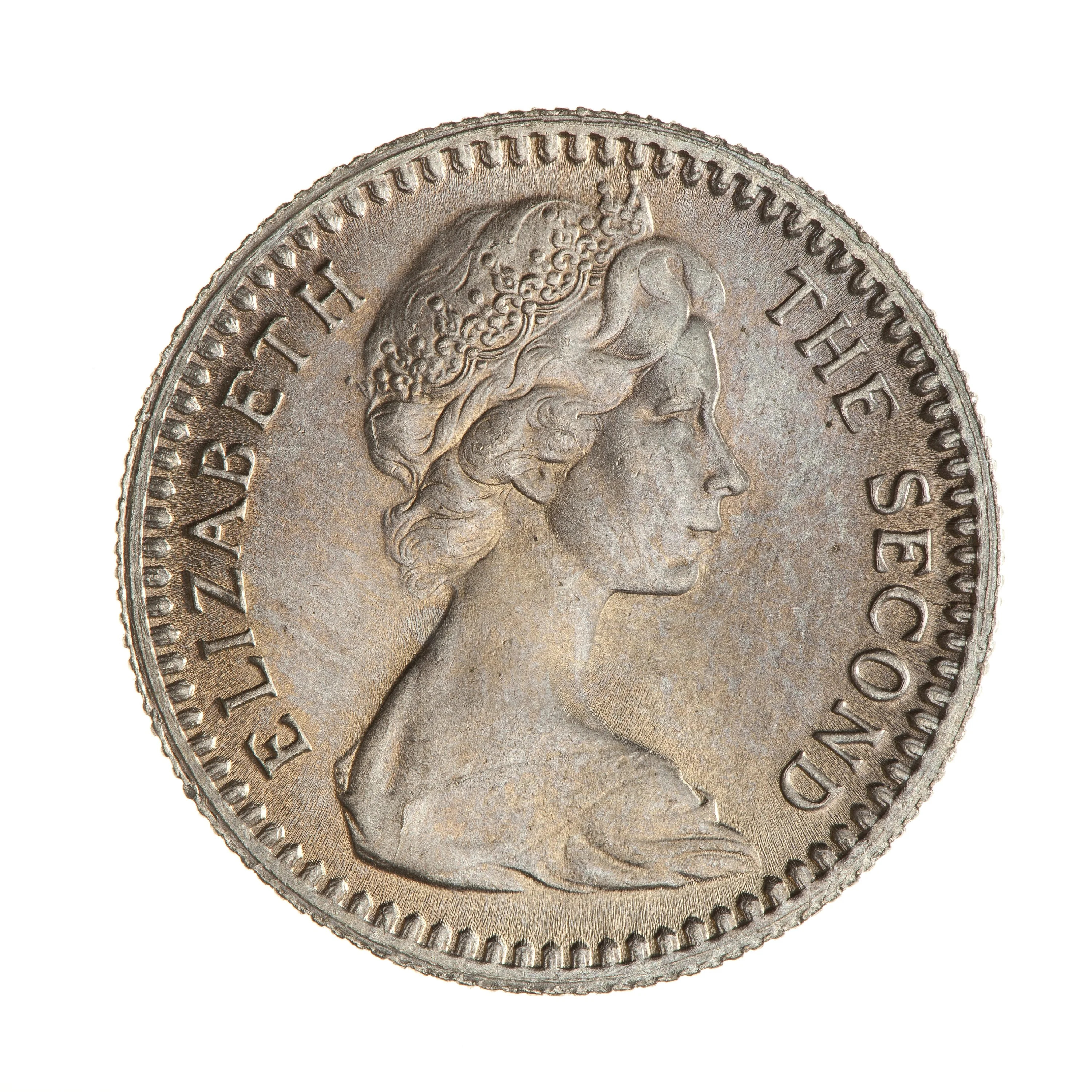
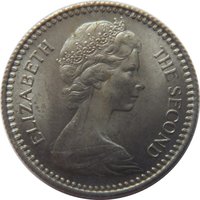
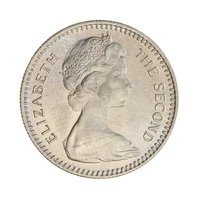
Queen Elizabeth II effigy with "ELIZABETH THE SECOND" inscription.
Inscription:
ELIZABETH THE SECOND
Translation:
ELIZABETH THE SECOND
Script: Latin
Language: English
Designer: Arnold Machin
Reverse
Edge
Reeded
Mints
| Name | Mark |
|---|---|
| Pretoria | — |
Mintings
| Year | Mint Mark | Mintage | Quality | Collection |
|---|---|---|---|---|
| 1964 | — | 13,500,000 | ||
| 1964 | — | 2,060 | Proof |
Historical background
In 1964, Rhodesia’s currency situation was directly tied to its escalating political crisis. As a self-governing British colony, it operated within the sterling area and used the Rhodesian pound (£R), which was pegged at par with the British pound sterling. This arrangement provided stability and facilitated trade, but it was fundamentally dependent on the recognition and financial infrastructure of the United Kingdom. The currency was issued by the Reserve Bank of Rhodesia, established just two years prior in 1962, marking a step toward greater economic autonomy from London.
The political context was dominated by the white-minority government of Prime Minister Ian Smith, who was aggressively seeking independence under the existing constitution to permanently entrench minority rule. As negotiations with Britain broke down over the British government’s insistence on "no independence before majority rule" (NIBMAR), the threat of a Unilateral Declaration of Independence (UDI) loomed large. This created profound uncertainty for the currency, as such a rebellious act would inevitably lead to economic sanctions, expulsion from the sterling area, and the potential freezing of Rhodesia’s substantial sterling reserves held in London.
Consequently, by late 1964, the currency system was in a state of precarious anticipation. The Rhodesian government and the Reserve Bank were acutely aware that UDI would force a drastic reorganization. Contingency plans, including the potential introduction of a new, separate currency and the secret printing of banknotes, were likely already under consideration to ensure the colony could maintain a functioning financial system after a break with Britain. Thus, the currency in 1964 existed in a fragile duality: it was still the stable Rhodesian pound, but it stood on the brink of becoming an instrument of a besieged rebel state.
The political context was dominated by the white-minority government of Prime Minister Ian Smith, who was aggressively seeking independence under the existing constitution to permanently entrench minority rule. As negotiations with Britain broke down over the British government’s insistence on "no independence before majority rule" (NIBMAR), the threat of a Unilateral Declaration of Independence (UDI) loomed large. This created profound uncertainty for the currency, as such a rebellious act would inevitably lead to economic sanctions, expulsion from the sterling area, and the potential freezing of Rhodesia’s substantial sterling reserves held in London.
Consequently, by late 1964, the currency system was in a state of precarious anticipation. The Rhodesian government and the Reserve Bank were acutely aware that UDI would force a drastic reorganization. Contingency plans, including the potential introduction of a new, separate currency and the secret printing of banknotes, were likely already under consideration to ensure the colony could maintain a functioning financial system after a break with Britain. Thus, the currency in 1964 existed in a fragile duality: it was still the stable Rhodesian pound, but it stood on the brink of becoming an instrument of a besieged rebel state.
🌱 Very Common