

⅔ Thaler – Brunswick-Lüneburg-Calenberg-Hannover
Germany
Context

Material
References
KM: #Click to copy to clipboard413
Numista: #47893
Value
Bullion value: $36.86
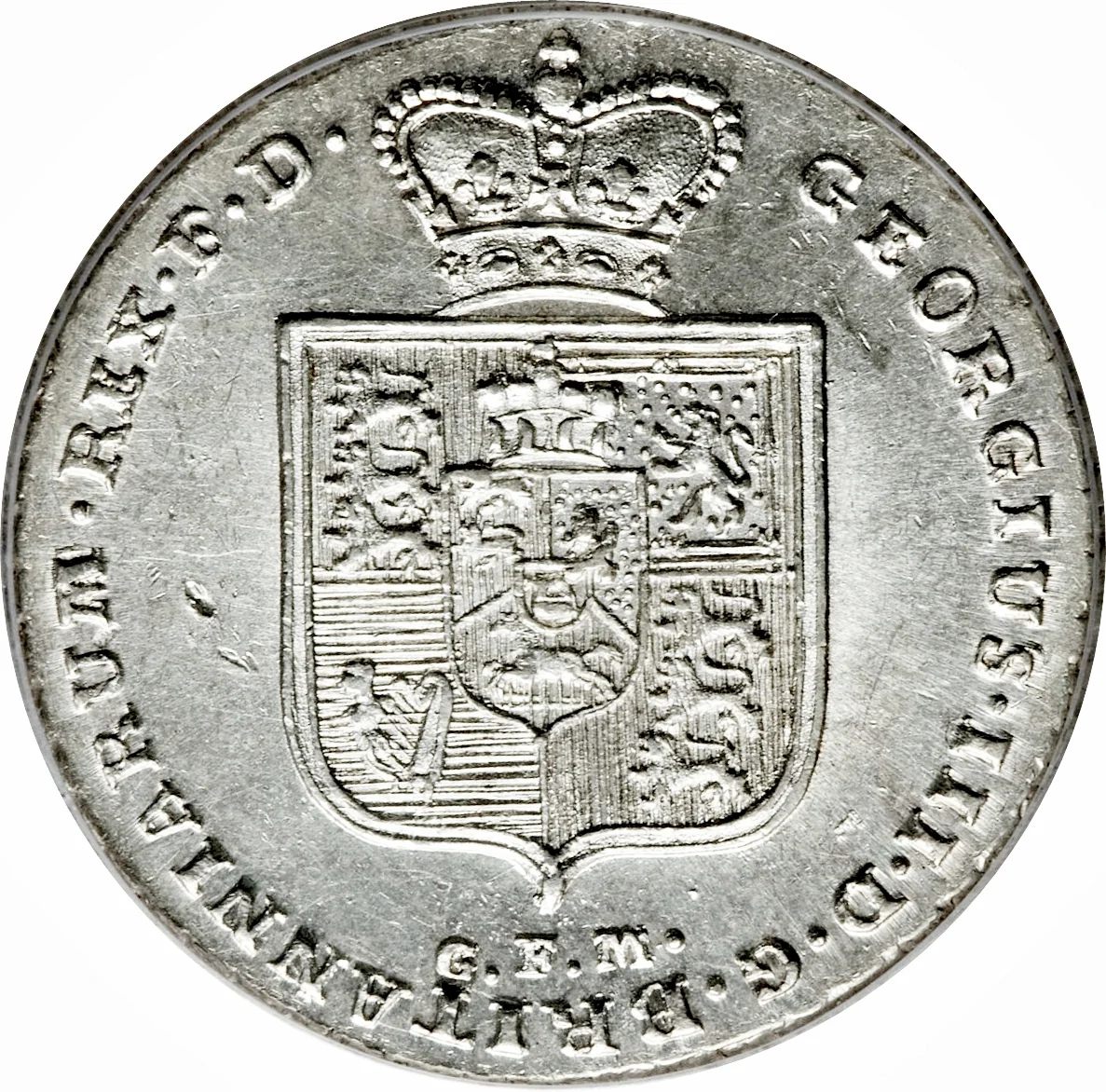
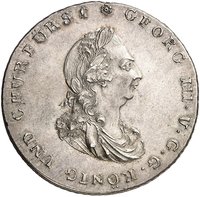
Obverse
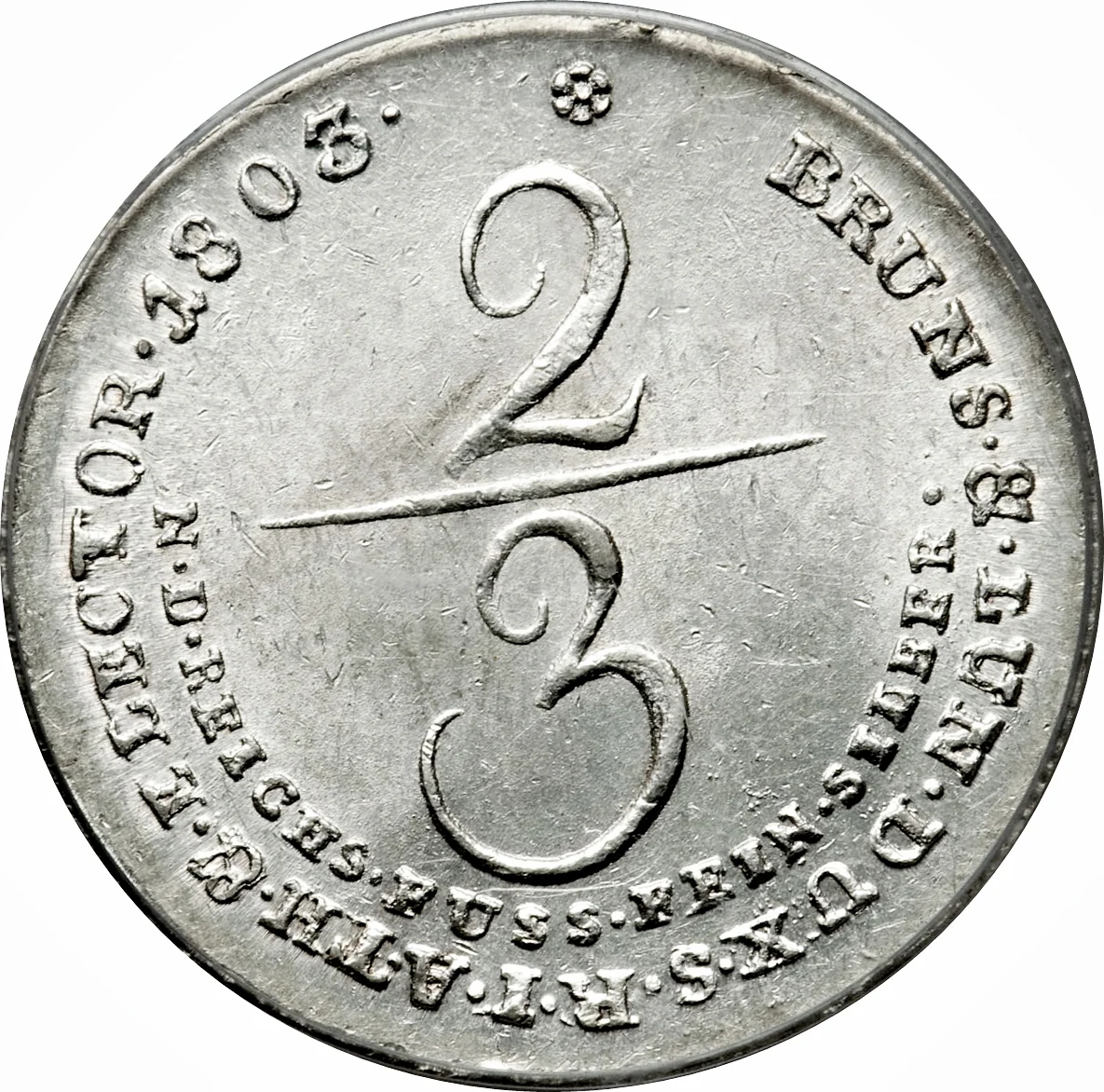
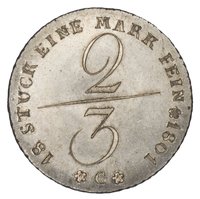
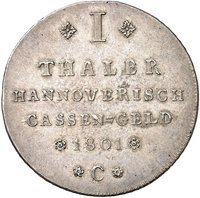
Reverse
Description:
Center denomination, encircled legend.
Inscription:
BRUNS·&·LUN·DUX·S·R·I·ATH·&·L·LECTOR·1803·
2/3
N·D·REICHS·FUSS·FEIN·SILBER
2/3
N·D·REICHS·FUSS·FEIN·SILBER
Script: Latin
Edge
Mints
| Name | Mark |
|---|---|
| Clausthal | — |
Mintings
| Year | Mint Mark | Mintage | Quality | Collection |
|---|---|---|---|---|
| 1801 | C | — | ||
| 1802 | — | — | ||
| 1802 | C | — | ||
| 1803 | — | — | ||
| 1804 | — | — | ||
| 1805 | — | — |
Historical background
In 1801, the currency situation in the Duchy of Brunswick-Lüneburg, specifically the Principality of Calenberg-Hannover, was complex and fragmented, reflecting the broader monetary disunity of the Holy Roman Empire. The region operated on the Conventionsfuß monetary standard, established in 1753, which defined the silver content of the primary large silver coin, the Reichsthaler. However, daily commerce relied on a confusing array of actual circulating coins. These included local Hanoverian issues, older Reichsthaler variants, and a significant influx of foreign coins from neighboring states like Prussia, Brunswick-Wolfenbüttel, and even Dutch and French currencies, all with fluctuating values and metal contents.
This multiplicity created chronic problems for trade and public administration. The intrinsic value of a coin (its precious metal content) often differed from its nominal face value, leading to arbitrage, hoarding of good coin, and a general loss of public confidence. The political situation added to the instability; although Hanover was formally ruled by the British monarch, it was under direct French occupation from 1803, which foreshadowed further monetary disruption. Authorities struggled to enforce exchange rates and curb the circulation of debased or foreign coins, but effective central control was limited.
Consequently, the monetary landscape was one of practical disorder within a theoretical framework. While the Conventionsreichsthaler served as an accounting unit, the actual medium of exchange was a heterogeneous mix of specie, requiring merchants and officials to constantly refer to published Kurantlisten (exchange rate bulletins). This inefficiency acted as a drag on the economy, highlighting the need for the standardized national currency systems that would emerge in the German lands later in the 19th century.
This multiplicity created chronic problems for trade and public administration. The intrinsic value of a coin (its precious metal content) often differed from its nominal face value, leading to arbitrage, hoarding of good coin, and a general loss of public confidence. The political situation added to the instability; although Hanover was formally ruled by the British monarch, it was under direct French occupation from 1803, which foreshadowed further monetary disruption. Authorities struggled to enforce exchange rates and curb the circulation of debased or foreign coins, but effective central control was limited.
Consequently, the monetary landscape was one of practical disorder within a theoretical framework. While the Conventionsreichsthaler served as an accounting unit, the actual medium of exchange was a heterogeneous mix of specie, requiring merchants and officials to constantly refer to published Kurantlisten (exchange rate bulletins). This inefficiency acted as a drag on the economy, highlighting the need for the standardized national currency systems that would emerge in the German lands later in the 19th century.

💎 Extremely Rare