



50 rials – Yemen
Add to wishlist
Yemen
Context
Year: 2025
Islamic (Hijri) Year:: 1446
Issuer: Yemen
Issuing organization: Central Bank of Yemen
Period:
(since 1990)
Currency:
(since 1990)


References
Numista: #477891
Value
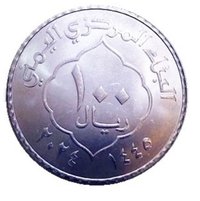
Exchange value: 50 YER
Obverse
Reverse
Description:
Al-Aidaros Mosque, central Sana'a.
Inscription:
مسجد العيدروس
عدن
عدن
Translation:
The Al-Aidarus Mosque
Aden
Aden
Script: Arabic (Maghribi)
Language: Arabic
Edge
Categories
| Building> Religious building |
Mintings
| Year | Mint Mark | Mintage | Quality | Collection |
|---|---|---|---|---|
| 2025 | — | — |
Historical background
In 2025, Yemen’s currency situation remains a critical symptom and driver of the nation's profound humanitarian and economic crisis. The country operates with a stark dual-currency reality: the internationally recognized government in Aden issues the new Yemeni rial (YER), while the de facto Houthi authorities in Sana’a continue to circulate pre-2016 banknotes, often called the "old riyal." This fragmentation, coupled with the Central Bank of Yemen's divided leadership, has destroyed monetary policy coherence. The result is a persistent and severe depreciation, particularly of the Aden-based rial, which has seen its value plummet due to a collapse in foreign exchange reserves, a reliance on costly imports for nearly all goods, and a lack of confidence. Hyperinflationary pressures, though slightly tempered from peak years, continue to erode purchasing power, pushing millions deeper into poverty as salaries, if paid at all, become virtually worthless.
The primary factors sustaining this crisis in 2025 are largely unchanged from previous years but have become more entrenched. The blockade and restrictions on ports, especially Hodeidah, severely limit the inflow of essential goods and the generation of customs revenue needed to support the currency. Remittances from the Yemeni diaspora, a vital lifeline, remain a key source of hard currency but are insufficient to offset the structural trade deficit. Furthermore, the competing authorities engage in destructive financial policies, including the unrestricted printing of banknotes to cover public sector wages and war costs, which further floods the market and devalues the currency. This economic warfare, where each side seeks to undermine the other's financial system, ensures that ordinary Yemenis bear the brunt through skyrocketing prices for food, fuel, and medicine.
Looking forward, the currency's fate in 2025 is inextricably tied to the stalled peace process. Any durable ceasefire or political roadmap would need to include a mechanism for reunifying the central bank and monetary system—a monumental technical and political challenge. In the absence of a political settlement, stopgap humanitarian measures, such as direct cash assistance from international organizations and efforts to stabilize commodity imports, provide minimal relief but cannot reverse the underlying collapse. Consequently, the Yemeni rial is projected to remain highly volatile and weak, with its value acting as a daily barometer of the conflict's intensity and the effectiveness of fragile, localized economic arrangements within a fractured state.
The primary factors sustaining this crisis in 2025 are largely unchanged from previous years but have become more entrenched. The blockade and restrictions on ports, especially Hodeidah, severely limit the inflow of essential goods and the generation of customs revenue needed to support the currency. Remittances from the Yemeni diaspora, a vital lifeline, remain a key source of hard currency but are insufficient to offset the structural trade deficit. Furthermore, the competing authorities engage in destructive financial policies, including the unrestricted printing of banknotes to cover public sector wages and war costs, which further floods the market and devalues the currency. This economic warfare, where each side seeks to undermine the other's financial system, ensures that ordinary Yemenis bear the brunt through skyrocketing prices for food, fuel, and medicine.
Looking forward, the currency's fate in 2025 is inextricably tied to the stalled peace process. Any durable ceasefire or political roadmap would need to include a mechanism for reunifying the central bank and monetary system—a monumental technical and political challenge. In the absence of a political settlement, stopgap humanitarian measures, such as direct cash assistance from international organizations and efforts to stabilize commodity imports, provide minimal relief but cannot reverse the underlying collapse. Consequently, the Yemeni rial is projected to remain highly volatile and weak, with its value acting as a daily barometer of the conflict's intensity and the effectiveness of fragile, localized economic arrangements within a fractured state.

✨ Legendary