

2 Zlotys – Poland
Circulating commemorative coins
Commemoration: Stefan Batory (1576 - 1586)
Series: Polish Kings and Princes
Poland
Context

Material
Diameter: 27 mm
Weight: 8.15 g
Thickness: 2 mm
Shape: Round
Composition: Nordic gold
Magnetic: No
Technique: Milled
Alignment: Medal alignment
flip
References
Y: #Click to copy to clipboard325
Numista: #14941
Value
Exchange value: 2 PLN = $0.56
Inflation-adjusted value: 6.68 PLN
Obverse
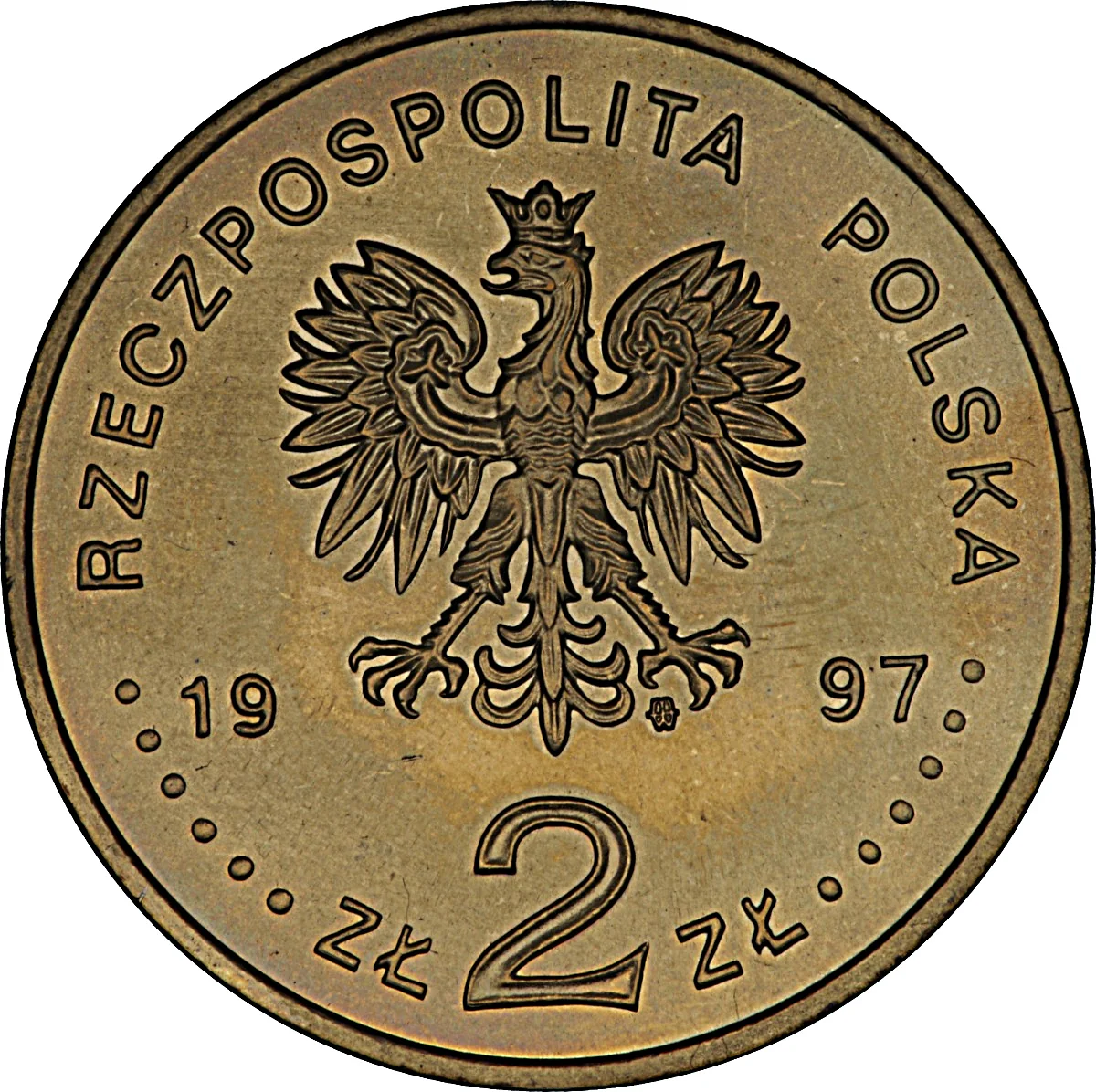
Description:
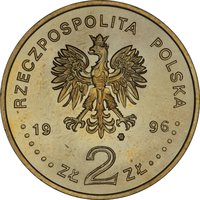
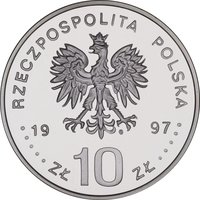
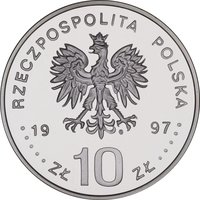
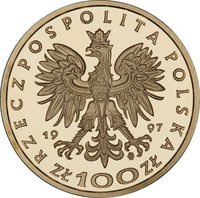
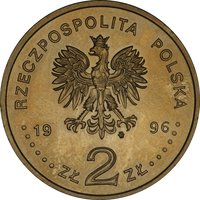
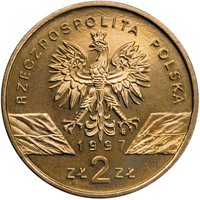
Crowned eagle facing left.
Inscription:
RZECZPOSPOLITA POLSKA
mw
1997
ZŁ 2 ZŁ
mw
1997
ZŁ 2 ZŁ
Translation:
REPUBLIC OF POLAND
2 ZŁ 2 ZŁ
1997
2 ZŁ 2 ZŁ
1997
Script: Latin
Language: Polish
Designer: Ewa Tyc-Karpińska
Reverse
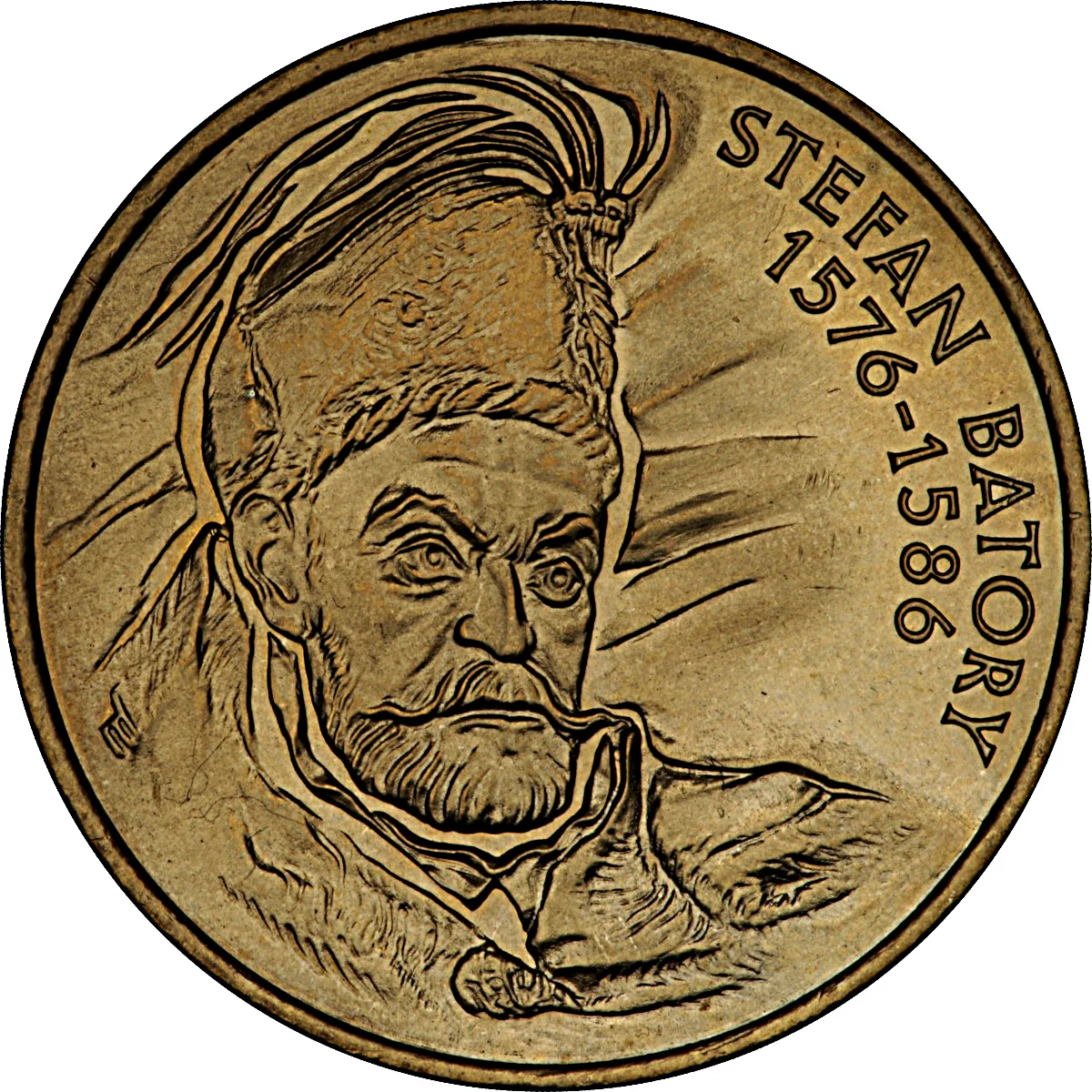
Description:
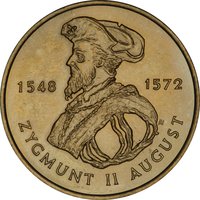
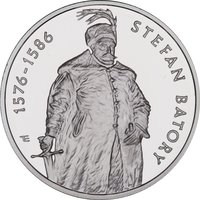
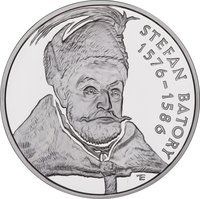
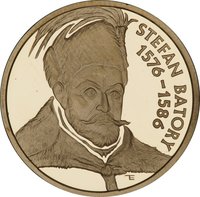
King Stefan Batory, facing right.
Inscription:
STEFAN BATORY
1576 - 1586
ET
1576 - 1586
ET
Script: Latin
Designer: Ewa Tyc-Karpińska
Edge
Plain
Mints
| Name | Mark |
|---|---|
| Mint of Poland | (MW) |
Mintings
| Year | Mint Mark | Mintage | Quality | Collection |
|---|---|---|---|---|
| 1997 | MW | 315,000 |
Historical background
In 1997, Poland's currency situation was defined by a period of relative stability and strategic transition following the shock therapy reforms of the early 1990s. The Polish złoty (PLN) was operating under a crawling peg exchange rate regime, introduced in 1995 to curb inflation and guide the economy toward greater market liberalization. Under this system, the National Bank of Poland (NBP) pre-announced a narrow band for the złoty's value against a basket of currencies (USD and DEM) and allowed for a controlled, gradual devaluation—the "crawl"—of approximately 1% per month. This policy successfully tamed hyperinflation and provided predictable exchange rates for trade and investment, which was crucial for Poland's rapidly growing economy.
The year itself was marked by significant external pressures that tested this stability. In the spring and summer, the fallout from the Asian financial crisis led to speculative attacks on Central European currencies. While the Czech koruna succumbed to devaluation pressure in May, the Polish złoty weathered the storm with only moderate interventions. The NBP's credible commitment to its band, supported by substantial foreign reserves and consistent macroeconomic policies, helped maintain confidence. Furthermore, strong fundamentals—including robust GDP growth, a narrowing current account deficit, and continued large-scale foreign direct investment—insulated Poland from the worst of the regional turbulence.
Looking ahead, 1997 was a pivotal year that set the stage for further monetary modernization. The successful defense of the crawling peg demonstrated the złoty's resilience and bolstered arguments for greater exchange rate flexibility. This experience, combined with Poland's ongoing integration with the West—including its invitation to join NATO in 1997 and EU accession negotiations—accelerated plans for a new monetary framework. These developments paved the way for the major reforms that would follow in 1998-2000: the replacement of the crawling peg with a free-floating exchange rate and the adoption of a direct inflation-targeting regime, cementing Poland's path toward a fully independent, market-based monetary policy.
The year itself was marked by significant external pressures that tested this stability. In the spring and summer, the fallout from the Asian financial crisis led to speculative attacks on Central European currencies. While the Czech koruna succumbed to devaluation pressure in May, the Polish złoty weathered the storm with only moderate interventions. The NBP's credible commitment to its band, supported by substantial foreign reserves and consistent macroeconomic policies, helped maintain confidence. Furthermore, strong fundamentals—including robust GDP growth, a narrowing current account deficit, and continued large-scale foreign direct investment—insulated Poland from the worst of the regional turbulence.
Looking ahead, 1997 was a pivotal year that set the stage for further monetary modernization. The successful defense of the crawling peg demonstrated the złoty's resilience and bolstered arguments for greater exchange rate flexibility. This experience, combined with Poland's ongoing integration with the West—including its invitation to join NATO in 1997 and EU accession negotiations—accelerated plans for a new monetary framework. These developments paved the way for the major reforms that would follow in 1998-2000: the replacement of the crawling peg with a free-floating exchange rate and the adoption of a direct inflation-targeting regime, cementing Poland's path toward a fully independent, market-based monetary policy.
Series: Polish Kings and Princes
🌟 Uncommon