

½ Cent – Liberia
Liberia
Context
Material
Diameter: 18 mm
Weight: 2.42 g
Shape: Round
Composition: Nickel brass
Magnetic: No
Technique: Milled
Alignment: Coin alignment
flip
References
KM: #Click to copy to clipboard10
Numista: #4764
Value
Exchange value: 0.005 LRD
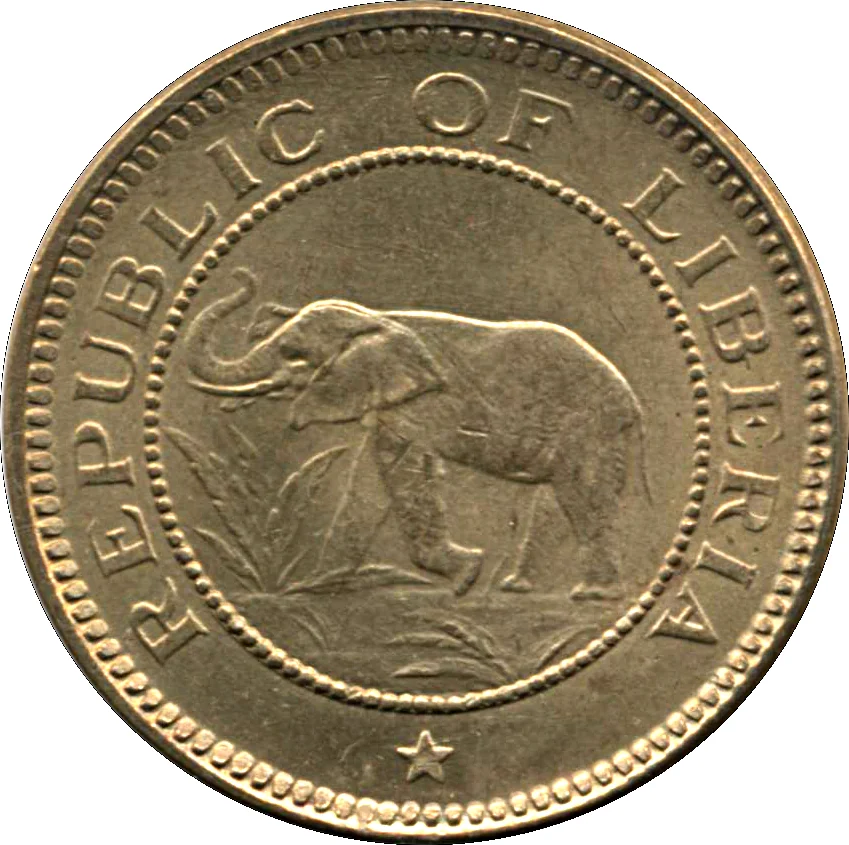
Obverse
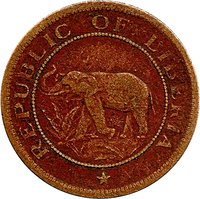
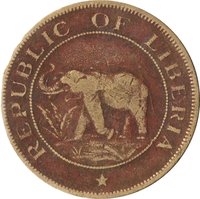
Reverse
Description:
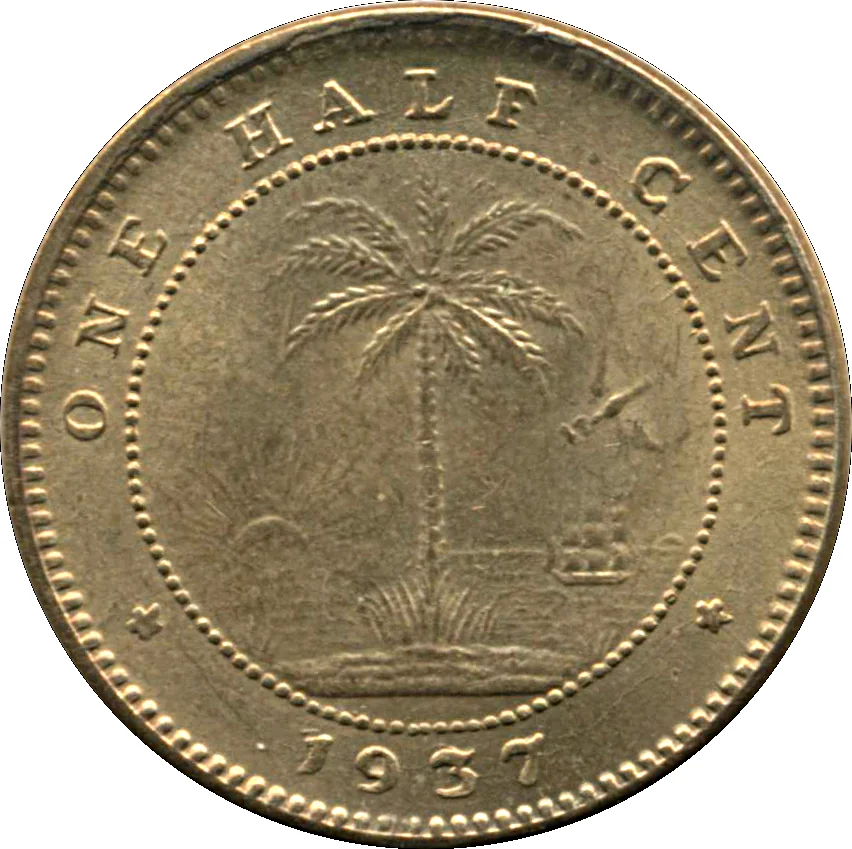
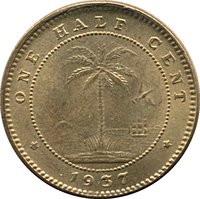
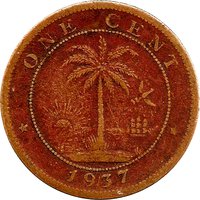
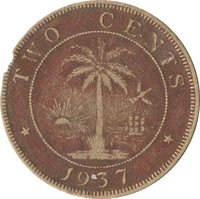
Palm tree separates ship and sun inside a circle, with stars above the date.
Inscription:
ONE HALF CENT
★ 1937 ★
★ 1937 ★
Script: Latin
Edge
Plain
Categories
| Plant> Tree |
| Transportation> Watercraft |
| Animal> Bird |
| Animal> Elephant |
Mints
| Name | Mark |
|---|---|
| Royal Mint of Belgium | — |
Mintings
| Year | Mint Mark | Mintage | Quality | Collection |
|---|---|---|---|---|
| 1937 | — | 1,000,000 |
Historical background
In 1937, Liberia's currency situation was characterized by a complex and often unstable dual system, heavily influenced by foreign economic interests. The official currency was the Liberian dollar, introduced in 1935 to replace British West African shillings and assert monetary sovereignty. However, this new currency was pegged at par to the US dollar, reflecting the dominant economic influence of the United States, particularly through the Firestone Tire and Rubber Company, which had operated vast rubber plantations since 1926. In practice, US dollars circulated widely alongside the local currency, especially for major commercial transactions and international trade.
Despite the official peg, the Liberian dollar faced significant challenges of public trust and limited circulation. The economy remained largely cash-based and agrarian, with many rural areas relying on barter or traditional forms of exchange. The government's fiscal capacity was weak, and the currency was not fully backed by substantial foreign exchange reserves or a central bank (the National Bank of Liberia was not established until 1974). Consequently, confidence in the fledgling Liberian dollar was fragile, and the US dollar continued to function as the de facto preferred medium for savings and large-scale commerce.
This monetary arrangement underscored Liberia's precarious economic position in the late 1930s. The country was deeply indebted from a 1926 loan to Firestone, and its revenue was heavily dependent on royalties from the rubber industry. The currency system, therefore, was not one of true independence but rather a formal structure dependent on the inflow of US capital. It reflected a colonial-style economic dependency without direct political colonization, leaving the Liberian government with limited control over its own monetary policy as it navigated the tail end of the Great Depression.
Despite the official peg, the Liberian dollar faced significant challenges of public trust and limited circulation. The economy remained largely cash-based and agrarian, with many rural areas relying on barter or traditional forms of exchange. The government's fiscal capacity was weak, and the currency was not fully backed by substantial foreign exchange reserves or a central bank (the National Bank of Liberia was not established until 1974). Consequently, confidence in the fledgling Liberian dollar was fragile, and the US dollar continued to function as the de facto preferred medium for savings and large-scale commerce.
This monetary arrangement underscored Liberia's precarious economic position in the late 1930s. The country was deeply indebted from a 1926 loan to Firestone, and its revenue was heavily dependent on royalties from the rubber industry. The currency system, therefore, was not one of true independence but rather a formal structure dependent on the inflow of US capital. It reflected a colonial-style economic dependency without direct political colonization, leaving the Liberian government with limited control over its own monetary policy as it navigated the tail end of the Great Depression.
🌱 Common