

20 qapiks – Azerbaijan
Add to wishlist
Azerbaijan
Context
Material
References
KM: #
Numista: #4749
Value
Exchange value: 0.20 AZN
Obverse
Description:
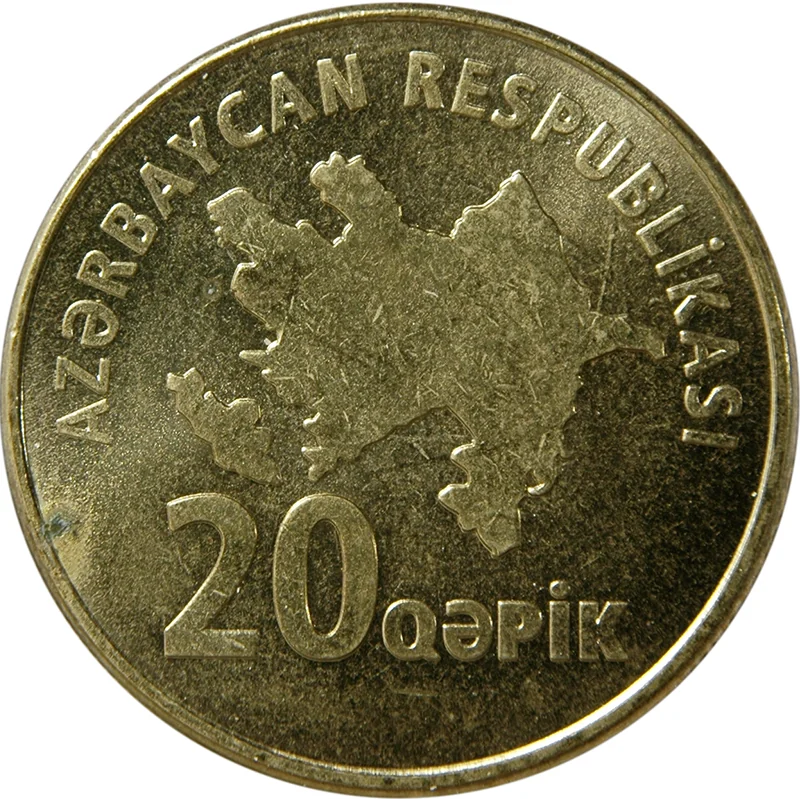
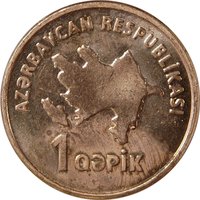
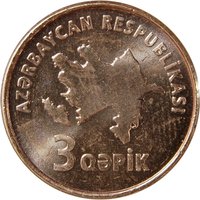
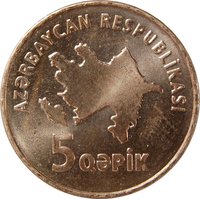
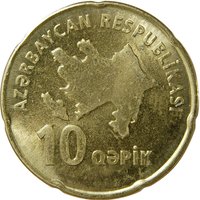
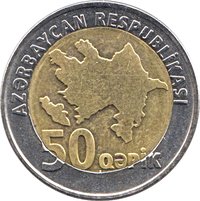
Azerbaijan map with denomination.
Inscription:
AZƏRBAYCAN RESPUBLİKASI
20 QƏPİK
20 QƏPİK
Translation:
REPUBLIC OF AZERBAIJAN
20 QƏPIK
20 QƏPIK
Script: Latin
Language: Azerbaijani
Engraver: Robert Kalina
Reverse
Description:
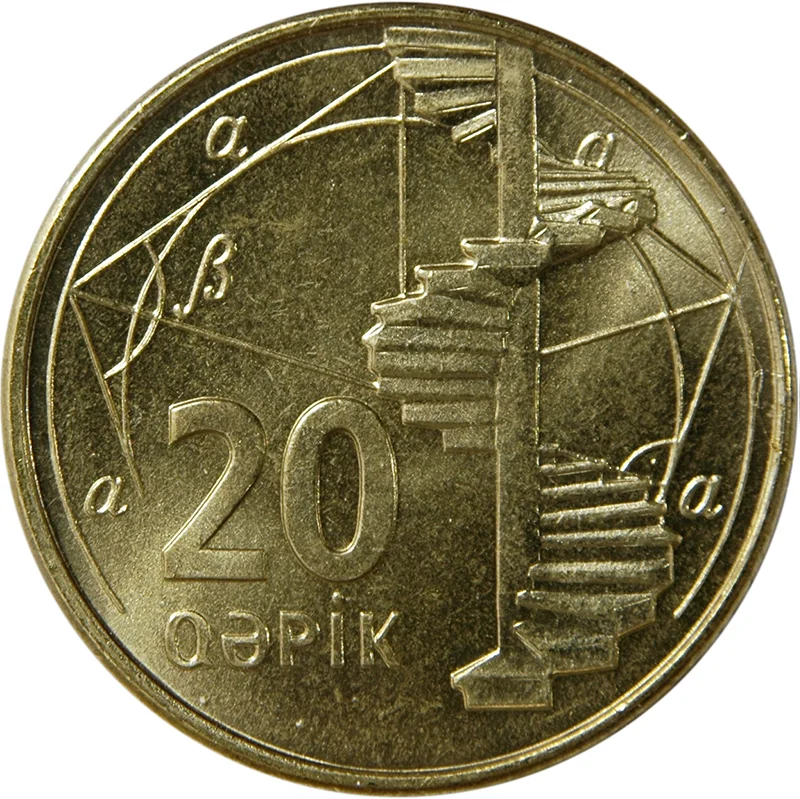
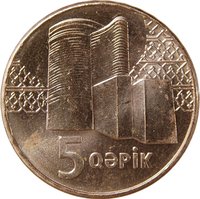
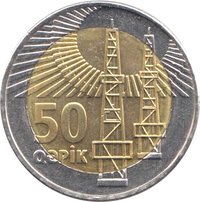
Spiral stairs over a labeled pentagon.
Inscription:
20
QƏPİK
QƏPİK
Translation:
20 Qəpik
Script: Latin
Language: Azerbaijani
Engraver: Robert Kalina
Edge
Segmented reeding
Mints
| Name | Mark |
|---|---|
| Münze Österreich | Circulation |
| National Bank of Ukraine Banknote Printing and Minting Works | (Sets) |
Mintings
| Year | Mint Mark | Mintage | Quality | Collection |
|---|---|---|---|---|
| 2006 | — | — | ||
| 2011 | — | 500 | In sets |
Historical background
In 2006, Azerbaijan's currency situation was characterized by significant stability and strong upward pressure on the national currency, the manat (AZN), a marked contrast to the volatility of previous decades. This stability was underpinned by a dramatic influx of petrodollars, as the country was in the midst of an oil boom following the opening of the Baku-Tbilisi-Ceyhan pipeline in mid-2005. Surging hydrocarbon exports led to a substantial increase in foreign exchange reserves, which grew from approximately $1.2 billion in 2004 to around $2.5 billion by the end of 2006, bolstering the Central Bank of Azerbaijan's (CBA) ability to manage the exchange rate.
The primary challenge for monetary authorities was not devaluation, but managing intense appreciation pressures and controlling inflation. To maintain export competitiveness and shield the non-oil sector, the CBA pursued a de facto peg of the manat to the US dollar, intervening heavily in the foreign exchange market to sterilize the inflow of dollars. This policy resulted in a very stable nominal exchange rate, which hovered around 0.92 AZN per USD throughout the year. However, the massive monetary expansion from these interventions contributed to high double-digit inflation, which reached approximately 11.4% in 2006, eroding the real value of the currency domestically despite its nominal strength.
This period solidified Azerbaijan's transition from a post-Soviet economy with a fragile currency to a hydrocarbon-driven economy with a stable and strong external monetary position. The currency stability of 2006 was a direct benefit of the oil boom, but it also highlighted the growing macroeconomic imbalances, such as inflation and Dutch Disease concerns, that would define policy debates in the years to follow. The managed float regime successfully prevented abrupt nominal fluctuations but underscored the economy's growing dependence on oil revenues and the challenges of effective sterilization for the central bank.
The primary challenge for monetary authorities was not devaluation, but managing intense appreciation pressures and controlling inflation. To maintain export competitiveness and shield the non-oil sector, the CBA pursued a de facto peg of the manat to the US dollar, intervening heavily in the foreign exchange market to sterilize the inflow of dollars. This policy resulted in a very stable nominal exchange rate, which hovered around 0.92 AZN per USD throughout the year. However, the massive monetary expansion from these interventions contributed to high double-digit inflation, which reached approximately 11.4% in 2006, eroding the real value of the currency domestically despite its nominal strength.
This period solidified Azerbaijan's transition from a post-Soviet economy with a fragile currency to a hydrocarbon-driven economy with a stable and strong external monetary position. The currency stability of 2006 was a direct benefit of the oil boom, but it also highlighted the growing macroeconomic imbalances, such as inflation and Dutch Disease concerns, that would define policy debates in the years to follow. The managed float regime successfully prevented abrupt nominal fluctuations but underscored the economy's growing dependence on oil revenues and the challenges of effective sterilization for the central bank.
🌱 Very Common