

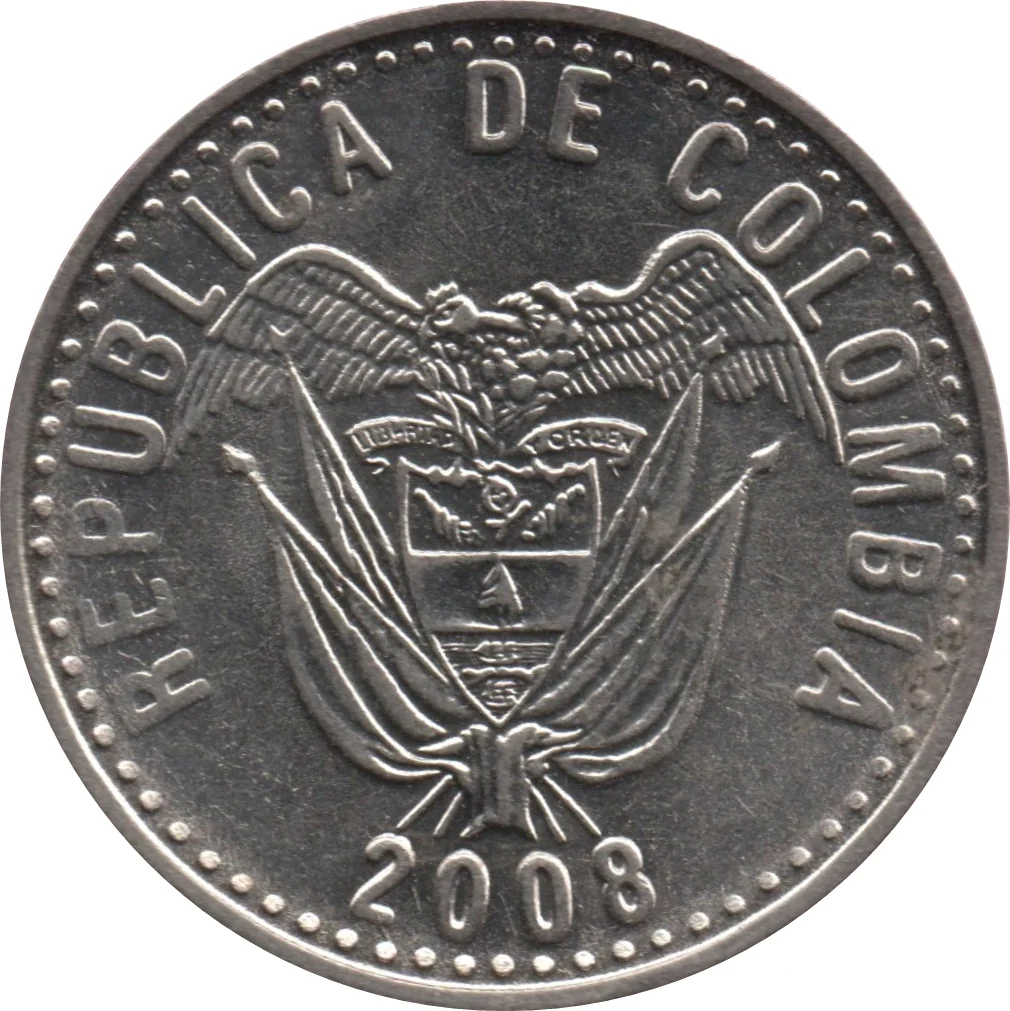
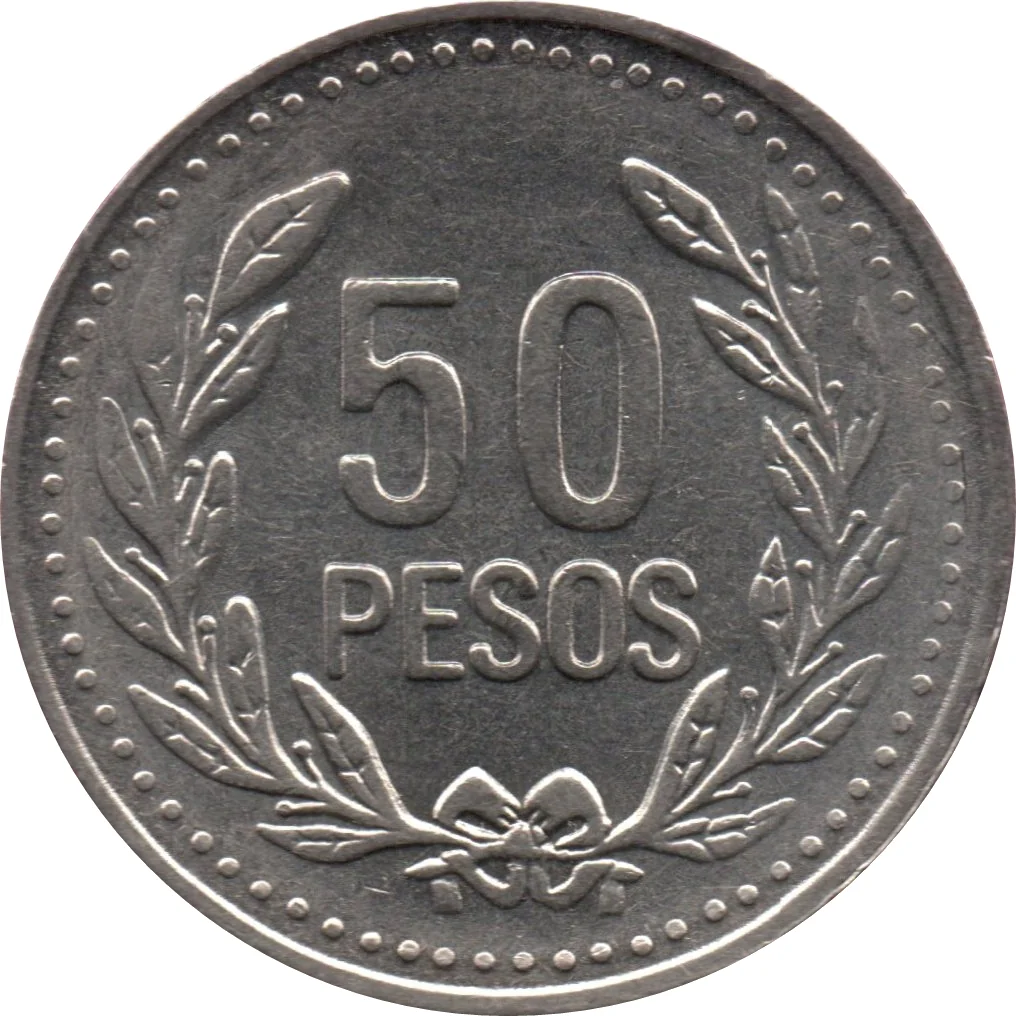
50 Pesos – Colombia
Colombia
Context
Years: 2007–2012
Issuer: Colombia 
Period:
(since 1886)
Currency:
(since 1847)
Total mintage: 181,824,000
Material
Diameter: 21.8 mm
Weight: 4.07 g
Shape: Round
Composition: Stainless steel
Magnetic: Yes
Technique: Milled
Alignment: Coin alignment
flip
References
KM: #Click to copy to clipboard283.2a
Numista: #47429
Value
Exchange value: 50 COP
Inflation-adjusted value: 121.80 COP
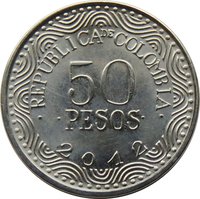
Obverse
Reverse
Edge
Reeded
Categories
| Symbols> Coat of Arms |
| Symbol> Wreath |
Mintings
| Year | Mint Mark | Mintage | Quality | Collection |
|---|---|---|---|---|
| 2007 | — | 14,824,000 | ||
| 2008 | — | 67,500,000 | ||
| 2009 | — | 3,000,000 | ||
| 2010 | — | 55,100,000 | ||
| 2011 | — | 19,100,000 | ||
| 2012 | — | 22,300,000 |
Historical background
In 2007, Colombia's currency, the peso (COP), experienced a period of significant and sustained appreciation against the US dollar, a trend that had begun several years earlier. The peso strengthened to around 2,000 COP per USD, a level not seen since the late 1990s, representing a dramatic rise from its low of nearly 3,000 COP per USD in 2003. This appreciation was primarily driven by strong inflows of foreign direct investment (FDI), particularly into the booming oil and mining sectors, and robust remittances from Colombians living abroad. Furthermore, high domestic interest rates, set by the Banco de la República to control inflation, attracted considerable short-term portfolio investment, adding further upward pressure on the currency.
The strong peso presented a complex economic puzzle for policymakers and businesses. On one hand, it helped to curb inflation by making imports cheaper and increased the purchasing power of Colombian consumers. On the other hand, it severely hurt the competitiveness of non-traditional exports (like manufacturing, textiles, and agriculture) and domestic industries competing with cheaper imports, a phenomenon known as "Dutch disease." This sparked intense concern among exporters and industrialists, who argued that the appreciating currency was eroding profit margins and threatening jobs, leading to calls for government intervention.
In response, the Colombian central bank pursued a strategy of heavy foreign exchange intervention. Throughout 2007, it accumulated record levels of international reserves through daily purchases of dollars in the market, aiming to slow the peso's ascent. Additionally, the government implemented a policy requiring exporters to bring a portion of their foreign currency earnings into the country, hoping to increase dollar supply. Despite these measures, the peso's strength persisted for much of the year, reflecting the powerful market forces of investor confidence and strong capital inflows that characterized Colombia's growing economy in the mid-2000s.
The strong peso presented a complex economic puzzle for policymakers and businesses. On one hand, it helped to curb inflation by making imports cheaper and increased the purchasing power of Colombian consumers. On the other hand, it severely hurt the competitiveness of non-traditional exports (like manufacturing, textiles, and agriculture) and domestic industries competing with cheaper imports, a phenomenon known as "Dutch disease." This sparked intense concern among exporters and industrialists, who argued that the appreciating currency was eroding profit margins and threatening jobs, leading to calls for government intervention.
In response, the Colombian central bank pursued a strategy of heavy foreign exchange intervention. Throughout 2007, it accumulated record levels of international reserves through daily purchases of dollars in the market, aiming to slow the peso's ascent. Additionally, the government implemented a policy requiring exporters to bring a portion of their foreign currency earnings into the country, hoping to increase dollar supply. Despite these measures, the peso's strength persisted for much of the year, reflecting the powerful market forces of investor confidence and strong capital inflows that characterized Colombia's growing economy in the mid-2000s.

🌱 Very Common