

1 dollar – United States
Add to wishlist
United States
Context
Years: 1878–1921
Issuer: United States
Period:
(since 1776)
Currency:
(since 1785)
Total mintage: 647,147,442
Material
References
KM: #
Numista: #1492
Value
Exchange value: 1 USD = $1.00
Bullion value: $58.84
Obverse
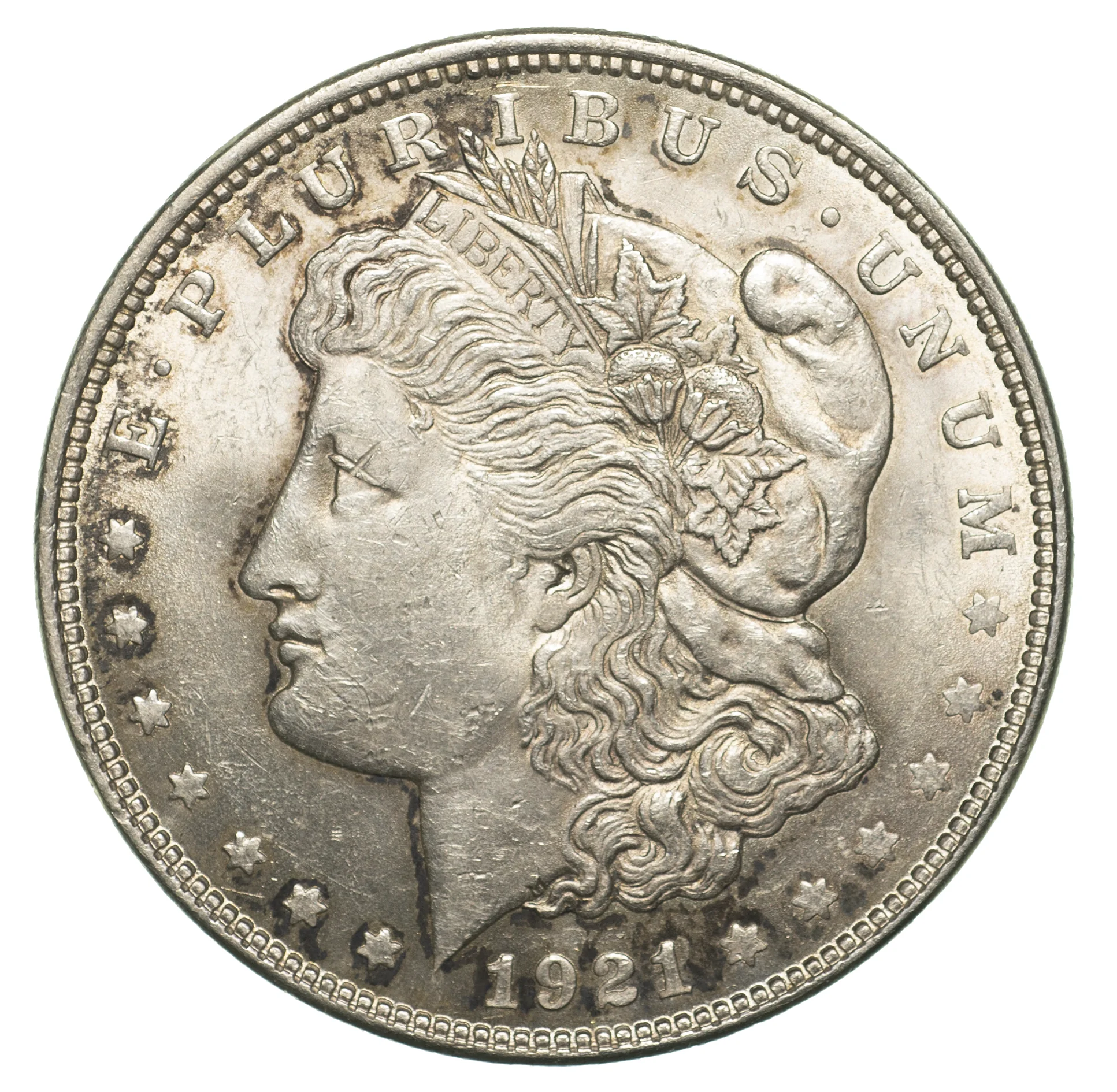
Description:
Liberty head left.
Inscription:
E · PLURIBUS · UNUM
LIBERTY
1885
LIBERTY
1885
Translation:
Out of Many, One
Liberty
1885
Liberty
1885
Script: Latin
Engraver: George Thomas Morgan
Reverse
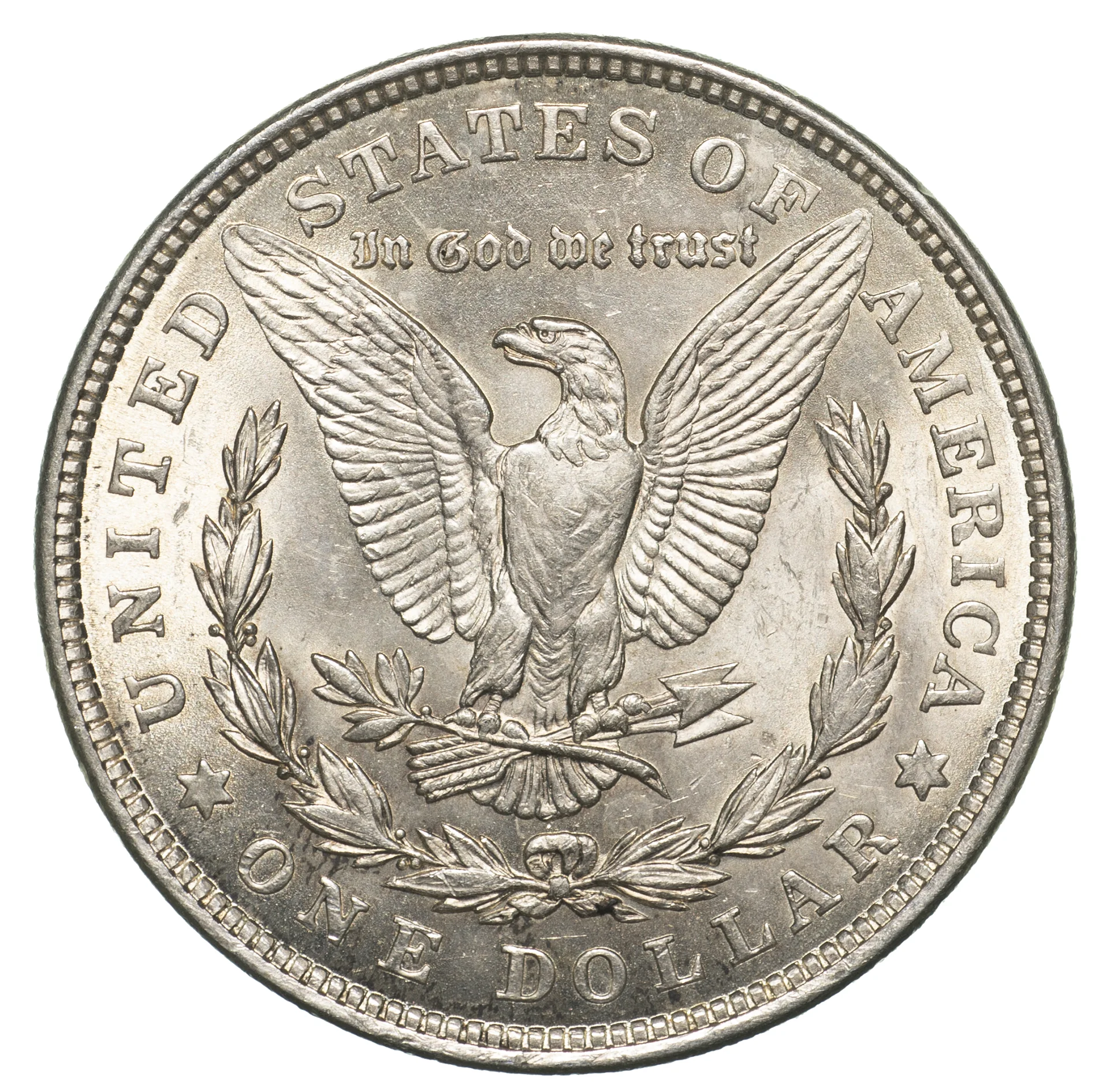
Description:
Eagle with arrows and olive branch in wreath.
Inscription:
UNITED STATES OF AMERICA
In God we trust
* ONE DOLLAR *
In God we trust
* ONE DOLLAR *
Script: Latin
Engraver: George Thomas Morgan
Edge
Reeded
Categories
| Animal> Bird> Eagle |
| Symbol> Allegory |
| Symbol> Phrygian cap |
| Symbol> Wreath |
| Object> Cold weapons |
Mints
| Name | Mark |
|---|---|
| United States Mint of Philadelphia | — |
| United States Mint of Carson City | CC |
| United States Mint of Denver | D |
| United States Mint of New Orleans | O |
| United States Mint of San Francisco | S |
Mintings
| Year | Mint Mark | Mintage | Quality | Collection |
|---|---|---|---|---|
| 1878 | — | 750,000 | ||
| 1878 | — | 500 | Proof | |
| 1878 | CC | 2,212,000 | ||
| 1878 | S | 9,744,000 | ||
| 1879 | — | 1,100 | Proof | |
| 1879 | — | 14,806,000 | ||
| 1879 | CC | 756,000 | ||
| 1879 | O | 2,887,000 | ||
| 1879 | S | 9,110,000 | ||
| 1880 | — | 12,600,000 | ||
| 1880 | — | 1,355 | Proof | |
| 1880 | CC | 495,000 | ||
| 1880 | O | 5,305,000 | ||
| 1880 | S | 8,900,000 | ||
| 1881 | — | 9,163,000 | ||
| 1881 | — | 984 | Proof | |
| 1881 | CC | 296,000 | ||
| 1881 | O | 5,708,000 | ||
| 1881 | S | 12,760,000 | ||
| 1882 | — | 1,100 | Proof | |
| 1882 | O | 6,090,000 | ||
| 1882 | S | 9,250,000 | ||
| 1882 | — | 11,100,000 | ||
| 1882 | CC | 1,133,000 | ||
| 1883 | — | 12,290,000 | ||
| 1883 | S | 6,250,000 | ||
| 1883 | O | 8,725,000 | ||
| 1883 | — | 1,039 | Proof | |
| 1883 | CC | 1,204,000 | ||
| 1884 | — | 14,070,000 | ||
| 1884 | — | 875 | Proof | |
| 1884 | CC | 1,136,000 | ||
| 1884 | O | 9,730,000 | ||
| 1884 | S | 3,200,000 | ||
| 1885 | O | 9,185,000 | ||
| 1885 | S | 1,497,000 | ||
| 1885 | CC | 228,000 | ||
| 1885 | — | 17,787,000 | ||
| 1885 | — | 930 | Proof | |
| 1886 | — | 886 | Proof | |
| 1886 | O | 10,710,000 | ||
| 1886 | — | 19,963,000 | ||
| 1886 | S | 750,000 | ||
| 1887 | — | 710 | Proof | |
| 1887 | — | 20,290,710 | ||
| 1887 | O | 11,550,000 | ||
| 1887 | S | 1,771,000 | ||
| 1888 | — | 833 | Proof | |
| 1888 | — | 19,183,000 | ||
| 1888 | O | 12,150,000 | ||
| 1888 | S | 657,000 | ||
| 1889 | — | 811 | Proof | |
| 1889 | CC | 350,000 | ||
| 1889 | O | 11,875,000 | ||
| 1889 | — | 21,726,000 | ||
| 1889 | S | 700,000 | ||
| 1890 | — | 590 | Proof | |
| 1890 | O | 10,701,000 | ||
| 1890 | S | 8,230,373 | ||
| 1890 | — | 16,802,000 | ||
| 1890 | CC | 2,309,041 | ||
| 1891 | — | 8,693,556 | ||
| 1891 | — | 650 | Proof | |
| 1891 | CC | 1,618,000 | ||
| 1891 | O | 7,954,529 | ||
| 1891 | S | 5,296,000 | ||
| 1892 | — | 1,036,000 | ||
| 1892 | — | 1,245 | Proof | |
| 1892 | CC | 1,352,000 | ||
| 1892 | O | 2,744,000 | ||
| 1892 | S | 1,200,000 | ||
| 1893 | — | 378,000 | ||
| 1893 | — | 792 | Proof | |
| 1893 | CC | 677,000 | ||
| 1893 | O | 300,000 | ||
| 1893 | S | 100,000 | ||
| 1894 | — | 110,000 | ||
| 1894 | O | 1,723,000 | ||
| 1894 | S | 1,260,000 | ||
| 1894 | — | 972 | Proof | |
| 1895 | S | 400,000 | ||
| 1895 | — | 880 | Proof | |
| 1895 | O | 450,000 | ||
| 1896 | — | 9,967,000 | ||
| 1896 | — | 762 | Proof | |
| 1896 | O | 4,900,000 | ||
| 1896 | S | 5,000,000 | ||
| 1897 | S | 5,825,000 | ||
| 1897 | — | 2,822,000 | ||
| 1897 | — | 731 | Proof | |
| 1897 | O | 4,004,000 | ||
| 1898 | — | 5,884,000 | ||
| 1898 | O | 4,440,000 | ||
| 1898 | — | 735 | Proof | |
| 1898 | S | 4,102,000 | ||
| 1899 | O | 12,290,000 | ||
| 1899 | S | 2,562,000 | ||
| 1899 | — | 330,000 | ||
| 1899 | — | 846 | Proof | |
| 1900 | — | 8,880,000 | ||
| 1900 | — | 912 | Proof | |
| 1900 | O | 12,590,000 | ||
| 1900 | S | 3,540,000 | ||
| 1901 | — | 6,962,000 | ||
| 1901 | — | 813 | Proof | |
| 1901 | O | 13,320,000 | ||
| 1901 | S | 2,284,000 | ||
| 1902 | — | 777 | Proof | |
| 1902 | O | 8,636,000 | ||
| 1902 | S | 1,530,000 | ||
| 1902 | — | 7,994,000 | ||
| 1903 | — | 4,652,000 | ||
| 1903 | — | 755 | Proof | |
| 1903 | O | 4,450,000 | ||
| 1903 | S | 1,241,000 | ||
| 1904 | — | 2,788,000 | ||
| 1904 | — | 650 | Proof | |
| 1904 | O | 3,720,000 | ||
| 1904 | S | 2,304,000 | ||
| 1921 | — | 44,690,000 | ||
| 1921 | D | 20,345,000 | ||
| 1921 | S | 21,695,000 |
Historical background
The United States in 1878 stood at a pivotal moment in its monetary history, caught between the competing doctrines of hard money and soft money. The nation had operated without a uniform national paper currency until the Civil War, when the federal government issued "greenbacks" (U.S. Notes) to finance the conflict. These were legal tender but not redeemable in gold or silver, leading to their depreciation. Following the war, a fierce political struggle emerged between creditors and urban industrialists in the Northeast, who favored a strict gold standard ("sound money"), and debtors, farmers, and silver miners in the South and West, who advocated for inflationary policies like the free coinage of silver to ease debt burdens and raise crop prices.
This conflict culminated in two major legislative acts in the pivotal year of 1878. First, the Bland-Allison Act was passed over President Hayes's veto, requiring the U.S. Treasury to purchase between $2 and $4 million worth of silver each month and coin it into silver dollars. This was a major victory for silver interests, though it fell short of free and unlimited coinage. Second, Congress passed the Act of May 31, 1878, which halted the further retirement of greenbacks, permanently fixing their circulation at approximately $347 million. This created a dual system of paper currency: gold-backed National Bank Notes and the unredeemable but legal-tender greenbacks.
Thus, by the end of 1878, the United States was operating on a de facto limping gold standard. Gold remained the official basis for value, and the government resumed specie payments for all other forms of currency in 1879. However, the mandated purchase of silver and the frozen supply of greenbacks created a complex and somewhat contradictory monetary base. This uneasy compromise did not settle the debate but merely established a tense and unstable status quo, setting the stage for the more intense political battles over "Free Silver" that would dominate the 1890s.
This conflict culminated in two major legislative acts in the pivotal year of 1878. First, the Bland-Allison Act was passed over President Hayes's veto, requiring the U.S. Treasury to purchase between $2 and $4 million worth of silver each month and coin it into silver dollars. This was a major victory for silver interests, though it fell short of free and unlimited coinage. Second, Congress passed the Act of May 31, 1878, which halted the further retirement of greenbacks, permanently fixing their circulation at approximately $347 million. This created a dual system of paper currency: gold-backed National Bank Notes and the unredeemable but legal-tender greenbacks.
Thus, by the end of 1878, the United States was operating on a de facto limping gold standard. Gold remained the official basis for value, and the government resumed specie payments for all other forms of currency in 1879. However, the mandated purchase of silver and the frozen supply of greenbacks created a complex and somewhat contradictory monetary base. This uneasy compromise did not settle the debate but merely established a tense and unstable status quo, setting the stage for the more intense political battles over "Free Silver" that would dominate the 1890s.
🌱 Very Common