

20 dollars – United States
Add to wishlist
United States
Context
Years: 1877–1907
Issuer: United States
Period:
(since 1776)
Currency:
(since 1785)
Total mintage: 64,139,903
Material
References
KM: #
Numista: #23125
Value
Exchange value: 20 USD = $20.00
Bullion value: $4617.23
Obverse
Description:
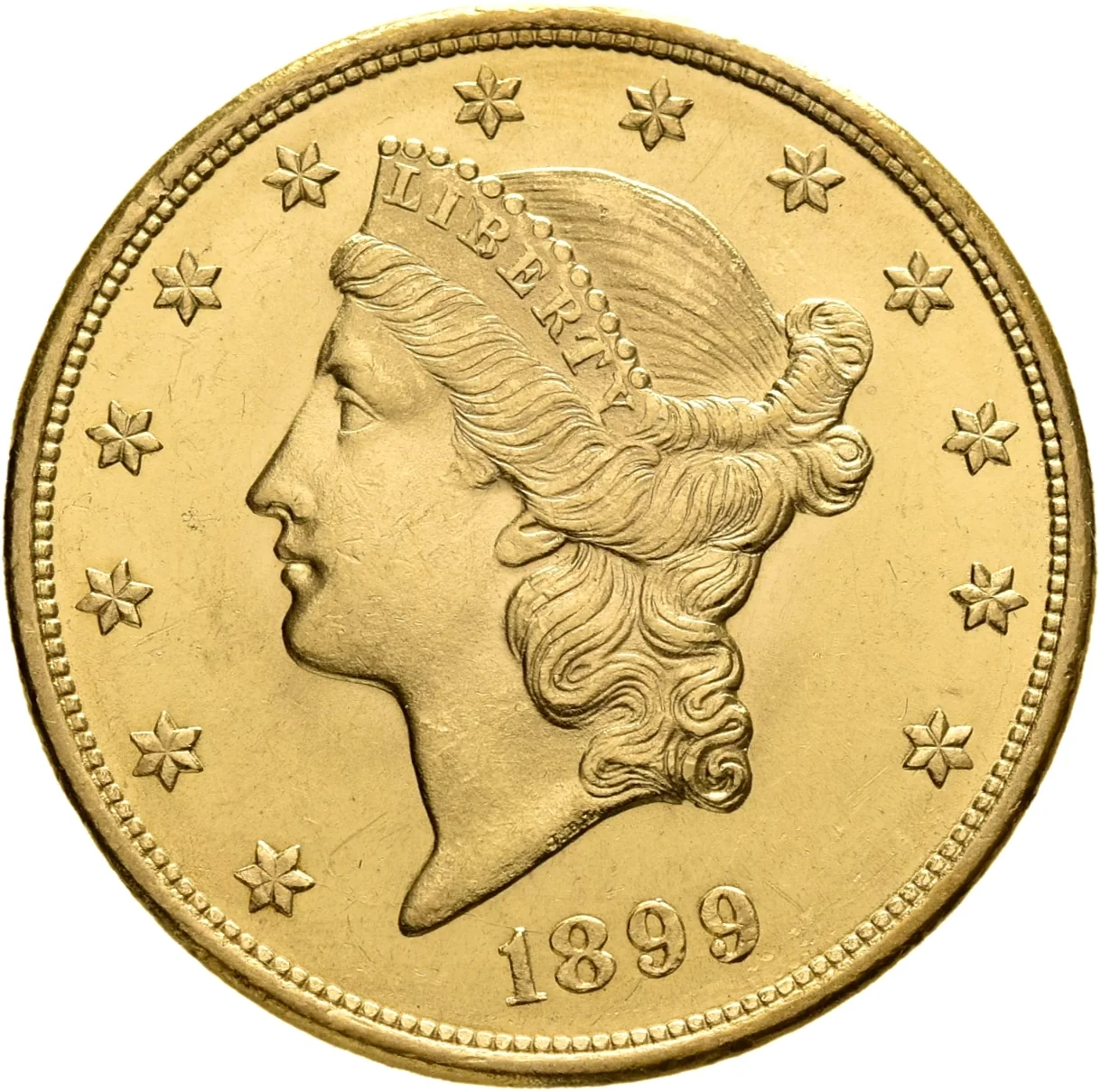
Liberty left, crowned by stars, date beneath.
Inscription:
LIBERTY
1904
1904
Script: Latin
Designer: James Barton Longacre
Reverse
Description:
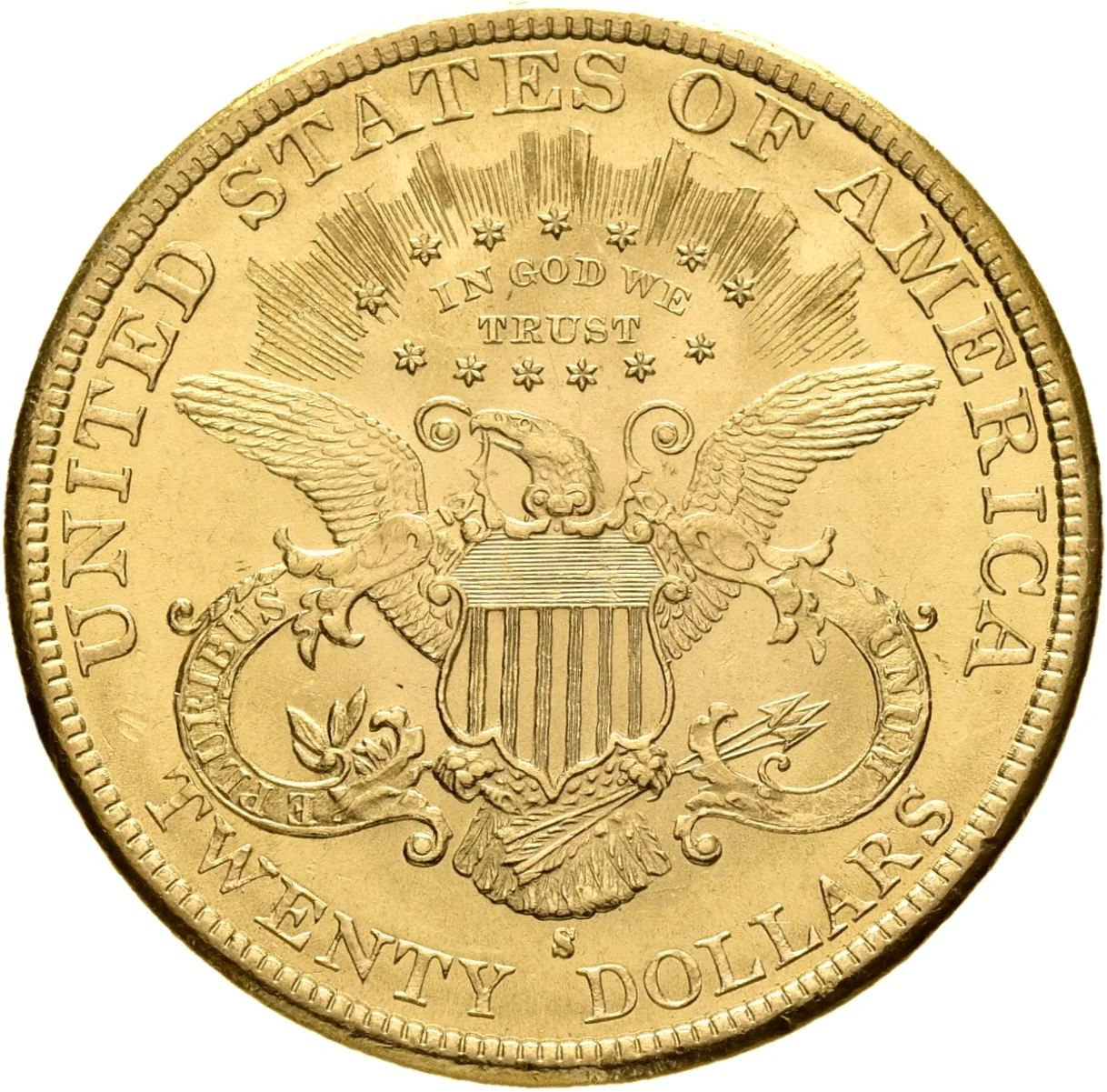
American eagle with shield, arrows, olive branch, stars, and motto.
Inscription:
UNITED STATES OF AMERICA
IN GOD WE TRUST
E PLURIBUS UNUM
TWENTY DOLLARS
IN GOD WE TRUST
E PLURIBUS UNUM
TWENTY DOLLARS
Script: Latin
Designer: James Barton Longacre
Edge
Reeded
Mints
| Name | Mark |
|---|---|
| United States Mint of Philadelphia | — |
| United States Mint of Carson City | CC |
| United States Mint of Denver | D |
| United States Mint of New Orleans | O |
| United States Mint of San Francisco | S |
Mintings
| Year | Mint Mark | Mintage | Quality | Collection |
|---|---|---|---|---|
| 1877 | — | 397,650 | ||
| 1877 | — | 20 | Proof | |
| 1877 | CC | 42,565 | ||
| 1877 | S | 1,735,000 | ||
| 1878 | — | 543,625 | ||
| 1878 | — | 20 | Proof | |
| 1878 | CC | 13,180 | ||
| 1878 | S | 1,739,000 | ||
| 1879 | — | 207,600 | ||
| 1879 | — | 30 | Proof | |
| 1879 | CC | 10,708 | ||
| 1879 | O | 2,325 | ||
| 1879 | S | 1,223,800 | ||
| 1880 | — | 51,420 | ||
| 1880 | — | 36 | Proof | |
| 1880 | S | 836,000 | ||
| 1881 | S | 727,000 | ||
| 1881 | — | 2,199 | ||
| 1881 | — | 61 | Proof | |
| 1882 | — | 571 | ||
| 1882 | — | 59 | Proof | |
| 1882 | CC | 39,140 | ||
| 1882 | S | 1,125,000 | ||
| 1883 | — | 92 | Proof | |
| 1883 | CC | 59,962 | ||
| 1883 | S | 1,189,000 | ||
| 1884 | — | 71 | Proof | |
| 1884 | CC | 81,139 | ||
| 1884 | S | 916,000 | ||
| 1885 | — | 751 | ||
| 1885 | — | 77 | Proof | |
| 1885 | CC | 9,450 | ||
| 1885 | S | 683,500 | ||
| 1886 | — | 1,000 | ||
| 1886 | — | 106 | Proof | |
| 1887 | — | 121 | Proof | |
| 1887 | S | 283,000 | ||
| 1888 | S | 859,600 | ||
| 1888 | — | 226,161 | ||
| 1888 | — | 105 | Proof | |
| 1889 | — | 44,070 | ||
| 1889 | — | 41 | Proof | |
| 1889 | CC | 30,945 | ||
| 1889 | S | 774,700 | ||
| 1890 | — | 55 | Proof | |
| 1890 | CC | 91,209 | ||
| 1890 | — | 75,940 | ||
| 1890 | S | 802,750 | ||
| 1891 | — | 1,390 | ||
| 1891 | — | 52 | Proof | |
| 1891 | CC | 5,000 | ||
| 1891 | S | 1,288,125 | ||
| 1892 | — | 93 | Proof | |
| 1892 | CC | 27,265 | ||
| 1892 | S | 930,150 | ||
| 1892 | — | 4,430 | ||
| 1893 | — | 344,280 | ||
| 1893 | — | 59 | Proof | |
| 1893 | CC | 18,402 | ||
| 1893 | S | 996,175 | ||
| 1894 | — | 1,368,940 | ||
| 1894 | — | 50 | Proof | |
| 1894 | S | 1,048,550 | ||
| 1895 | — | 1,114,605 | ||
| 1895 | — | 51 | Proof | |
| 1895 | S | 1,143,500 | ||
| 1896 | — | 128 | Proof | |
| 1896 | S | 1,403,925 | ||
| 1896 | — | 792,535 | ||
| 1897 | S | 1,470,250 | ||
| 1897 | — | 86 | Proof | |
| 1897 | — | 1,383,175 | ||
| 1898 | — | 170,395 | ||
| 1898 | — | 75 | Proof | |
| 1898 | S | 2,575,175 | ||
| 1899 | — | 1,669,300 | ||
| 1899 | — | 84 | Proof | |
| 1899 | S | 2,010,300 | ||
| 1900 | — | 1,874,460 | ||
| 1900 | — | 124 | Proof | |
| 1900 | S | 2,459,500 | ||
| 1901 | — | 111,430 | ||
| 1901 | — | 96 | Proof | |
| 1901 | S | 1,596,000 | ||
| 1902 | — | 31,140 | ||
| 1902 | — | 114 | Proof | |
| 1902 | S | 1,753,625 | ||
| 1903 | — | 158 | Proof | |
| 1903 | S | 954,000 | ||
| 1903 | — | 287,270 | ||
| 1904 | — | 6,256,699 | ||
| 1904 | — | 98 | Proof | |
| 1904 | S | 5,134,175 | ||
| 1905 | — | 58,919 | ||
| 1905 | — | 92 | Proof | |
| 1905 | S | 1,813,000 | ||
| 1906 | — | 69,596 | ||
| 1906 | — | 94 | Proof | |
| 1906 | D | 620,250 | ||
| 1906 | S | 2,065,750 | ||
| 1907 | — | 1,451,786 | ||
| 1907 | — | 78 | Proof | |
| 1907 | D | 842,250 | ||
| 1907 | S | 2,165,800 |
Historical background
In 1877, the United States was in the midst of a profound and often bitter debate over its monetary system, a conflict known as the "Battle of the Standards." The nation operated on a de facto gold standard following the Specie Payment Resumption Act of 1875, which aimed to restore the convertibility of paper "greenbacks"—issued during the Civil War—into gold by January 1, 1879. This policy, championed by creditors, industrialists, and Eastern financial interests, sought to ensure a "hard," stable currency backed by precious metal, which they believed was essential for long-term investment, international trade, and upholding the credit of the government.
However, this commitment to gold sparked fierce opposition from a coalition of debtors, farmers, and silver miners, particularly in the South and West. They advocated for the expansion of the money supply through the free and unlimited coinage of silver at a ratio of 16-to-1 against gold, arguing that a "soft" currency would ease the burden of debt, raise agricultural prices, and fuel economic growth. The previous year, their cause had gained significant momentum with the passage of the Bland-Allison Act (though it was vetoed by President Hayes and later overridden by Congress in early 1878), which mandated limited government purchase and coinage of silver, creating a bimetallic system in name but one still dominated by gold.
The currency debate was not merely economic but deeply political and social, reflecting the regional and class fractures of the post-Reconstruction era. The year 1877 itself was marked by the cataclysmic Great Railroad Strike, partly fueled by wage cuts during a depression, which highlighted the economic distress felt by many. Against this backdrop of industrial unrest and agrarian protest, the "money question" became a defining issue, pitting the deflationary pressures of the gold standard against the inflationary hopes of the silver movement, a conflict that would dominate American politics until the climactic "Cross of Gold" election of 1896.
However, this commitment to gold sparked fierce opposition from a coalition of debtors, farmers, and silver miners, particularly in the South and West. They advocated for the expansion of the money supply through the free and unlimited coinage of silver at a ratio of 16-to-1 against gold, arguing that a "soft" currency would ease the burden of debt, raise agricultural prices, and fuel economic growth. The previous year, their cause had gained significant momentum with the passage of the Bland-Allison Act (though it was vetoed by President Hayes and later overridden by Congress in early 1878), which mandated limited government purchase and coinage of silver, creating a bimetallic system in name but one still dominated by gold.
The currency debate was not merely economic but deeply political and social, reflecting the regional and class fractures of the post-Reconstruction era. The year 1877 itself was marked by the cataclysmic Great Railroad Strike, partly fueled by wage cuts during a depression, which highlighted the economic distress felt by many. Against this backdrop of industrial unrest and agrarian protest, the "money question" became a defining issue, pitting the deflationary pressures of the gold standard against the inflationary hopes of the silver movement, a conflict that would dominate American politics until the climactic "Cross of Gold" election of 1896.
🌱 Common