

20 fillér – Hungary
Add to wishlist
Hungary
Context
Years: 1926–1940
Issuer: Hungary
Ruler: Nicolas Horthy
Currency:
(1927—1946)
Demonetization: 30 April 1942
Total mintage: 50,469,690
Material
Diameter: 21 mm
Weight: 4 g
Thickness: 1.6 mm
Shape: Round
Composition: Copper-nickel
Technique: Milled
Alignment: Medal alignment
flip
References
KM: #
Numista: #4735
Obverse
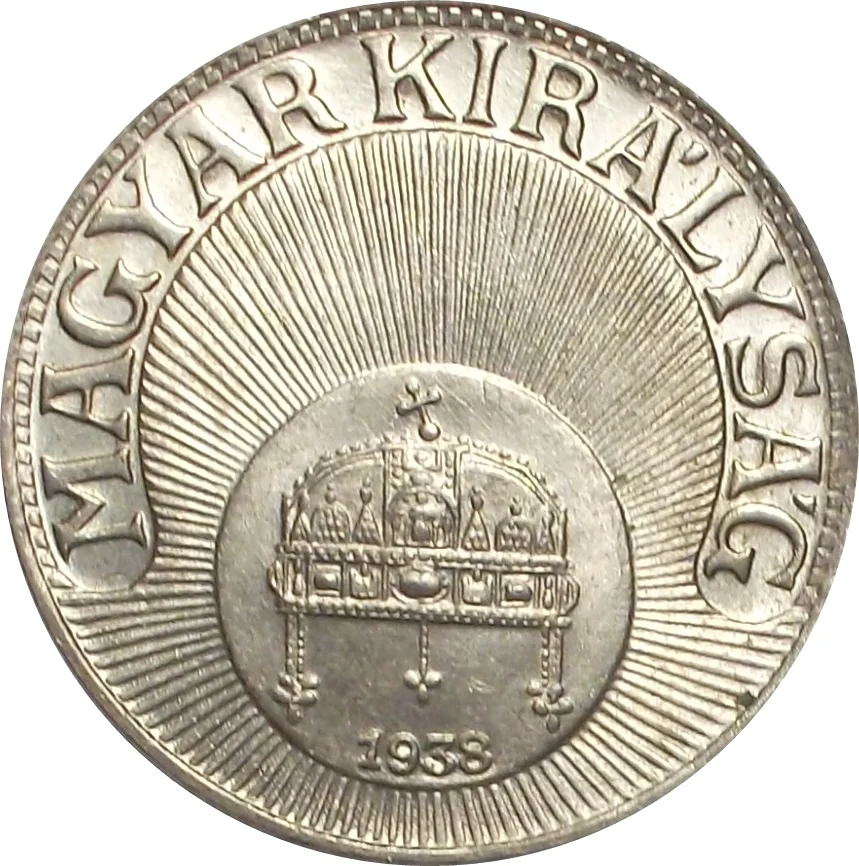
Description:
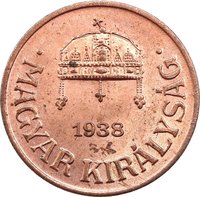
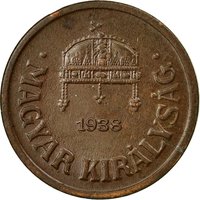
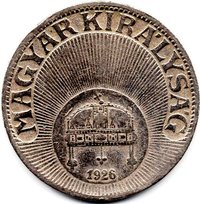
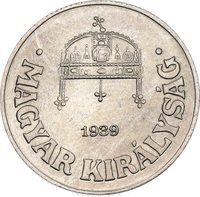
Crown of St. Stephen in circle on rays.
Inscription:
MAGYAR KIRÁLYSÁG
1926
1926
Translation:
Kingdom of Hungary
1926
1926
Script: Latin
Language: Hungarian
Engraver: János Pálinkás
Reverse
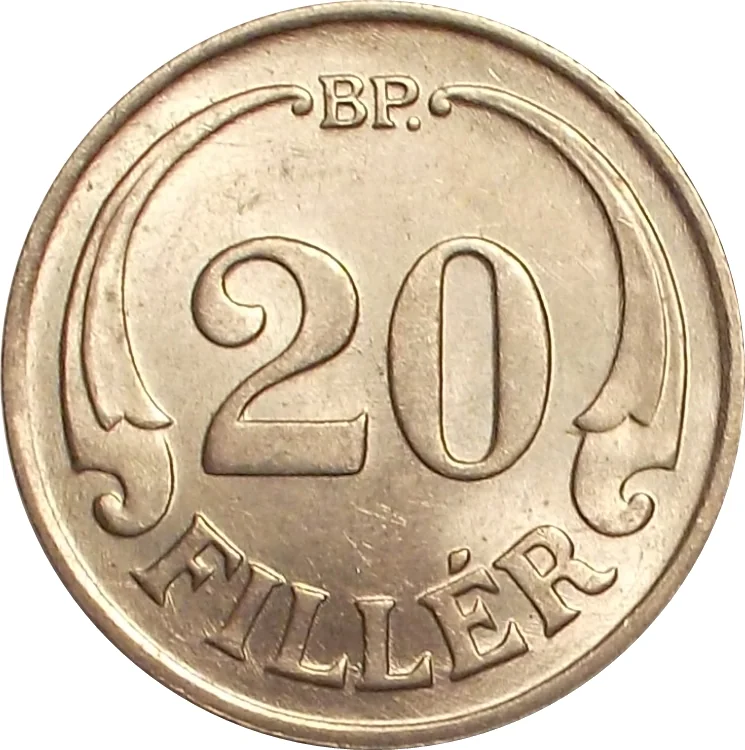
Description:
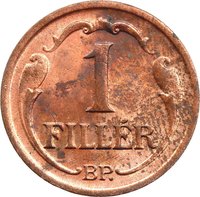
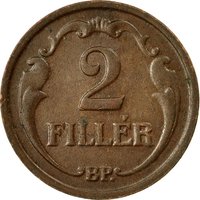
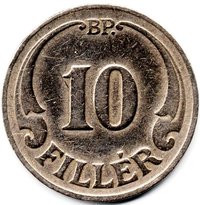
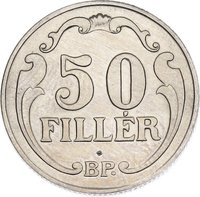
Denomination
Inscription:
BP.
20
FILLÉR
20
FILLÉR
Translation:
20 Fillér
Script: Latin
Language: Hungarian
Engraver: János Pálinkás
Edge
Plain
Mints
| Name | Mark |
|---|---|
| Hungarian mint | — |
Mintings
| Year | Mint Mark | Mintage | Quality | Collection |
|---|---|---|---|---|
| 1926 | BP | 25,000,000 | ||
| 1927 | BP | 829,690 | ||
| 1938 | BP | 20,150,000 | ||
| 1939 | BP | 2,020,000 | ||
| 1940 | BP | 2,470,000 |
Historical background
In 1926, Hungary was in the midst of a fragile stabilization following the economic catastrophe of the post-World War I period. The Austro-Hungarian Empire's dissolution left the new Hungarian state with a shattered economy, rampant hyperinflation (peaking in 1924), and a severe loss of territory and resources. The crisis was so profound that it required international intervention, leading to the 1924 League of Nations reconstruction loan. A key condition of this loan was the establishment of an independent central bank, the Hungarian National Bank, which began operations in 1924 with a mandate to stabilize the currency and state finances.
The currency situation in 1926 was defined by the introduction and consolidation of the new pengő, which had replaced the utterly devalued korona in 1927. The preparatory work for this monumental shift was the central financial task of 1926. Under the guidance of the League of Nations Commissioner, Jeremiah Smith Jr., the government worked to achieve a balanced budget and create the necessary gold and foreign exchange reserves to back the new currency. The pengő was intended to be stable and convertible, pegged to gold at a fixed rate, marking a decisive break from the era of worthless paper money.
Thus, 1926 was a year of tense transition and cautious optimism. The immediate hyperinflation was over, but the success of the impending pengő reform depended entirely on maintaining strict fiscal discipline and the continued confidence of foreign lenders. The situation remained precarious, as the economy was still under international oversight and vulnerable to external shocks, but the foundations for a decade of relative monetary stability (which would last until the upheavals of World War II) were being meticulously laid.
The currency situation in 1926 was defined by the introduction and consolidation of the new pengő, which had replaced the utterly devalued korona in 1927. The preparatory work for this monumental shift was the central financial task of 1926. Under the guidance of the League of Nations Commissioner, Jeremiah Smith Jr., the government worked to achieve a balanced budget and create the necessary gold and foreign exchange reserves to back the new currency. The pengő was intended to be stable and convertible, pegged to gold at a fixed rate, marking a decisive break from the era of worthless paper money.
Thus, 1926 was a year of tense transition and cautious optimism. The immediate hyperinflation was over, but the success of the impending pengő reform depended entirely on maintaining strict fiscal discipline and the continued confidence of foreign lenders. The situation remained precarious, as the economy was still under international oversight and vulnerable to external shocks, but the foundations for a decade of relative monetary stability (which would last until the upheavals of World War II) were being meticulously laid.
Series: 1926 Hungary circulation coins
🌱 Very Common